


Digital scanning in modern orthodontics
Purpose of Review
The purpose of this review is to provide the readers with current information and state-of-the-art of digital scanning systems within the orthodontics. Introducing the commercially available intraoral and facial scanning systems, as well as bringing future perspectives to these systems.
Recent Findings
The emergence of digital scanners associated with computer-aided design is one of today’s key diagnostic tool enhancements in orthodontics. Among the main applications in orthodontics, it is the analysis for diagnosis, treatment planning, and prediction of the final result. There is a range of possibilities for the application of digital scanners in orthodontics, both facial and intraoral, bringing benefits to the correct choice of a treatment technique and a shorter time period to acquire the patient documentation and case planning.
Summary
The intraoral scanning allowed for a broader diagnosis, more precise, and efficient planning with esthetic treatments. However, there are still some drawbacks such as the tip size of the scanners, which makes difficult to read the maxillary tuberosity region. Other drawbacks are related to the limit of patient’s mouth opening, humidity control (i.e., saliva), and light reflection during scanning by mini-implants and bars. Facial digital scanning has also an important applicability in cases of orthodontic treatment associated with orthognathic surgery, when the acquired files are combined with cone-beam computed tomography information. Although facial scanners are of great interest for facial analysis studies, they are still costly or, in the case of the new more affordable and portable devices, they still have accuracy limitations.
Authors: Paulo Eduardo Guedes Carvalho, André de Oliveira Ortega, Fernando Akio Maeda, Lucas Hian da Silva, Vanessa Graciela Gomes Carvalho, Fernando César Torres
Source: https://link.springer.com/
 Tag
Tag
Related articles
Editorials 27 September 2026
Dentistry33 survey highlights replacement care, deep caries and evolving restorative workflows
Reader survey finds direct composites remain dominant, secondary caries is the leading reason for restoration replacement, and clinicians want more training in pulp preservation
Reader survey finds direct composites remain dominant, secondary caries is the leading reason for restoration replacement, and clinicians want more training in pulp preservation
Editorials 20 September 2026
Dentistry33 survey shows small practices balancing growth, costs and technology modernization
Reader survey finds solo and small practices remain prominent while staffing, rising costs and digital adoption shape business priorities
Reader survey finds solo and small practices remain prominent while staffing, rising costs and digital adoption shape business priorities
Digital Dentistry 20 April 2026
To report a fully digital and guided immediate-load All-on-4 protocol conducted in Brazil on a 59-year-old male patient with an edentulous maxilla and a history of oropharyngeal cancer surgery,...
Digital Dentistry 16 February 2026
An original procedure for the ovoid pontic technique in ortho-restorative cases

In the multidisciplinary treatments, especially in case of missing teeth in aesthetic area, the compliance of patient during retention time post orthodontic therapy is evidently very high, even among...
Editorials 03 February 2026

Dr. Alireza Sadr of the Department of Restorative Dentistry has been appointed as the first-ever UW School of Dentistry Director of Digital Dentistry and Innovation, effective Jan. 1, 2026.
Read more
Europe 11 October 2026 - 30 November -0001
Scandinavian Dental Fair 2026: Event Preview and Professional Highlights

The Scandinavian Dental Fair 2026 will take place from November 11, 2026 to November 13, 2026 in TBD, Sweden/Denmark, offering dental professionals a focused environment for continuing education,...
Edra Professional Books 10 October 2026

Esthetics and function in complete denture prosthesis is an Edra professional dentistry reference focused on clinical practice, education and treatment planning.
Products 09 October 2026
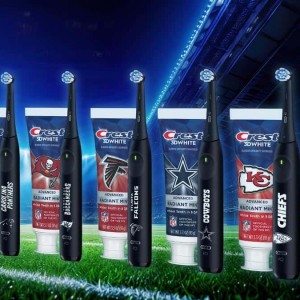
Oral-B and Crest, Official Oral Care Partners of the NFL, recently announced the launch of new special-edition products, giving fans even more ways to celebrate their love of the g
News 09 October 2026
Apex Dental Partners, a dental partnership organization supporting dentists and affiliated practices, has been named No.
News 09 October 2026

New education website and fully funded Swiss fellowship program debut at the 2026 Orthopaedic Trauma Association Annual Meeting in Nashville



Copyright © 2026 - All Rights Reserved
ISSN 2767-1178