


Peri-implant inflammation in waterpipe users and cigarette smokers
Objective
The aim of this study was to compare peri-implant clinical and radiographic status and levels of advanced glycation endproducts (AGEs) in peri-implant sulcular fluid (PISF) in waterpipe users and cigarette smokers.
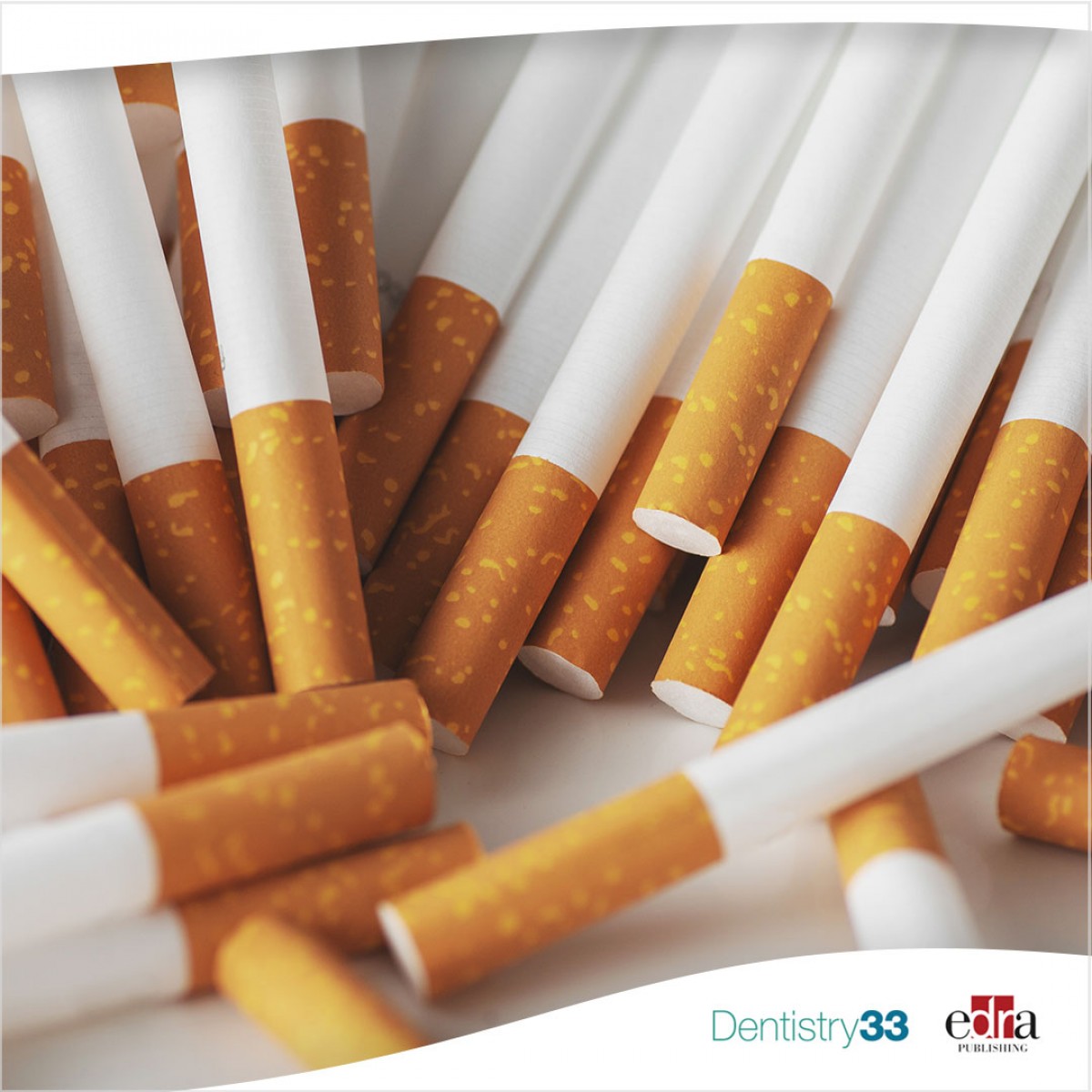
Combustible tobacco products are commonly smoked in the form of cigarettes. It is often demanding for cigarette smokers to quit smoking, as nicotine is addictive, and its withdrawal elicits unpleasant symptoms including state of confusion or nervousness, headache, and constipation.
Other modes of combustible tobacco product usage include the use of cigars, pipes, and waterpipes (also known as shisha, hookah, and narghile). Waterpipe usage is a traditional norm in Middle Eastern countries including Saudi Arabia, Qatar and Kuwait.
However, studies have reported that waterpipe usage is increasing in other countries including Brazil, the U.S., the United Kingdom and Australia.
Methods
Waterpipe users, cigarette smokers, and never smokers were included.
Self-reported current cigarette smokers, waterpipe users and never smokers having undergone dental implant therapy for oral rehabilitation were included. Current cigarette smokers were defined as individuals who had a smoking history of at least five pack-years. Current waterpipe users were defined as those who used a waterpipe at least once a day in the past four weeks. Never smokers were defined as individuals who had never used any type of nicotinic product and had never tried vaping/electronic nicotine delivery systems.
Demographic details were collected using a questionnaire. Characteristics of implants (dimensions, jaw location, depth of placement, insertion torque, and duration in function) were recorded. Peri-implant modified plaque and gingival indices (mPI and mGI), probing depth (PD), and crestal bone loss (CBL) were recorded in all groups. Volume of PISF and levels of AGEs were determined using standard techniques. Sample-size estimation was done on data from a pilot investigation, and correlation between clinicoradiographic and immunoinflammatory parameters was assessed using logistic regression models. Probability values <.05 were considered statistically significant.
Results
In all, 25, 25, and 24 cigarette smokers, never smokers, and waterpipe users, respectively, were examined. All participants were male and had comparable mean ages. Cigarette smokers and waterpipe users had a smoking history of 20.2 ± 3.5 years and 18.8 ± 0.6 years, respectively. The mPI (P < .01), CBL (P < .01), PD (P < 0.01), and mGI (P < .01) were significantly higher in cigarette smokers and waterpipe users than never smokers. There was no significant difference in clinicoradiographic status and AGE concentrations in waterpipe users and cigarette smokers. A statistically significant correlation was recorded between AGEs and PD in cigarette smokers (P < .01) and waterpipe users (P < .01).
Conclusions
Waterpipe usage is not less hazardous to peri-implant tissue health than conventional cigarette smoking. It is imperative to caution patients with dental implants about the detrimental effects of tobacco products on oral health.
 Tag
Tag
Related articles
Implantology 09 December 2022
Short tuberosity implants: survival rate in diabetic vs non-diabetic patients

By Valentina Viganò, University of Milan
Diabetes can affect implant success, in particular type 2, which is more widespread among the population.
Endodontics 02 February 2026
Implantology 20 January 2026
Smoking as a risk factor for dental implants and implant-related surgery

Cigarette smoking is known to adversely affect wound healing, and thus may jeopardize the success of dental implantation and implant-related oral surgery.
Products 27 November 2025
Neocis Unveils Next-Generation AI-Powered Robotic System for Dental Implants

Neocis, the pioneer behind the first and only U.S. FDA-cleared robotic system for dental implant surgery, today announced the launch and FDA approval of its next-generation robotic platform: Yomi...
Read more
Europe 27 September 2026 - 30 November -0001
Digital Dentistry Society Global Congress 2026: Event Preview and Professional Highlights

The Digital Dentistry Society Global Congress 2026 will take place from October 22, 2026 to October 24, 2026 in TBD, Rotating Europe, offering dental professionals a focused environment for...
Editorials 27 September 2026
Dentistry33 survey highlights replacement care, deep caries and evolving restorative workflows
Reader survey finds direct composites remain dominant, secondary caries is the leading reason for restoration replacement, and clinicians want more training in pulp preservation
Reader survey finds direct composites remain dominant, secondary caries is the leading reason for restoration replacement, and clinicians want more training in pulp preservation
Edra Professional Books 26 September 2026
Manual of oral surgery: A Practical Reference for Dental Professionals
Manual of oral surgery is an Edra professional dentistry reference focused on clinical practice, education and treatment planning.
Products 25 September 2026

Shofu Dental’s line of dental restorative materials now includes FX-LC, a next-generation, light-cure, resin-reinforced glass ionomer formulated to deliver high strength, efficient 4
News 25 September 2026

The scholarships are part of an ongoing workforce solutions strategy to help address the need for skilled dental hygienists



Copyright © 2026 - All Rights Reserved
ISSN 2767-1178