


Therapeutic Irrigant Procedures for Treating Apical Periodontitis (TIPTAP): A triple-blinded parallel-group randomized controlled phase I/II trial.
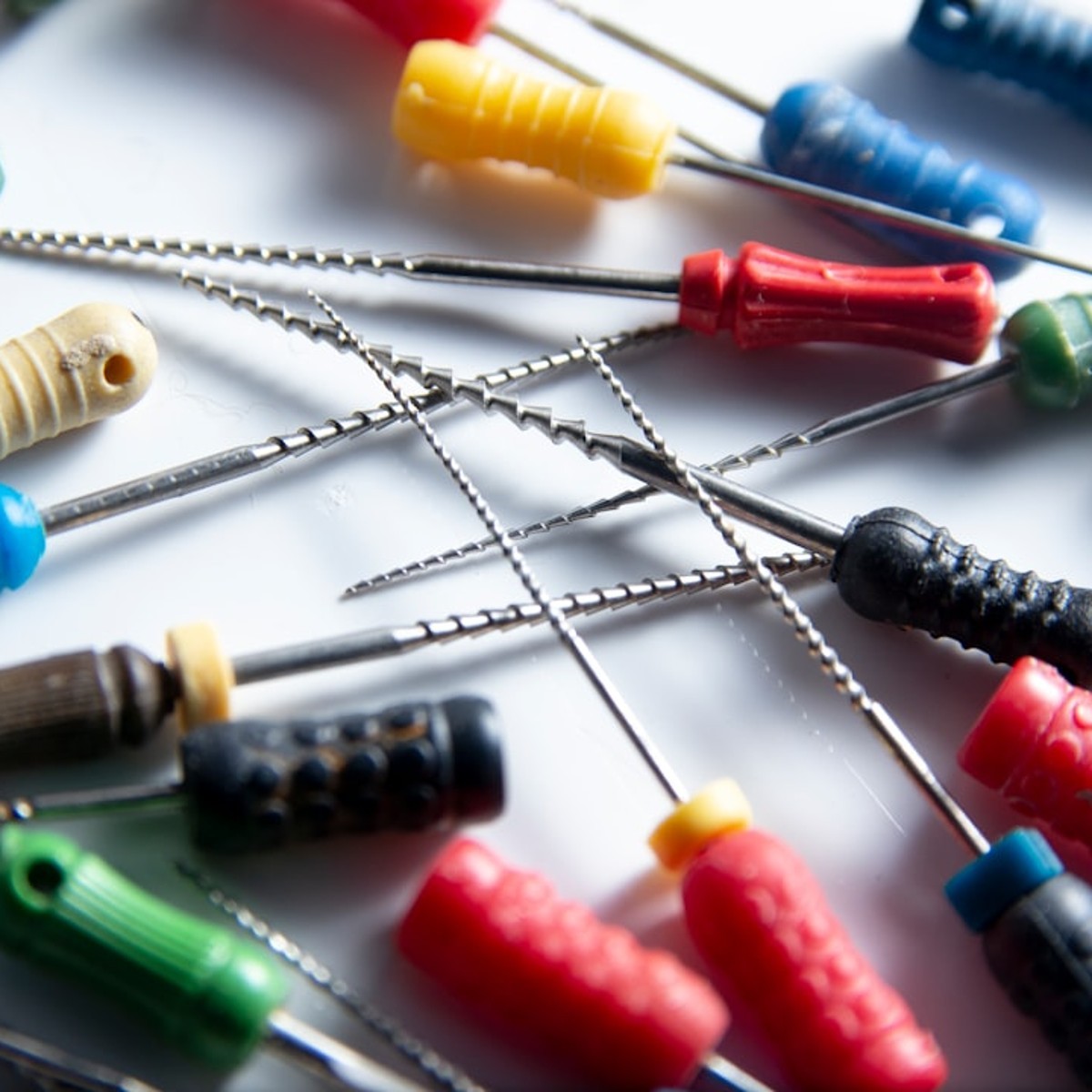
This peer-reviewed endodontics article summarizes clinical evidence from International endodontic journal (2025). It focuses on findings that may help dental professionals evaluate treatment decisions, patient outcomes, or clinical protocols.
Abstract
BACKGROUND: Solubilized endogenous dentine extracellular matrix components (dECMs) are potent mediators in pulp regeneration and could potentially promote similar healing effects in diseased periradicular tissues by upregulating local mesenchymal stem cell-derived regenerative events.
AIMS: (1) Determine if endodontic treatment outcomes with irrigation regimes promoting dECM release (17% ethylenediaminetetraacetic acid [EDTA]) are equivalent to conventional regimes (5.25% sodium hypochlorite [NaOCl]) in mature permanent teeth with asymptomatic apical periodontitis. (2) Explore changes in pain scores, expressions of periradicular tissue fluid (PTF)-derived inflammatory mediators, and volumtric changes in lesion size between the different irrigant regimes.
METHODS: Forty single-rooted teeth, from 37 healthy adults, were block randomized into parallel groups of irrigation with either 17% EDTA, optimized for dECM solubilization, or 5.25% NaOCl (n = 20). All other aspects of the endodontic protocol were standardized over two visits with 14 days of calcium hydroxide intracanal medicament. Patient-reported pain scores were recorded at six hours and then daily for one week post-instrumentation and post-obturation. PTF samples were collected pre-instrumentation and pre-obturation, where analyte profiles (pg/TPC) were determined using an O-link Target-48 cytokine array. Treatment outcomes were clinically and radiographically assessed with cone beam computed tomography at 1 year using dichotomous criteria (favourable/unfavourable) based on volumetric change in lesion size. Participants, operators and assessors were blinded, and per-protocol analyses were conducted using binary logistic regression models with initial alpha values for statistical comparisons set at p < .05.
RESULTS: A 90% recall rate was achieved at one year (NaOCl: 19; EDTA: 17). Favourable outcomes were observed in 89.5% of treatments using NaOCl and 94.1% of treatments using EDTA irrigation, with median lesion volume reductions of 92.5% (IQR: 67.33-99.13) and 95.84% (IQR: 78.81-100), respectively, (p > .05). Odds of unfavourable periradicular healing with EDTA irrigation were 0.53 [95% CI: 0.04-6.44; p > .05]. No serious adverse effects or atypical pain patterns were reported, although two acute exacerbations occurred post-instrumentation with NaOCl irrigation (p > .05). Target-48 panels consistently detected 15 inflammatory analytes in both groups (CCL-2, -3, -4; CSF-1; CXCL-8; HGF; IL-1β, -6, -18; MMP-1, -12; OLR-1; OSM; TNFSF-10; VEGF-A), all of which reduced pre-obturation. At this stage, IL-6 and -18 were significantly more abundant in the intervention group (p < .05).
CONCLUSIONS: Therapeutic irrigant regimes promoting dECM solubilization resulted in one-year treatment outcomes equivalent to conventional irrigant protocols with no serious adverse effects reported.
Key takeaway
Key takeaway: Because the evidence comes from a clinical trial design, the findings may be especially useful when comparing treatment approaches in daily practice.
Introduction from full text
Dentin constitutes the major component of teeth and forms a protective shield around the dental pulp. The organic matrix preceding the mineral phase is secreted by odontoblasts during tooth development, where each cell leaves a process behind that becomes embedded in the mineralized tissue, bringing about the tubular architecture of dentin. During dentinogenesis, odontoblasts produce collagen but also non-collagenous signaling molecules, which become fossilized in the matrix and preserve their bioactive potential over a lifetime 1 . Among others, cytokines, growth factors, neurotrophic proteins and extracellular matrix molecules like small integrin-binding ligand N-linked glycoproteins (SIBLINGs), small leucine-rich proteoglycans (SLRPs) and osteocalcin are present in human dentin 1 .
It is known that these signaling molecules are released and allowed to diffuse into the pulpal tissue via the dentinal tubules by decalcification of dentin in carious lesions or by application of alkaline pulp-capping agents or acidic etchants in dentin bonding agents 2 , 3 . The proteins released from dentin are believed to modulate immunoresponse, to exert chemotactic effects, to stimulate angiogenesis, cell proliferation and differentiation and thus to promote regenerative or reparative processes 4 – 7 .
Furthermore, dentin matrix proteins are exposed on root canal walls after conditioning with chelating agents such as EDTA. In regenerative endodontic procedures, bioactive proteins might contribute to tissue formation in young patients with immature roots and pulp necrosis after provocation of bleeding into the canal 8 , 9 . The exact role of bioactive proteins in the complex processes of tissue response remains to be better understood.
The approach of decalcifying the extracellular matrix has also been used to extract proteins from human dentin for laboratory use 6 , 10 . Several groups applied similar extraction methods to isolate matrix components from dentin powder and determine their composition, however, the efficiency of the applied techniques as well as methodical restrictions regarding protein fractionation limited the protein coverage. So far, not more than 289 proteins have been identified in human dentin 10 – 12 .
Proteomic analysis of complex samples such as dentin is challenging as protein coverage is highly restricted by ion suppression and a limited loading capacity of the used systems. Thus, a mitigation of sample complexity by separation of proteins into different fractions allows for facilitated analysis by liquid chromatography-tandem mass spectrometry (LC-MS/MS).
A common prefractionation method that has been used for proteomic analysis of human dentin 10 – 12 is sodium dodecyl sulfate polyacrylamide gel electrophoresis (SDS-PAGE). With this technique, proteins are denatured by SDS and separated in a polyacrylamide gel according to their molecular weight. The resulting gel lane can be sliced into portions related to the molecular weight, digested trypticly (in-gel) and submitted to mass spectrometry. Another method, OFFGEL isoelectric focusing (IEF), can separate complex protein samples based on their different isoelectric point (pI). With this method, peptides distribute according to their pI in liquid compartments that are connected by a gel with an immobilized pH gradient 13 . Protein fractions can finally be recovered from the liquid phase for further analysis. Strong cation exchange chromatography (SCX) is a third possibility to fractionate complex protein samples at a fixed pH. Peptide mixtures flow through analytical SCX columns with different elution times based on their size and charge. Different fractions can be submitted to LC-MS/MS 14 .
Thus, prefractionation enables a “simplified” mixture of proteins which can be analyzed more successfully by mass spectrometry due to a reduction of signal-to-noise ratio and protein interference. The combination of multiple fractionation methods before tandem mass spectrometry consequently enables a more comprehensive detection and can increase total protein coverage 14 .
Thus, the main focus of this study was to cover the human dentin proteome more comprehensively utilizing different physical and chemical properties of proteins by combination of three prefractionation methods: SDS-PAGE, IEF and SCX. In addition to a comparison of the advanced fractionation methods, proteins detected in human dentin will be organized to identify the most represented protein classes as well as their presumable functions in the dentin pulp complex.
Peer-reviewed source
Satnam Singh Virdee, Nasir Zeeshan Bashir, Melissa M Grant, Paul R Cooper, Phillip L Tomson
International endodontic journal. 2025
DOI: 10.1111/iej.14233
PMID: 40229989
PubMed: https://pubmed.ncbi.nlm.nih.gov/40229989/
Image: Ozkan Guner (Unsplash)
 Related articles
Endodontics 19 October 2026
This peer-reviewed endodontics article summarizes clinical evidence from International endodontic journal (2026). It focuses on findings that may help dental professionals evaluate treatment...
Endodontics 19 October 2026

This peer-reviewed endodontics article summarizes clinical evidence from BMC oral health (2026). It focuses on findings that may help dental professionals evaluate treatment decisions, patient...
Endodontics 12 October 2026
This peer-reviewed endodontics article summarizes clinical evidence from Journal of dentistry (2026). It focuses on findings that may help dental professionals evaluate treatment decisions, patient...
Endodontics 05 October 2026
This peer-reviewed endodontics article summarizes clinical evidence from Journal of dentistry (2026). It focuses on findings that may help dental professionals evaluate treatment decisions, patient...
Endodontics 01 October 2026
This peer-reviewed endodontics article summarizes clinical evidence from International endodontic journal (2026). It focuses on findings that may help dental professionals evaluate treatment...
Read more
News 19 October 2026

Milestone achieved approximately two years after full commercial launch reflects growing surgeon adoption and expanding use of EnFix across orthopedic sports medicine applications.
Editorials 19 October 2026
Expanded coverage: Texas A&M’s Plemons named 2026 Texas Dentist of the Year

Sometimes a small act of generosity can make a tremendous impression, especially on a 7-year-old.
Endodontics 19 October 2026
This peer-reviewed endodontics article summarizes clinical evidence from International endodontic journal (2026). It focuses on findings that may help dental professionals evaluate treatment...
Endodontics 19 October 2026
This peer-reviewed endodontics article summarizes clinical evidence from BMC oral health (2026). It focuses on findings that may help dental professionals evaluate treatment decisions, patient...
Products 19 October 2026




Copyright © 2026 - All Rights Reserved
ISSN 2767-1178