


Crown discoloration promoted by materials used in regenerative endodontic procedures and effect of dental bleaching: spectrophotometric analysis
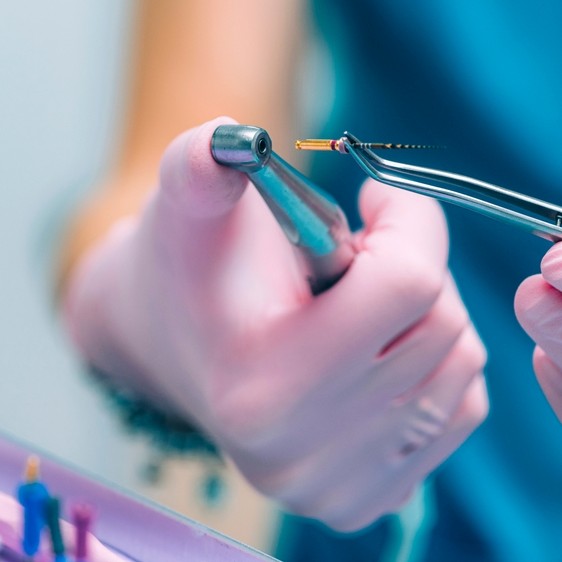
Regenerative endodontic procedure (REP) has been proposed as a new approach to treat immature permanent teeth. However, materials used in REP for root canal disinfection or cervical sealing may induce tooth discoloration.
Objectives
To assess tooth crown’s color after intracanal treatment with triple antibiotic paste (TAP) or calcium hydroxide (CH); cervical sealing with glass ionomer cement (GIC) or mineral trioxide aggregate (MTA); and bleaching with carbamide peroxide.
Material and Methods
After pulp removal and color spectrophotometer measurement, 50 bovine incisors were divided into 4 experimental groups and one control (untreated). Experiments were performed in phases (Ph). Ph1: TAP (ciprofloxacin, metronidazole, minocycline), TAPM (ciprofloxacin, metronidazole, amoxicillin), DAP (ciprofloxacin, metronidazole), or CH treatment groups. After 1 and 3 days (d); 1, 2, 3 weeks (w); and 1, 2, 3 and 4 months (m), color was measured and medications were removed. Ph2: GIC or MTA cervical sealing, each using half of the specimens from each group. Color was assessed after 1d, 3d; 1w, 2w, 3w; 1m and 2m. Ph3: Two bleaching sessions, each followed by color measurement. Data were analyzed with ANOVA and post-hoc Holm-Sidak method.
Results
Ph1: Specimens of TAP group presented higher color alteration (ΔE) mean than those of TAPM group. No significant difference was found among TAP or TAPM and CH, DAP or Control groups. Ph2: cervical sealing materials showed no influence on color alteration. Ph3: Different ΔE means (from different groups), prior to bleaching, became equivalent after one bleaching session.
Conclusions
TAP induces higher color alteration than TAPM; color alteration increases over time; cervical sealing material has no influence on color alteration; and, dental bleaching was able to recover, at least partially, the tooth crown’s color.
Authors: Luciane Geanini Pena dos SANTOS, Wilson Tadeu FELIPPE, Beatriz Dulcineia Mendes de SOUZA, person Andrea Cristina KONRATH, Mabel Mariela Rodríguez CORDEIRO, Mara Cristina Santos FELIPPE
Source: https://www.scielo.br/
 Tag
Tag
Related articles
Endodontics 02 May 2025

Immature teeth are susceptible to infections due to trauma, anatomic anomalies, and caries. Traditional endodontic therapies for immature teeth, such as apexification procedures, promote resolution...
Endodontics 28 October 2024

An immature tooth with pulpal necrosis and apical periodontitis presents a unique challenge to the endodontist. Endodontic treatment options consist of apexification, apical barriers, or more...
Endodontics 10 September 2023
Regenerated treated incisors subjected to orthodontic movement

With an increasing number of anterior traumatized teeth treated with regenerative endodontic procedures nowadays, orthodontic movement of such teeth is expected to become a common scenario in...

In 2004, a new technique was introduced for the treatment of non-vital immature teeth, termed a regenerative endodontic procedure, which allows for continued root maturation in both length and...
Read more

Continuous innovation across the DEXIS ecosystem helps clinicians work with greater clarity, confidence, and efficiency
News 23 October 2026

CrownPoint Partners announced the successful closing of a $9.2 million, five-property dental sale-leaseback portfolio located throughout Michigan.
News 23 October 2026
Dentsply Sirona, Midwest Dental Expand Technology Relationship

Beginning November 1, Dentsply Sirona will expand its long-standing relationship with Midwest Dental Equipment & Supply beyond consumables to include its complete technology portfo
Editorials 23 October 2026
Honoring Excellence: Graduation Awards for CU Anschutz Dental Students and Faculty

As the University of Colorado Anschutz School of Dental Medicine celebrates the graduating DDS Class of 2025, we are proud to recognize the students and faculty members whose excep
Implantology 23 October 2026
This peer-reviewed implantology article summarizes clinical evidence from Clinical oral implants research (2026). It focuses on findings that may help dental professionals evaluate treatment...



Copyright © 2026 - All Rights Reserved
ISSN 2767-1178