


Root canal retreatments for persistent secondary periapical lesions: single visit or 2 visits with interappointment medication ?
Lara Figini
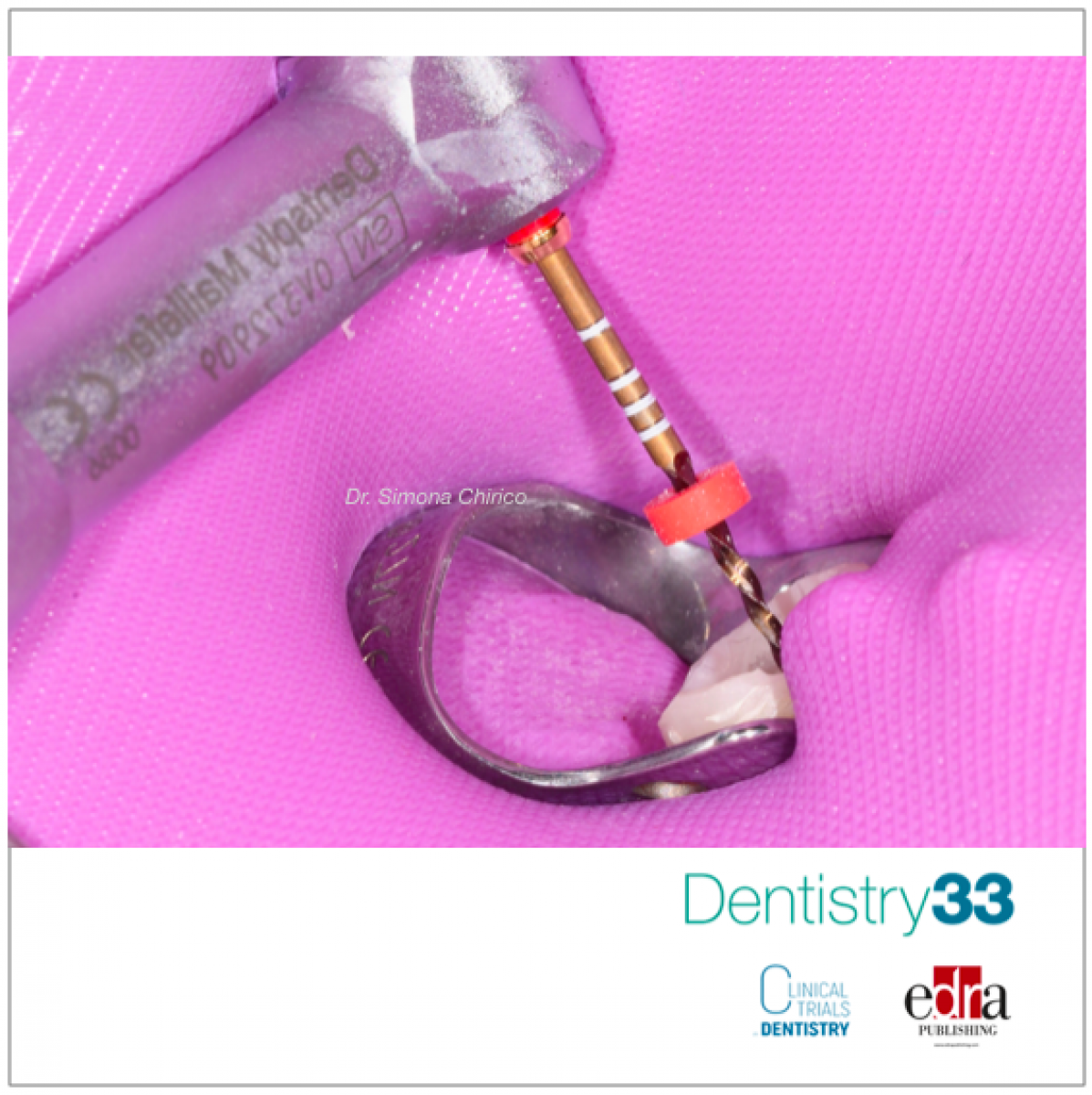
One of the main objectives of root canal therapy is to eliminate the infectious process by reducing the microbiota contained in the root canal systems to compatible level with the healing of periapical tissues. However, some organisms originally present in necrotic tissues may survive to chemomechanical procedures or may persist in canals or in areas left “un-instrumented” in the root canal system.
Persistent bacteria can induce new inflammation in the periapical region or contribute to the perpetuation of the infectious process even after root canal obturation. Periapical periodontitis associated with teeth already endodontically treated with root canal seal is commonly referred to as secondary and persistent, and is termed post-treatment periapical periodontitis (PTAP). For a long time, the literature showed that the PTAP microbiota differed from the microbiota reported for primary endodontic infections, suggesting that unlike the latter microbiota (composed of 1 or a few bacterial species, generally gram-positive, with apparent predominance of facultative species o
anaerobic) that of PTAP is typically mixed where infections are sustained in particular by gram-negative anaerobics. However, recent studies on this topic have revealed that teeth with PTAP have an equally diverse bacterial community, including gram-positives and gram-negative anaerobics. These studies support the heterogeneous etiology of persistent / secondary infection, where no single species can be considered the main endodontic pathogen, where instead multiple bacterial combinations act synergistically to increase their virulence, playing an important role in the maintenance of the disease.
Specifically, lipopolysaccharide (LPS) and lipoteic acid (LTA) are 2 virulence factors involved in the development and maintenance of apical periodontitis. LPS is the major component of the outer cell wall of gram-negative bacteria, while LTA makes up the cell wall of gram-positive bacteria. Despite the differences in terms of structure and transcription genes, both have remarkable pathogenic properties and are capable of causing damage to periradicular tissues.
Given the heterogeneity and complexity of the microbiota of persistent secondary periapical periodontitis, is it better to retreat these teeth in a single session or in two sessions with the aid of intermediate dressing?
Materials and methods
In a recent randomized clinical trial, published on the Journal of Endodontics, January 2022, the authors compared the efficacy of endodontic retreatment of teeth with persistent secondary apical periodontitis (PTAP) performed in 1 visit compared to that performed in 2 visits. The reduction of culturable bacteria (colony-forming units [CFU]), lipopolysaccharides (LPS), lipoteic acid (LTA) and the volume of the periapical lesion (mm3) after 18 months of follow-up were analyzed.
The authors selected forty patients diagnosed with PTAP and randomly divided into the following 2 groups:
-Group 1: root canal retreatment performed in a single visit
-Group 2: root canal retreatment performed in 2 visits with intermediate placement of calcium hydroxide dressing for 14 days.
Cone-beam tomographic scans were performed preoperative and after 18 months of follow-up.
Microbiological samples were collected before and after root canal procedures. The LAL test (Limulus Amebocyte Lysate Test) was used to quantify endotoxins (EU / mL). LTA levels were measured using the enzyme-linked immunosorbent assay (pg / mL). Culture techniques were used to determine culturable bacteria by counting CFU (CFU / mL). The volume of periapical lesions was analyzed at the start of the study and at the follow-up at 18 months after treatment through the ITK-SNAP program (Cognitica, Philadelphia, PA).
Results
Basal values higher than those collected after the retreatment protocol for all investigated parameters were highlighted for all samples. Higher bacterial load and lower LTA level were found in the 2-visit Group after the retreatment protocol (P, .05), with no statistical differences between groups in endotoxin levels and lesion volume periapical (mm3) at the follow-up of 18 months, analyzed by cone beam computed tomography (P. .05).
No significant differences were found regarding the following parameters: gender, age, type of tooth, diagnosis, preoperative volume of the lesion, quality of the filling and type of coronal restoration.
Regarding the time elapsed since the previous treatment, 57.5% of cases (n = 23) were treated 3 and 5 years earlier, 30% (n = 12) from 5-10 years earlier, and 12, 5% (n = 5) more than 10 years earlier.
Conclusions
From the data of this study, which must be confirmed in other similar studies, it can be concluded that endodontic retreatment in 1 or 2 visits shows equally favorable periapical healings at 18 months, with no statistically significant differences between the two groups.
Clinical implications
This clinical study revealed that endodontic treatment performed in both 1 visit and 2 visits is able to reduce the volume of periapical lesions, regardless of the bacterial load levels and the levels of LPS and LTA present before root canal sealing.
for additional information: Effectiveness of 1-Visit and 2-Visit Endodontic Retreatment of Teeth with Persistent / Secondary
 Tag
Tag
Related articles
Endodontics 01 October 2021
Single versus multiple visit: which is the best endodontic approach with necrotic teeth?

Endodontic postoperative pain is an unpleasant sensation that occurs after root canal treatment. Endodontic postoperative pain occurs in 3 to 58% of the cases- depending on many individual variables-...
Read more

Continuous innovation across the DEXIS ecosystem helps clinicians work with greater clarity, confidence, and efficiency
News 23 October 2026
CrownPoint Partners announced the successful closing of a $9.2 million, five-property dental sale-leaseback portfolio located throughout Michigan.
News 23 October 2026
Dentsply Sirona, Midwest Dental Expand Technology Relationship

Beginning November 1, Dentsply Sirona will expand its long-standing relationship with Midwest Dental Equipment & Supply beyond consumables to include its complete technology portfo
Editorials 23 October 2026
Honoring Excellence: Graduation Awards for CU Anschutz Dental Students and Faculty

As the University of Colorado Anschutz School of Dental Medicine celebrates the graduating DDS Class of 2025, we are proud to recognize the students and faculty members whose excep
Implantology 23 October 2026
This peer-reviewed implantology article summarizes clinical evidence from Clinical oral implants research (2026). It focuses on findings that may help dental professionals evaluate treatment...



Copyright © 2026 - All Rights Reserved
ISSN 2767-1178