


Saliva diagnostics
Background
Each day, humans produce approximately 0.5 through 1.5 liters of saliva, a biofluid that is rich in biological omic constituents. Our lack of understanding how omic biomarkers migrate from diseased tissue to the saliva has impeded the clinical translation of saliva testing. Although such biomarkers must be conveyed via the vascular and lymphatic systems to the salivary glands, the molecular mechanisms that underlie this transport remain unclear. Although COVID-19 highlighted the need for rapid and reliable testing for infectious diseases, it represents only one of the many health conditions that potentially can be diagnosed using a saliva sample.
Types of studies reviewed
The authors discuss salivaomics, saliva exosomics and the mechanisms on which saliva diagnostics are based and introduce a novel electrochemical sensing technology that may be exploited for saliva liquid biopsy.
Results
The utility of saliva for screening for lung cancer is under investigation. Saliva testing may be used to stratify patients, monitor treatment response, and detect disease recurrence. The authors also highlight the landscapes of saliva-based SARS-CoV-2 testing and ultrashort cell-free DNA and outline how these fields are likely to evolve in the near future.
Practical implications
Breakthroughs in the study of saliva research, therefore, will facilitate clinical deployment of saliva-based testing.
Taichiro Nonaka and David T.W. Wong. "Saliva diagnostics: Salivaomics, saliva exosomics, and saliva liquid biopsy." JADA. August 2023. https://doi.org/10.1016/j.adaj.2023.05.006
 Related articles
Products 13 December 2024
Pusan National University Researchers Discover Potential Biomarkers for Peri-Implantitis

The number of people receiving dental implants is increasing annually as more individuals become aware of the advantages of replacing missing teeth.
Oral Hygiene & Prevention 16 August 2023
Salivary cortisol, anxiety in Canadian dentists during COVID-19

The dental profession has endured unprecedented disruption amid COVID-19. Novel stressors have included a high risk of occupational exposure to COVID-19, financial losses, and stricter infection...
Periodontology 07 June 2023
Peri-implant diseases diagnosis, prognosis and dental implant monitoring
The diagnosis of peri-implantar and periodontal relies mainly on a set of clinical measures and the evaluation of radiographic images. However, these clinical settings alone are not sufficient to...
Oral pathology 01 February 2023
By Arianna Bianchi
In a study published in Dentomaxillofacial Radiology in May 2020, the authors evaluated the effectiveness of ultra-high frequency ultrasound on assessing oral mucosa.

Researchers at the University of Birmingham are developing a rapid test to identify the presence of periodontal disease.
Read more
Products 22 September 2026

News 22 September 2026
New FlexPayments features help Open Dental practices convert more diagnosed treatment into scheduled care and automatically recover credit card processing fees they’ve been absorbi
News 22 September 2026
The Accreditation Association for Ambulatory Health Care (AAAHC) has accredited Momenta Oral & Maxillofacial Surgery, a full-scope oral and maxillofacial surgery (OMS) practice wit
Editorials 22 September 2026
Tooth travelers: Students sharpen their skills on dental mission trips over the summer breaks
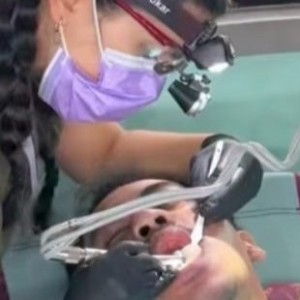
A busy dental student scheduled to graduate next May, few would fault Mackenzie “Kenzie” Bankes for heading to Jamaica for a few lazy days to enjoy sandy beaches and misty mountain
Oral pathology 22 September 2026
This peer-reviewed oral pathology article summarizes clinical evidence from Oral oncology (2026). It focuses on findings that may help dental professionals evaluate treatment decisions, patient...



Copyright © 2026 - All Rights Reserved
ISSN 2767-1178