


NYU researchers modify drug to enter cells, treat pain
By NYU News
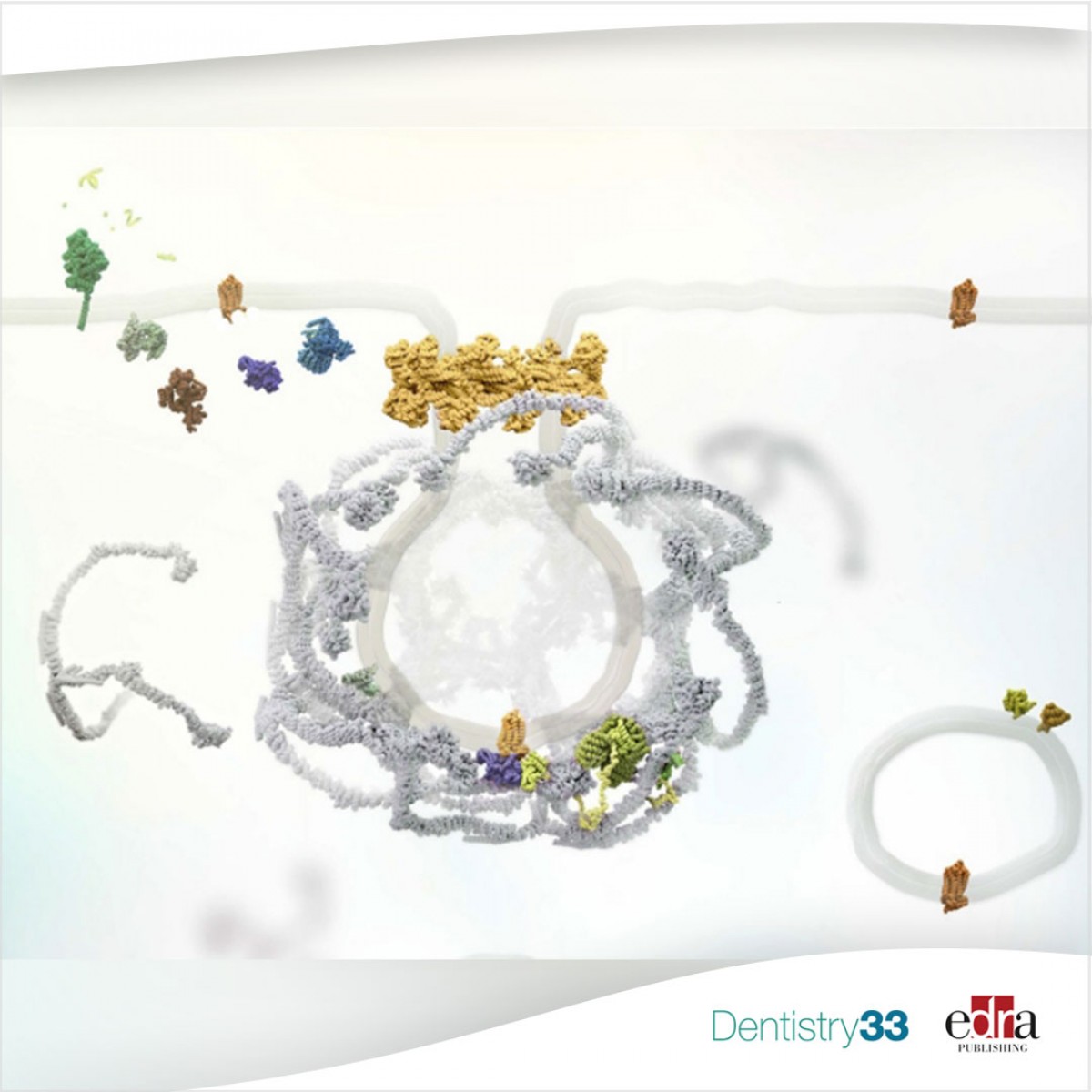
Altering the chemical properties of an anti-nausea drug enables it to enter an interior compartment of the cell and provide long-lasting pain relief, according to a new study led by researchers at NYU College of Dentistry’s Pain Research Center.
The study, published in the Proceedings of the National Academy of Sciences (PNAS), illustrates how pain signaling occurs inside cells rather than at the surface, highlighting the need for drugs that can reach receptors within cells.
G protein-coupled receptors (GPCRs) are a large family of proteins that regulate many processes in the body and are the target of one third of clinically used drugs. A subset of these receptors plays an important role in pain, including the neurokinin-1 (NK1) receptor, which is activated by a pain-transmitting neuropeptide called substance P.
Several FDA-approved drugs that target the NK1 receptor are used to prevent nausea and vomiting associated with chemotherapy or surgery. Scientists previously hoped that the NK1 receptor would be a promising target for treating pain—but drugs targeting the receptor failed to control pain in clinical trials in the 1990s and early 2000s.
One reason why drugs targeting the NK1 receptor may not have been effective against pain is that most drugs block receptors at the surface of cells. However, researchers at the NYU Pain Research Center have shown that GCPRs signal pain not from the surface of cells, but from compartments inside the cell called endosomes.
“Sustained signaling in endosomes is necessary for the hyperexcitability of pain-sensing neurons involved in chronic pain,” said Nigel Bunnett, professor and chair of the Department of Molecular Pathobiology at NYU College of Dentistry and the study’s senior author. “As a result, treating pain may require the development of drugs that penetrate cells, are retained in endosomes, and disrupt signaling inside the cell.”
In the PNAS study, the researchers focused on two drugs, aprepitant and netupitant, both NK1 receptor antagonists used to prevent nausea and vomiting. Studying NK1 receptors in the lab has the benefit of clinically available drugs that target the receptor, but also comes with challenges, as there are large differences between the NK1 receptor in mice and humans. To overcome this, the researchers genetically modified mice to express the human NK1 receptor.
Bunnett and his colleagues had previously shown that encapsulating aprepitant in nanoparticles could deliver the drug to endosomes to block pain, but in this study, aprepitant only briefly disrupted endosomal signaling in cellular studies and stopped pain in mice for short periods.
Modifying the second drug, netupitant, held much more promise. The researchers changed the chemical properties of the drug to make it more capable of penetrating a cell’s lipid membrane. They also altered the charge on the molecule within an acidic environment so that once the drug entered the acidic environment of an endosome, it would stay trapped inside and accumulate.
These changes allowed the modified netupitant to readily penetrate cells to reach the endosome and block signaling of the NK1 receptor in endosomes with a much more prolonged effect in cells. The altered netupitant also had a more potent and long-lasting analgesic effect in mice than aprepitant and the regular form of netupitant.
In another experiment, the researchers studied mice with a different type of NK1 receptor on the outer membrane of the cell, rather than inside. These mice were more resistant to pain than those with human NK1 receptors inside the cell, illustrating the importance of endosomes in signaling pain and the need for treatments that can penetrate cells.
The researchers are continuing this research and other studies in animal models to develop new therapies for pain that block GCPRs in endosomes.
“Although we focused on the neurokinin-1 receptor, our findings are likely applicable to many G-protein coupled receptors because many of them show sustained signaling within cells, and therefore require drugs that can enter cells and block the receptors in endosomes,” said Bunnett.
Additional study authors include Alan Hegron, Chloe J. Peach, Raquel Tonello, Shavonne Teng, Rocco Latorre, Dane D. Jensen, Alex R. B. Thomsen, and Brian L. Schmidt of NYU College of Dentistry; Philipp Seemann, Harald Huebner, Dorothee Weikert, and Peter Gmeiner of Friedrich-Alexander Universität Erlangen-Nürnberg in Germany; and Jeanette Rientjes, Nicholas A. Veldhuis, Daniel P. Poole, and Wendy L. Imlach of Monash University in Australia.
The research was supported by the National Institutes of Health (NS102722, DE026806, DK118971, DE029951), the U.S. Department of Defense (W81XWH1810431, W81XWH2210239), the National Health and Medical Research Council (NHMRC APP1125877, APP1139586) and the Australian Research Council (ARC DP190102854). Bunnett is a founding scientist of Endosome Therapeutics Inc. Research in Bunnett’s laboratory is funded, in part, by Takeda Pharmaceuticals International.
About NYU College of Dentistry
Founded in 1865, New York University College of Dentistry (NYU Dentistry) is the third oldest and the largest dental school in the US, educating nearly 10 percent of the nation’s dentists. NYU Dentistry has a significant global reach with a highly diverse student body. Visit dental.nyu.edu for more.
 Related articles
Much like EMTs rushing to the scene after an accident, stem cells hurry to the site of a skull fracture to start mending the damage. A new finding has uncovered the signaling mechanism that triggers...
Oral pathology 24 October 2025
Isolation and characterization of dental pulp stem cells from a supernumerary tooth
Dental pulp stem cells (DPSCs) were primarily derived from the pulp tissues of primary incisors and permanent third molar teeth, whereas no report to our knowledge has yet been documented on deriving...
Oral pathology 07 February 2024

The characteristics of a stem cell are the potential for multidifferentiation (ability to differentiate into different cell types) and the capacity for self-renewal (ability to generate daughter stem...

The innovative therapy is made possible by the discovery of the precise region where a regulatory protein binds to the NaV1.7 sodium ion channel to control its activity.
Oral surgery 21 June 2023

Current literature has shown a direct association between biomarkers and adverse stimuli that determine anxiogenic responses.
Read more
Products 22 September 2026

News 22 September 2026

New FlexPayments features help Open Dental practices convert more diagnosed treatment into scheduled care and automatically recover credit card processing fees they’ve been absorbi
News 22 September 2026

The Accreditation Association for Ambulatory Health Care (AAAHC) has accredited Momenta Oral & Maxillofacial Surgery, a full-scope oral and maxillofacial surgery (OMS) practice wit
Editorials 22 September 2026
Tooth travelers: Students sharpen their skills on dental mission trips over the summer breaks

A busy dental student scheduled to graduate next May, few would fault Mackenzie “Kenzie” Bankes for heading to Jamaica for a few lazy days to enjoy sandy beaches and misty mountain
Oral pathology 22 September 2026

This peer-reviewed oral pathology article summarizes clinical evidence from Oral oncology (2026). It focuses on findings that may help dental professionals evaluate treatment decisions, patient...



Copyright © 2026 - All Rights Reserved
ISSN 2767-1178