


Russia-Ukraine crisis: what to do?
Author: Luigi Campopiano
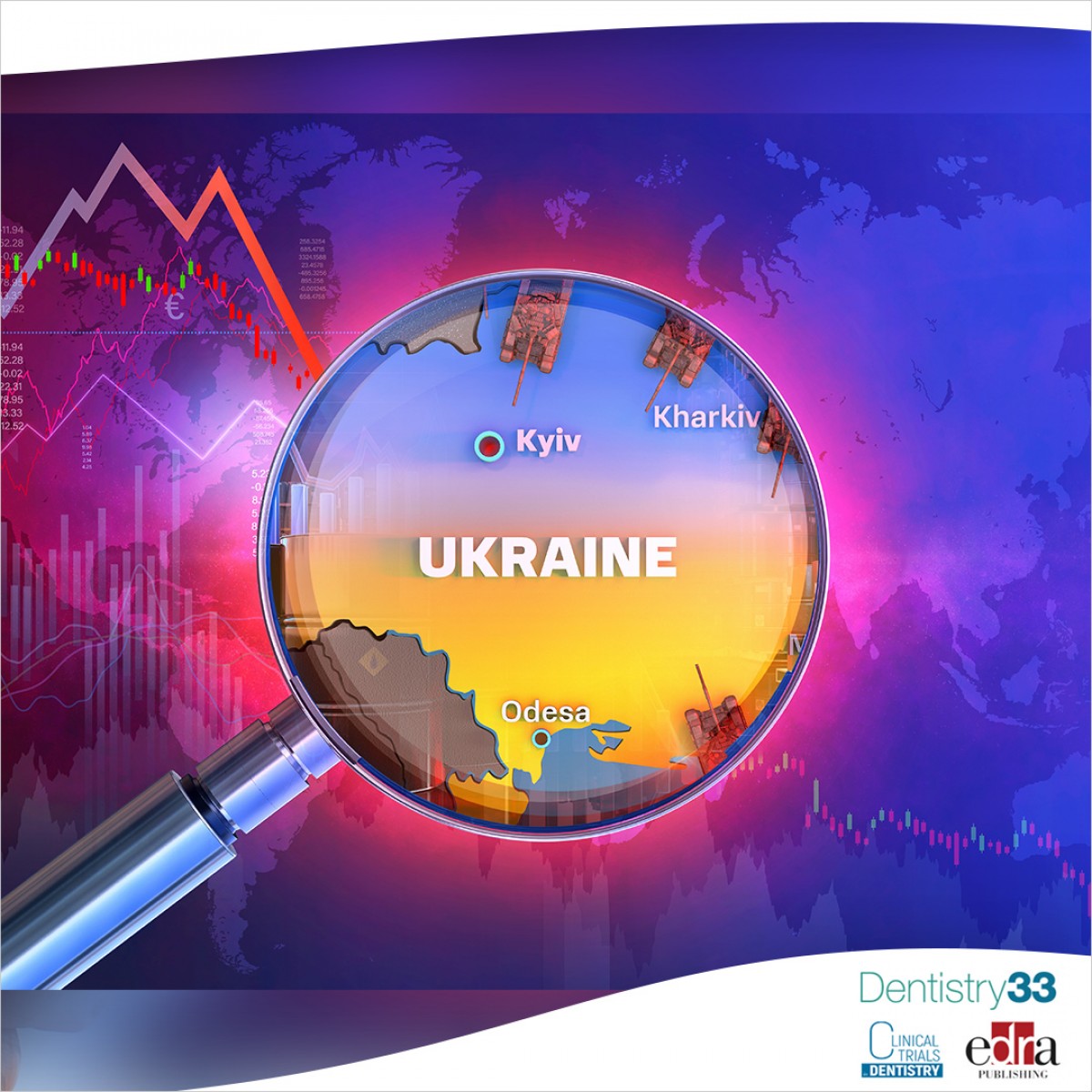
We are experiencing dramatic days from a human point of view, with the concern that it is at the highest levels. All of us hope that what is happening in Ukraine will last as little as possible, taking with it the least number of victims.
Looking at what has happened in diversified stock markets since the outbreak of the main war conflicts, starting from the Second World War, we can take many ideas that, of course, do not calm the drama of the hours we are living through.
In summary, these situations have caused losses of about 22% on average over 10 months, and then see immediately subsequent increases of over 120% in the next 50 months.
As represented by the figure below, the economy has always adapted to any situation it has had to face, growing over time and dragging the stock indices into this trend which, it should be remembered, represent the value of listed companies that produce goods and services for the world with a continuous progression.
There is, however, a psychological problem, well studied by behavioral finance: for investors, the perception is that the financial markets, periodically subject to market fluctuations, move within a horizontal track.
In reality, this is not the case, and this is because, as demonstrated by Daniel Kahneman (Nobel Prize in Economics in 2002), we are programmed so that losses cause twice as much pain as the joy that gains of the same magnitude produce: here is the which is why, in times like these (you buy at a discount) there is still a lot of liquidity in the current accounts of Italians (over 1,800 billion euros), instead of taking advantage of the favorable moment, taking into account their time horizons.
Reflecting rationally, we know with certainty that diversification and time horizon allows us to always win in every historical period: moments of volatility represent an incremental factor of return.
Fear is the worst enemy for our investment choices: the natural evolution of hundreds of thousands of years has built the brain in such a way that certainties are not understandable by those who do not know the nature of human behavior (who is not an expert on behavioral finance). If the fear in the days of uncertainty increases and works asymmetrically, the certainty that the investments quoted in a suitable time horizon are the best investment is not perceived and produces what economists call the risk premium ("fear reward"): we want extra returns on the part of the stock market, to compensate for the greater fear of a downturn in some moments. In all cases where the stock market falls, such falls increase fear and fuel the risk premium, which never disappears: this is why it is difficult to maintain an equity investment over time unless be supported by a professional in the sector, who can avoid losses due to choices dictated by fear.
For a person who is not followed by a consultant capable of guiding him towards ethical financial choices, another difficulty is represented by the fact that short-term forecasts are difficult to make in the field of investments. If this were not the case, it would not make sense. Diversify. Professionals who consult in other fields have the best solution in the short term, while in finance, only in the long term do you have certainties. In the life of ordinary people, short-term forecasts are the safest ever. In contrast, as we move towards the future, forecasts become increasingly bleak: it is exactly the opposite in finance. The role of the financial advisor is to translate all this into virtuous behavior, useful for the life projects of savers: today it is even more important, as the liquidity in the account is equivalent to a certain loss in real terms, in the light of inflation close to 5%.
 Related articles
News 16 February 2026

Clerri, the dental industry’s largest and most trusted membership platform, today announced the launch of an advanced marketing toolkit designed to help dental practices bridge the gap between...
News 19 September 2025

Specialist business property adviser, Christie & Co, has launched its Dental Market Review 2025 report, which offers a panoramic view of the UK dental business sector, spotlighting important...
Products 07 July 2025

The global dental 3D printing market, valued at $3.96 billion in 2025, is expected to surge to $10.06 billion by 2030, growing at a CAGR of 20.5%.
News 24 June 2025

The global Dental Soft-tissue Regeneration Market, valued at US$0.36 billion in 2024, stood at US$0.38 billion in 2025 and is projected to advance at a resilient CAGR of 6.8% from 2025 to 2030,...
Products 27 February 2025
Scott Leune Announces DentalMarketing.com as the Official Sponsor of The Dental CEO Podcast

Scott Leune is proud to announce DentalMarketing.com as the official sponsor of The Dental CEO Podcast, a new platform dedicated to providing dentists with the strategies, insights, and leadership...
Read more
Europe 11 October 2026 - 30 November -0001
Scandinavian Dental Fair 2026: Event Preview and Professional Highlights

The Scandinavian Dental Fair 2026 will take place from November 11, 2026 to November 13, 2026 in TBD, Sweden/Denmark, offering dental professionals a focused environment for continuing education,...
Edra Professional Books 10 October 2026

Esthetics and function in complete denture prosthesis is an Edra professional dentistry reference focused on clinical practice, education and treatment planning.
Products 09 October 2026

Oral-B and Crest, Official Oral Care Partners of the NFL, recently announced the launch of new special-edition products, giving fans even more ways to celebrate their love of the g
News 09 October 2026

Apex Dental Partners, a dental partnership organization supporting dentists and affiliated practices, has been named No.
News 09 October 2026

New education website and fully funded Swiss fellowship program debut at the 2026 Orthopaedic Trauma Association Annual Meeting in Nashville



Copyright © 2026 - All Rights Reserved
ISSN 2767-1178