


Time is on my side
Massimo Gagliani

Time is the tyrant of every life. The ancient ones identified in Cronus or Kronos, who devoured his own children, or the new blood to make the species evolve. It’s the unavoidability in the passage of time.
Time, in professional lives, is the only real resource to rely on. Optimizing time becomes an absolute duty and observing with curiosity all the procedures which, offering equal quality, can reduce operating time remains a professional duty. Ultimately, all this means offering patients affordable standards of care with interesting and favorable paybacks, in terms of working time, for us and for them.
Precisely on this side, I believe we will have to climb the mountain of the diffusion of dental training information. Certainly not by fueling false truths but by making explicit how much, precisely in terms of time, certain production realities are today able to deliver both to dentistry and to the patient.
Innovative and sustainable treatment paths will have to represent the cornerstones of a dental knowledge that we persist in defining as the future, but which instead represents the basis of a reality on which the next coming dentistry will have to be designed. We will scrape our teaching from all those intellectual ballasts that still afflict a way of thinking backdated to the last decade.
I say this as a spur to us who, guiltily and for too long, have attributed certain procedures to selected niches while these same procedures, the digital ones primarily, should be the founding basis of a training course that looks with a disenchanted eye at dentistry of the 30s.
There are millions of aphorisms about time. I choose “Time is on my side,” the title of a song performed by the Rolling Stones in a lysergic period of their production.
It was not their offspring and had a very down-to-earth meaning, dealing with the end of a love affair. But in its proposition, the song had – through the challenging face of a beardless Jagger and in the sonorous arrogance of the inspired guitars of Keith Richards and Brian Jones – a desire to look to the future with the youthful arrogance that only those times produced.
With the benefit of history and the experience gained, recalling that adventurous and ambitious attitude could be useful to move towards the new Pillars of Hercules of dentistry.
 Related articles
News 07 August 2026
National trauma data show Medicaid coverage rose from 16% to 24% after ACA implementation, while self-pay cases declined, suggesting broader insurance access for patients needing u

Your website is your virtual storefront and, more often than not, a patient’s first impression of your practice.
Oral surgery 10 April 2026
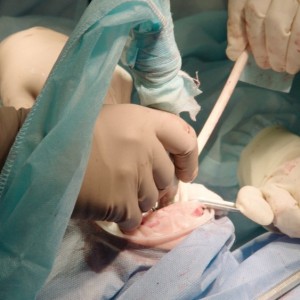
A systematic literature search in MEDLINE, Embase, and the Guideline websites, from October 2007 to October 2012, produced articles that were critically evaluated.

The American Dental Association (ADA) recently commended Rep. Jeff Van Drew (R-NJ) and Rep. Herb Conaway (D-NJ), for introducing the Improving Dental Administration (IDA) Act to ensure that the more...
Oral Hygiene & Prevention 05 February 2026

Considerable controversy exists in the literature regarding the clinical course of young patients with oral squamous cell carcinoma (SCC).
Read more
Products 23 September 2026
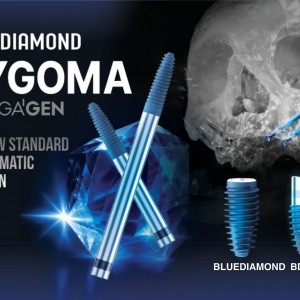
New zygomatic implant system brings MegaGen’s BLUEDIAMOND engineering, XPEED® surface technology, and flexible prosthetic solutions to complex full-arch rehabilitation.
News 23 September 2026

Inaugural GPO Partners include Unified Smiles, the Dentist Entrepreneur Organization (DEO), and Dental Purchasing Partners (DPP)
News 23 September 2026
Growing national network helps patients find local dentists trained to provide oral appliance therapy for obstructive sleep apnea.
Editorials 23 September 2026
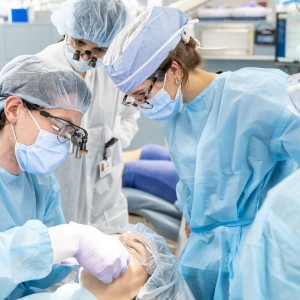
Students recently headed back to class for the current academic year, but Texas A&M College of Dentistry is looking ahead as deadlines approach for the dental Class of 2031 and the
Oral Hygiene & Prevention 23 September 2026
Propolis-containing formulations in caries prevention - a systematic review and meta-analysis.
This peer-reviewed oral hygiene & prevention article summarizes clinical evidence from Clinical oral investigations (2026). It focuses on findings that may help dental professionals evaluate...



Copyright © 2026 - All Rights Reserved
ISSN 2767-1178