


Does Chlorexidine preserve the adhesive layer after 10 years?
Co-authors: A. Comba, E. Mancuso
Lorenzo Breschi
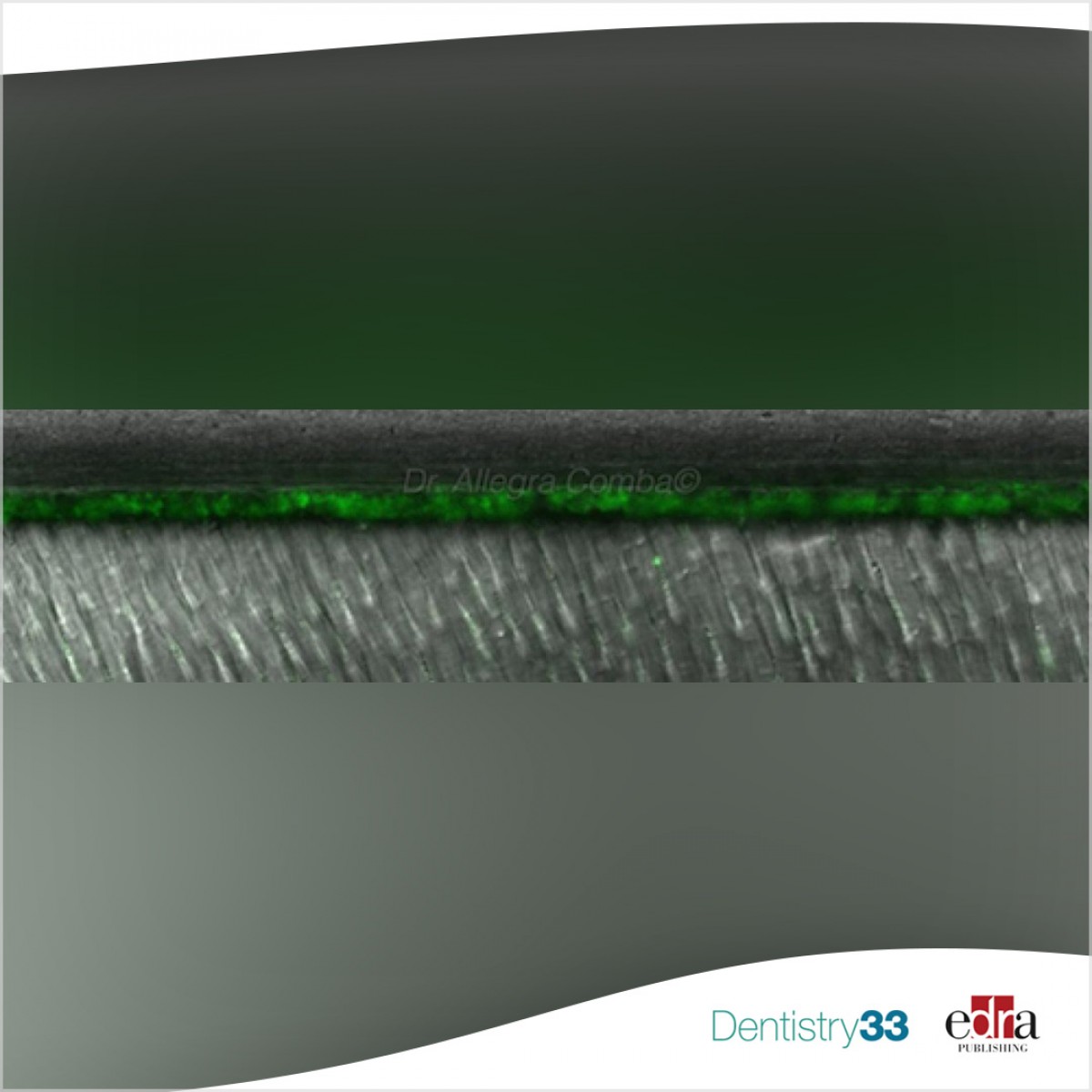
In spite of rapid development in the field of dental materials, the issue of time affected degradation of the hybrid layer has still not been resolved. Dentinal endogenous enzymes, such as MMPs and cysteine cathepsins can accelerate the aging process of the hybrid layer by degrading the collagen fibrils exposed after certain dental procedures.
Several approaches have been developed to enhance the durability of HL. Among those, various agents that inhibit or inactivate MMPs have been introduced.
To date, the largest number of studies is available using chlorexidine (CHX) as the MMP inhibitor. Although the results are promising, evidence that MMP inhibition can last over a long time, such as 5 or 10 years, are scarce and conflicting.
The research, conducted by our group from the University of Bologna, investigated whether CHX retains its MMP-inhibitory properties, preserves the HL, and whether it was still present in the HL after 10 years of aging in artificial saliva.
Materials and methods
The authors selected non-carious extracted molars, cut into slabs exposing middle/deep dentin, etched and assigned them to two groups with or without 0.2% CHX aqueous solution pretreatment. Finally bonded the samples with Adper Scotchbond 1XT (SB1XT). Composite build-ups were made, and the specimens were cut in 1-mm thick bonded sticks. In situ zymography was performed on freshly prepared specimens (T0) and specimens aged for 10 years (T10-yr) at 37◦C in artificial saliva, to investigate endogenous gelatinolytic activity within the HL. At T10-yr, specimens were also decalcified and embedded in epoxy resin for TEM analysis. Micro-Raman spectroscopy was performed at T0 and T10-yr to evaluate the chemical profiles in intertubular dentin and the HL.
Results
The results obtained by the group of Prof Breschi showed that in situ zymography less pronounced enzymatic activity in the CHX- pretreated group (p < 0.05) regardless of aging, maintaining a similar level of fluorescence at T0 and T10-yr (p > 0.05). TEM results showed that 98% of the HL had been degraded in the control group, while 95% of the HL was intact in the experimental group. Moreover, all the Raman spectra peaks assigned to CHX could be identified only in the CHX-pretreated group (T0 and T10-yr).
Conclusions
Chlorhexidine demonstrates anti-proteolytic effect and protection of the hybrid layer from degradation after 10 years of accelerated aging. The results further reinforce the importance of MMP inhibition for the preservation of the integrity of the resin-dentin interface. Future studies should validate the present results using CHX-containing adhesives.
For additional information: Chlorhexidine preserves the hybrid layer in vitro after 10-years aging. Dental materials : official publication of the Academy of Dental Materials,
 Read more
Products 20 October 2026

News 20 October 2026

In recognition of National Dental Hygiene Month, Delta Dental highlights key findings from its 2026 State of America’s Oral Health and Wellness Report , a nationwide analysis of co
News 20 October 2026

Abra Health Group has launched The Dental Bank, a new community impact initiative designed to make essential oral health resources more accessible to individuals and families throu
Editorials 20 October 2026
Woman’s skull likely proof of ancient nose amputation, says College of Dentistry professor
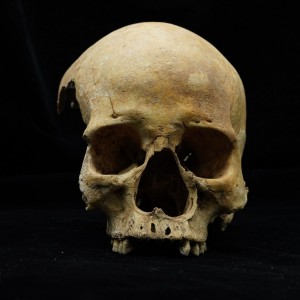
Qian Wang, professor in biomedical sciences at Texas A&M College of Dentistry in Dallas, identified what he and other researchers believe is likely one of the first examples of an
Endodontics 20 October 2026
This peer-reviewed endodontics article summarizes clinical evidence from Clinical oral investigations (2026). It focuses on findings that may help dental professionals evaluate treatment decisions,...



Copyright © 2026 - All Rights Reserved
ISSN 2767-1178