


A case series associated with different kinds of endo-perio lesions

Pulpal and periodontal problems are responsible for more than half of the tooth mortality. There are some articles published in the literature about this issue. Many of them are quite old. There has been also lack of knowledge about the effect of endodontic treatment on the periodontal tissue healing and suitable treatment interval between endodontic and periodontal treatments. In this case report, different kinds of endo-perio lesion were treated with sequential endodontic and periodontal treatment. The follow-up radiographs showed complete healing of the hard and soft tissue lesions. The tooth with endo-perio lesions should be evaluated thoroughly in terms of any cracks and fracture, especially furcation areas for a long term prognosis. In this case report, it was showed that 3 months treatment intervals between endodontic treatment and periodontal surgery has no harmful effect on periodontal tissue healing.
Introduction
Dental pulp and periodontal tissues are closely related that are ectomesenchymal in origin. The pulp origina-tes from the dental papilla and the periodontal ligament from the dental follicle and they are separated by Hertwig’s epithelial root sheat.
Pulpal and periodontal problems are responsible for more than half of the tooth mortality. The relationship between periodontal and pulpal disease was first described by Simring and Goldberg in 1964. Since then, the term “endo-perio lesion” has been used to describe this type of lesions due to same inflammatory products found in both periodontal and pulpal tissues.
The vast majority of pulpal and periodontal diseases are caused by bacterial infection. It has been suggested that cross-infection between the root canal and the periodontal ligament can occur via the anatomical (apical foramen, lateral and accessory canals, dentinal tubules and palato-gingival grooves) and non-physiological pathways (iatrogenic root canal perforations and vertical root fractures). These pathways determine the spread of infection. Periodontal disease causes destruction of bone in a coronal-to-apical direction while direction of the endodontic lesions is from apex to coronal. When the pulp is infected, it elicits an inflammatory response of periodontal ligament. However, the effect of periodontal inflammation on the pulpal tissue remains controversial. Clinically, the pulp is not affected by periodontal disease until accessory canals are exposed to the oral environment or microvasculature of the apical foramen is damaged.
The classification of endo-perio lesions by Simon et al. is that primary endodontic diseases, primary periodontal diseases and combined disease including primary endodontic disease with secondary periodontal involvement, primary periodontal disease with secondary endodontic involvement and true combined disease. This classification has been used and given very valuable guidance to make sound clinical decisions.
The main factors to take into account for treatment decision-making are pulp vitality and type and extent of periodontal defect. The differential diagnosis of endodontic and periodontal diseases can be challenged but a correct diagnosis has a vital importance so that appropriate treatment can be provided.
The aim of this study was to present the diagnosis and management of different types endo-perio lesions and emphasize the importance of the correct treatment sequence.
Authors: Hacer Aksel, Ahmet Serper
Source: https://pmc.ncbi.nlm.nih.gov/
 Tag
Tag
Related articles
Oral surgery 23 February 2026

Full-arch rehabilitation has always represented the most challenging work both from the surgical and from the prosthetic aspect. One of the challenges in the treatment of full-arch implant supported...
Prosthodontics 12 February 2026
Mandibular guidance prosthesis: Conventional and innovative approach: A case series
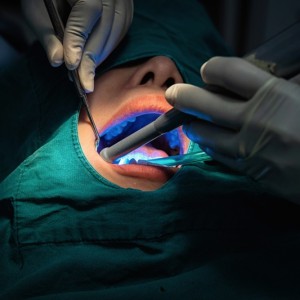
Surgical resection of the lower jaw due to the presence of a benign or malignant tumor is the most frequent cause of mandibular deviation.
Implantology 25 July 2025

Background: Cytokine–microbiology–virology monitoring after implant placement may help to develop profiles of variables that can help to explain interaction between the immune system and alveolar...
Endodontics 28 October 2024

An immature tooth with pulpal necrosis and apical periodontitis presents a unique challenge to the endodontist. Endodontic treatment options consist of apexification, apical barriers, or more...
Implantology 23 March 2026
Bisphosphonate related osteonecrosis of the jaws associated with denture and dentoalveolar surgery

The aim of this article was to present and discuss the diagnosis, management, and follow-up of a patient treated with zoledronic acid because of a metastatic prostate adenocarcinoma, that developed...
Read more
Europe 27 September 2026 - 30 November -0001
Digital Dentistry Society Global Congress 2026: Event Preview and Professional Highlights

The Digital Dentistry Society Global Congress 2026 will take place from October 22, 2026 to October 24, 2026 in TBD, Rotating Europe, offering dental professionals a focused environment for...
Editorials 27 September 2026
Dentistry33 survey highlights replacement care, deep caries and evolving restorative workflows
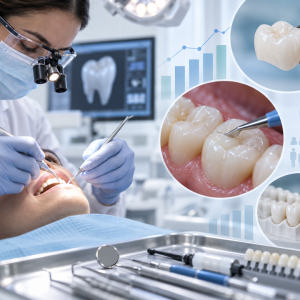
Reader survey finds direct composites remain dominant, secondary caries is the leading reason for restoration replacement, and clinicians want more training in pulp preservation
Reader survey finds direct composites remain dominant, secondary caries is the leading reason for restoration replacement, and clinicians want more training in pulp preservation
Edra Professional Books 26 September 2026
Manual of oral surgery: A Practical Reference for Dental Professionals
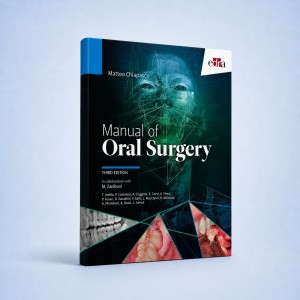
Manual of oral surgery is an Edra professional dentistry reference focused on clinical practice, education and treatment planning.
Products 25 September 2026
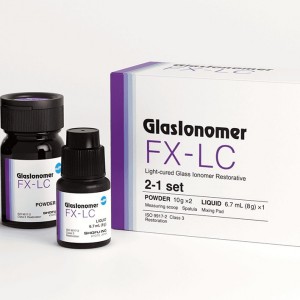
Shofu Dental’s line of dental restorative materials now includes FX-LC, a next-generation, light-cure, resin-reinforced glass ionomer formulated to deliver high strength, efficient 4
News 25 September 2026

The scholarships are part of an ongoing workforce solutions strategy to help address the need for skilled dental hygienists



Copyright © 2026 - All Rights Reserved
ISSN 2767-1178