


Soft gums, more prone to inflammation

A group of scientists from Tohoku University has discovered that the stiffness of the gums influences the properties of gingival fibroblasts, which in turn affects the likelihood of inflammation and hinders the formation of gingival fibers.
Their findings were published in January 2023 in Scientific Reports.
"We found that the soft gum produces inflammation and hinders the development of gum fibers," said Associate Professor Masahiro Yamada of Tohoku University School of Dentistry.
It has long been known that people with thick or stiff gums are less susceptible to gingival recessions. Many factors can lead to gingival recession, such as gum disease, excessive brushing and tobacco chewing. But this is the first time gingival stiffness has been attributed to biological reactions.
Although fibroblasts play an important role in gum maintenance, repair and healing, they also produce several inflammatory and tissue-degrading biomolecules that degrade gum fibers. In addition, fibroblasts are associated with immune responses to pathogens.
Yamada, along with her colleague, Professor Hiroshi Egusa, also from Tohoku University School of Dentistry, created an artificial culture environment that simulated soft or hard gums and grew human gingival fibroblasts in them. They found that simulated hard gum stiffness activated an intracellular anti-inflammatory system in gingival fibroblasts that prevented inflammation.
However, the simulated rigidity of the soft gum suppressed the fibroblastic anti-inflammatory system. This increased the likelihood of inflammation and resulted in less collagen synthesis.
"Our research is the first to demonstrate the biological mechanisms at play regarding a patient's gingival properties," Yamada said. "The results are expected to accelerate the development of advanced biomaterials to control local inflammation or microdevices that mimic the microenvironment of inflammatory conditions."
This article was originally published on Odontologia33.
Tiskratok, W., Yamada, M., Watanabe, J. et al. "Substrate stiffness controls proinflammatory responses in human gingival fibroblasts." Sci Rep 13, 1358 (2023). https://doi.org/10.1038/s41598-023-28541-z
 Related articles
Silencing a receptor in prostaglandins reduces pain but allows inflammation to run its course in animal and cellular studies.


Research led by George Hajishengallis of Penn Dental sheds light on an aging-related condition that drives inflammation in older populations.
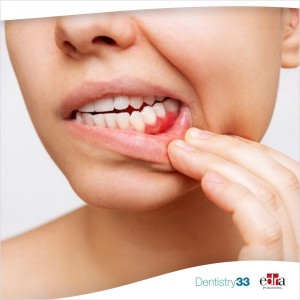
Oral Hygiene & Prevention 14 September 2023
Bypass gastroplasty impacts oral health, salivary inflammatory biomarkers, and microbiota

The aim was to prospectively evaluate oral health status, salivary inflammatory markers and microbiota in patients undergoing gastroplasty compared with a control group undergoing a dietary program.
Read more
Europe 18 October 2026 - 30 November -0001
IDS Cologne 2027 in Cologne: Event Preview and Professional Highlights

The IDS Cologne 2027 will take place from March 16, 2027 to March 20, 2027 in Cologne, Germany, offering dental professionals a focused environment for continuing education, clinical updates and...

Solutions is an Edra professional dentistry reference focused on clinical practice, education and treatment planning.
Products 16 October 2026
Karen Davis on Philips Sonicare DiamondClean 9900 Prestige & Smarter Brushing
News 16 October 2026
Align Technology to Report Q3 2026 Financial Results October 28

(Nasdaq: ALGN), a leading global medical device company that designs, manufactures, and sells the Invisalign® System of clear aligners, iTero™ intraoral scanners, and exocad™ CAD/C
News 16 October 2026

Fewer people on intake, faster turnaround, and no lost cases: Relu’s new automation captures and centralizes every scan and Rx from every source within a minute of arrival



Copyright © 2026 - All Rights Reserved
ISSN 2767-1178