


Application of a sodium hypochlorite-based gel in supportive periodontal therapy
Lara Figini
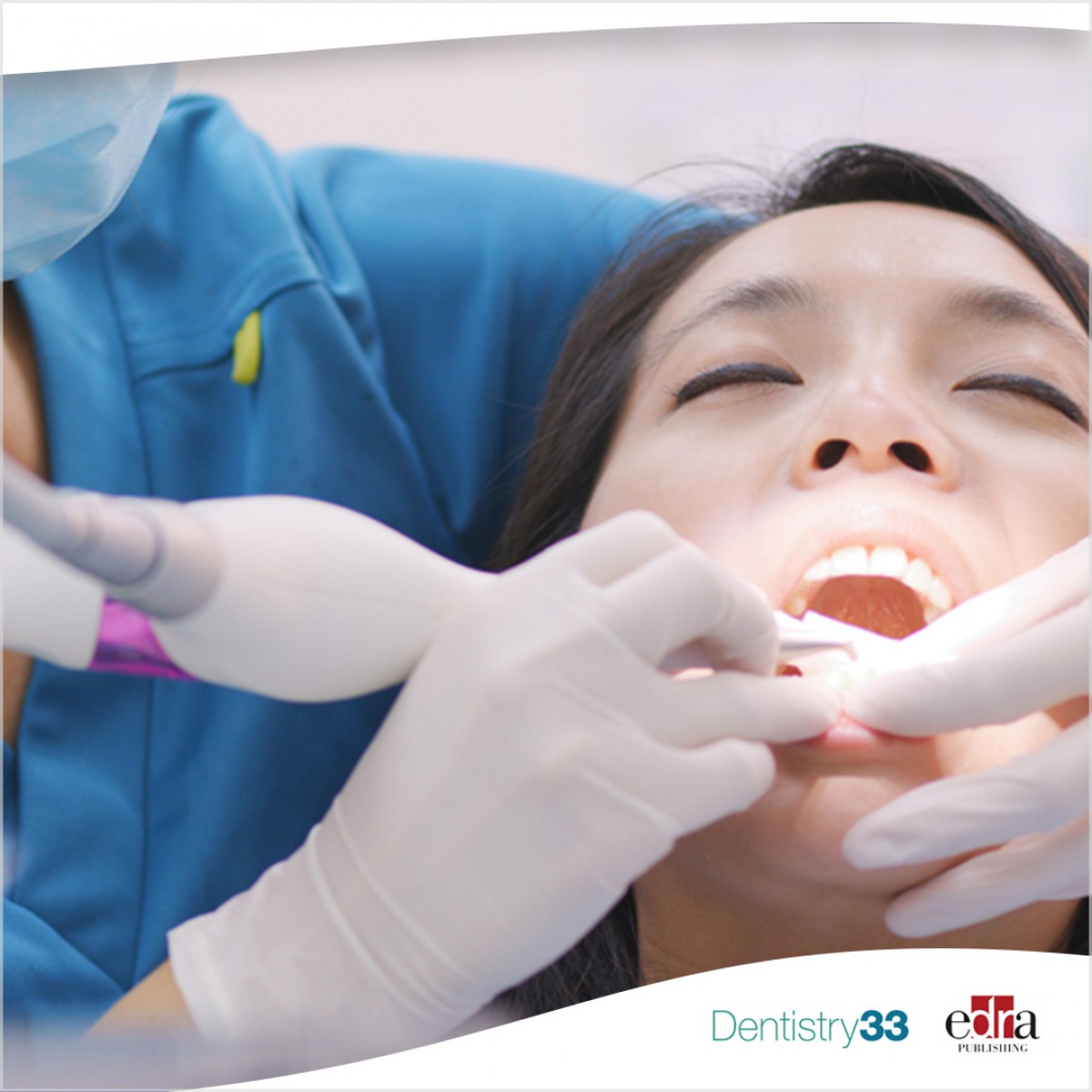
Periodontitis can be triggered by and maintained by periodontal pathogenic biofilm dysbiosis and subsequent destructive inflammatory response. Consequently, the treatment of periodontitis focuses on the mechanical removal or destruction of the supra- and subgingival biofilm.
Subgingival re-instrumentation during supportive periodontal therapy (SPT) has been shown to result in clinical improvements in only approximately 50% of affected patient sites, as evidenced by a reduction in probing pocket depths and bleeding on probing, while the rest of the affected sites may show further disease progression.
In the last decade, slow-release topical antimicrobials – such as chlorhexidine, doxycycline, minocycline and metronidazole – have been used sub gingivally in combination with mechanical instrumentation during SPT.
Substantial evidence indicates that the addition of a chemotherapeutic agent to conventional SPT has an additive effect in halting further progression of periodontal disease, as observed in persistent or recurrent periodontitis after local use of doxycycline (Tonetti, 2012).
Very recently the use of sodium hypochlorite (NaOCl) has also been suggested as an alternative to improve the outcomes of subgingival SRP. This is due to its broad antimicrobial activity, rapid bactericidal action and non-toxicity at application concentration.
Histologically, subgingival application of NaOCl provides chemolysis in the periodontal pocket with minimal effect on adjacent tissues. Its use in the maintenance phase of periodontal therapy is recommended.
Materials and Methods
In a controlled clinical study, published in Clinical Oral Investigations in November 2022, the authors evaluated the clinical and microbiological effects of a single subgingival administration of sodium hypochlorite (NaOCl) gel compared with the administration of chlorhexidine gel 1% (CHX) and a placebo gel after subgingival re-instrumentation during supportive periodontal therapy (SPT).
Sixty-two patients who had been treated for stage III-IV periodontitis and enrolled in SPT were included in the study based on the following criteria:
- active periodontal therapy completed at least 6 months prior to study enrollment
- presence of at least 4 non-adjacent sites with probing pocket depth (PPD) ≥4 mm with bleeding on probing (BOP) or presence of 5-8 mm PPD with or without BOP.
All sites presenting PPD ≥4 mm and BOP at baseline time 0 at 3, 6, and 9-month follow-ups were re-instrumented sub gingivally with ultrasound.
Selected patients were randomly assigned to one of three groups and treated additionally with a single subgingival administration of NaOCl gel (Group A), with the addition of 1% CHX gel (Group B) and with the addition of placebo gel (Group C).
The main outcome variable was pocket closure at 12 months. Secondary outcome variables were changes in PPD, BOP, and clinical attachment level (CAL) along with changes in the numerical presence of the following five bacterial pathogens: Aggregatibacter actinomycetemcomitans (A.a.), Porphyromonas gingivalis (P.g.), Prevotella intermedia (P.i.), Tannerella forsythia (T.f.) and Treponema denticola (T.d.).
Results
At 12 months, pocket closure was achieved in 77.5% of sites treated with NaOCl. The reduction in PPD was greater with CHX than with NaOCl, although a statistically significant additional effect for NaOCl (P = 0.028) was observed compared to the placebo group.
Mean CAL improved in all groups and at all time points, compared to time baseline (P < 0.05).
However, after 6 months the CAL gain was statistically significantly higher in the NaOCl-treated group than in the CHX-treated group (P = 0.0026).
Conclusions
From the data of this study, it can be concluded that in patients undergoing SPT supportive periodontal therapy, a single additional use of NaOCl-based gel can provide benefits in the control of inflammation and residual pockets.
Radulescu, Viorelia et al. "Clinical and microbiological effects of a single application of sodium hypochlorite gel during subgingival re-instrumentation: a triple-blind randomized placebo-controlled clinical trial." Clinical Oral Investigations. 2022 Nov;26(11):6639-6652. doi: 10.1007/s00784-022-04618-3. Epub 2022 Jul 12.
 Tag
Tag
Related articles
Endodontics 11 July 2023
This study compared disinfection and shaping after root canal preparation with either XP-endo Shaper or TruNatomy instrument systems, supplemented by ultrasonic activation of sodium hypochlorite...
Endodontics 01 November 2021
Evaluation of biofilm removal from isthmus and collateral canals by different irrigation modalities

Root canal irrigation is one of the most important steps in root canal treatment and its main purpose is to eliminate microorganisms, which often adhere to the root canal wall forming a biofilm, from...
Read more
Continuous innovation across the DEXIS ecosystem helps clinicians work with greater clarity, confidence, and efficiency
News 23 October 2026
CrownPoint Partners announced the successful closing of a $9.2 million, five-property dental sale-leaseback portfolio located throughout Michigan.
News 23 October 2026
Dentsply Sirona, Midwest Dental Expand Technology Relationship
Beginning November 1, Dentsply Sirona will expand its long-standing relationship with Midwest Dental Equipment & Supply beyond consumables to include its complete technology portfo
Editorials 23 October 2026
Honoring Excellence: Graduation Awards for CU Anschutz Dental Students and Faculty

As the University of Colorado Anschutz School of Dental Medicine celebrates the graduating DDS Class of 2025, we are proud to recognize the students and faculty members whose excep
Implantology 23 October 2026
This peer-reviewed implantology article summarizes clinical evidence from Clinical oral implants research (2026). It focuses on findings that may help dental professionals evaluate treatment...



Copyright © 2026 - All Rights Reserved
ISSN 2767-1178