


Premature loss of primary molar: space changes analysis
Alessandra Abbà

Many times primary teeth are given less importance as they are believed to shed automatically. Quite the opposite, primary teeth help in chewing, speech, are important for aesthetics and also they represent a “rail” for permanent teeth that should reach the right position in the dental arch. In fact the premature loss of primary molars leads to space reduction, resulting in malocclusion of permanent teeth unless a space maintainer. The early loss of primary teeth may have as side effect even crowding, rotation and impaction in the permanent teeth.
The aim of this study published on Journal of Dental Science on March 2017 was to monitor the long term space changes in children with premature loss of a primary maxillary first molar.
Matherials&Methods:
19 cases with unilateral premature loss of a primary maxillary first molar were evaluated for this study but only nine participants (mean age 6.0 ± 0.42 years) were available for the last follow up. Examination of the cases were done on dental casts after 2 or 3 days after the tooth extraction and then at a follow up visit after, on average, 81 months. Controlateral molars act as control. No space maintainer were used with any patient during the whole period.
Five lines of dental arch were measured according to designed reference points:
- Arch width and length,
- Intercanine width and length,
- Arch perimeter.
Paired t-test was used to compare the measurements between the initial and 81-month follow-up examinations.
Results
At 81-month follow-up, the examinations registered the following data:
- 88.9% of the cases didn’t show neither crowing of permanent successors nor canine impaction at the extraction site;
- 1\9 case exhibit more crowded permanent dentition at the control site compared with the extraction site,
- significantly greater arch width, arch length, intercanine width, and intercanine length compared with the initial parameters (P < 0.05);
- no significant difference in the arch perimeter (P = 0.071).
Conclusions
Increases of the dental arch dimension recorded in this study may call into question the use of space maintainers. Moreover, the variety of the results suggests that multiple factors affect the space changes in developing arches. Nevertheless more studies are needed to draw a certain conclusion.
For additional information: a long-term space changes after premature loss of a primary maxillary first molar
 Related articles
Pediatric dentistry 09 September 2025
Pediatric Dentists' Treatment Planning Decisions for Class II Carious Lesions in Primary Molars

To assess pediatric dentists' choice for restoring Class II carious lesions in primary molars.
Pediatric dentistry 16 May 2022
Primary Molars Restorations: Flowable Bulk-fill Materials VS Nano Ceramic Composites
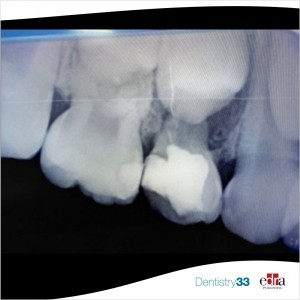
One of the most common materials for the restoration of primary teeth are glass ionomer cements (GIC), because of their time-saving feature. Nonetheless their...

Dental caries of primary dentition continues to be one of the major health problem in the world. And even if prevention and acknowledgment of the dental...
Read more
Products 20 October 2026

News 20 October 2026

In recognition of National Dental Hygiene Month, Delta Dental highlights key findings from its 2026 State of America’s Oral Health and Wellness Report , a nationwide analysis of co
News 20 October 2026

Abra Health Group has launched The Dental Bank, a new community impact initiative designed to make essential oral health resources more accessible to individuals and families throu
Editorials 20 October 2026
Woman’s skull likely proof of ancient nose amputation, says College of Dentistry professor
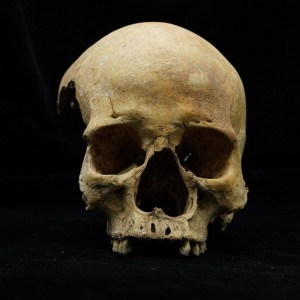
Qian Wang, professor in biomedical sciences at Texas A&M College of Dentistry in Dallas, identified what he and other researchers believe is likely one of the first examples of an
Endodontics 20 October 2026
This peer-reviewed endodontics article summarizes clinical evidence from Clinical oral investigations (2026). It focuses on findings that may help dental professionals evaluate treatment decisions,...



Copyright © 2026 - All Rights Reserved
ISSN 2767-1178