


Post-treatment stability after five years of retention with vacuum-formed and bonded retainers
Davide Elsido

Following orthodontic treatment, fixed or removable retainers are required to ensure post-treatment stability. The changes directly after debond, during the remodeling of periodontal structures, can be defined as rapid relapse.
Post-treatment changes over time are, however, individual, multifactorial, and difficult to predict. In the long term, it is therefore not easy to identify true relapse, secondary crowding, and natural changes (i.e. growth, maturation, or ageing).
Dental arches become shorter with age, which causes crowding. Craniofacial changes, soft tissue interaction and function affect occlusion stability and change throughout life. Therefore, retention can be considered a continuation of orthodontic treatment to prevent relapse and assure optimal long-term treatment results. Consequently, post-treatment stability can only be assured by using retention appliances over a long period.
As rapid relapse mainly occurs during the first 12 months, the first year of retention seems to be the most critical. This is also confirmed in a few previous randomized controlled trials (RCTs) investigating the short-term effects of different retention strategies. However, the knowledge of long-term stability is mainly based on retrospective studies.
A new RCT was recently published in the European Journal of Orthodontics. Thus, the aim of this randomized controlled trial is to evaluate and compare post-treatment changes in the maxilla and mandible after 5 years of retention with two different retention protocols. The null hypothesis is that there is no difference in post-treatment stability between the retention protocols. The secondary aims are to investigate patients’ perceptions and compliance with the retention appliances after 5 years, and to evaluate retainer failure.
This trial included 104 adolescent patients, randomized into two groups (computer-generated), using sequentially numbered, opaque, and sealed envelopes. All patients were treated with fixed appliances in both jaws with and without tooth extractions. Patients in the intervention group received a VFR in the mandible (n = 52), and patients in the active comparator group received a bonded cuspid-to-cuspid retainers (CTC) (n = 52). Both groups had vacuum-formed retainers (VFR) in the maxilla. Dental casts at debond (T1), after 6 months (T2), after 18 months (T3), and after 5 years (T4) were digitized and analyzed regarding Little’s Irregularity Index (LII), overbite, overjet, arch length, and intercanine and intermolar width. The patients completed questionnaires at T1, T2, T3, and T4.
The results of this randomized controlled trial revealed that there was a significant difference in post-treatment stability in the mandible, in terms of LII, between a removable VFR and a bonded CTC retainer after 5 years of retention. For all other outcome measurements in the mandible, no differences between groups were found. Thus, our null hypothesis must be rejected, in terms of LII. For the maxilla, both groups had the same retention, and consequently, there were no group differences.
Implication for clinical practice: compliance with VFRs decreases over time and the risk for relapse increases, especially in the mandible. To fully prevent both rapid relapse and future continued growth and age changes, a bonded retainer must be recommended. However, a well-motivated patient can maintain the same treatment stability with a removable or bonded retainer, especially if small changes can be accepted. We assume that relapse can be minimized by avoiding overexpansion, changes in arch form and intercanine width during the orthodontic treatment.
Conclusions:
- relapse in both jaws was small and of minor clinical significance after 5 years of retention,
- anterior alignment in the mandible was more stable with a bonded CTC retainer compared to a removable VFR after five years of retention,
- anterior malalignment in the maxilla increased after 5 years of retention with a VFR,
- patients were equally satisfied with fixed and removable retention appliances.
Anke Krämer, Mats Sjöström, Catharina Apelthun, Mats Hallman, Ingalill Feldmann. "Post-treatment stability after 5 years of retention with vacuum-formed and bonded retainers—a randomized controlled trial." European Journal of Orthodontics, February 2023, 45, 68–78.
 Related articles
Products 16 May 2025
Ormco Announces the Launch of Spark Retainers and Spark BiteSync Class II Corrector System

Ormco Corporation, a leading provider of innovative orthodontic solutions for over 60 years, is excited to announce the official launch of Spark Retainers and BiteSync Class II Corrector in the...
Products 10 January 2025
Streamlined Retainer Production: Primeprint Dental Resins Offer Precision and Biocompatibility

Dental resins Primeprint Splint ST and Primeprint Splint SF are available for retainer manufacturing, further solidifying their position as premium resins for removable dental appliances within the...
News 28 September 2023
Retainers For Life Expands Operations to Canada Following Pilot Success
Retainers For Life (RFL) announced that it will be expanding its operations in Canada, following a record-breaking adoption rate during the company’s Canadian pilot program.
Orthodontics 26 September 2022
3D-printed retainers VS thermoform retainers: which have the best fit?
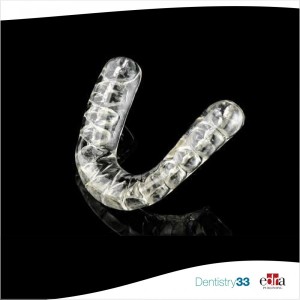
Advances in digital dentistry have paved the way for the use of computer-aided design (CAD) technology in the modern orthodontic practice. Today, a 3-dimensional...
Orthodontics 19 September 2022

The objective of a RCT published on AJODO on oct 2021 issue was to compare the survival rates and periodontal health in patients with 3-strand round twisted (RT) vs 8-strand rectangular braided (RB)...
Read more
Products 20 October 2026

News 20 October 2026

In recognition of National Dental Hygiene Month, Delta Dental highlights key findings from its 2026 State of America’s Oral Health and Wellness Report , a nationwide analysis of co
News 20 October 2026

Abra Health Group has launched The Dental Bank, a new community impact initiative designed to make essential oral health resources more accessible to individuals and families throu
Editorials 20 October 2026
Woman’s skull likely proof of ancient nose amputation, says College of Dentistry professor

Qian Wang, professor in biomedical sciences at Texas A&M College of Dentistry in Dallas, identified what he and other researchers believe is likely one of the first examples of an
Endodontics 20 October 2026
This peer-reviewed endodontics article summarizes clinical evidence from Clinical oral investigations (2026). It focuses on findings that may help dental professionals evaluate treatment decisions,...



Copyright © 2026 - All Rights Reserved
ISSN 2767-1178