


Characteristics and indications of surgical and respirators masks
Authors: Vittorio Checchi, Luigi Checchi
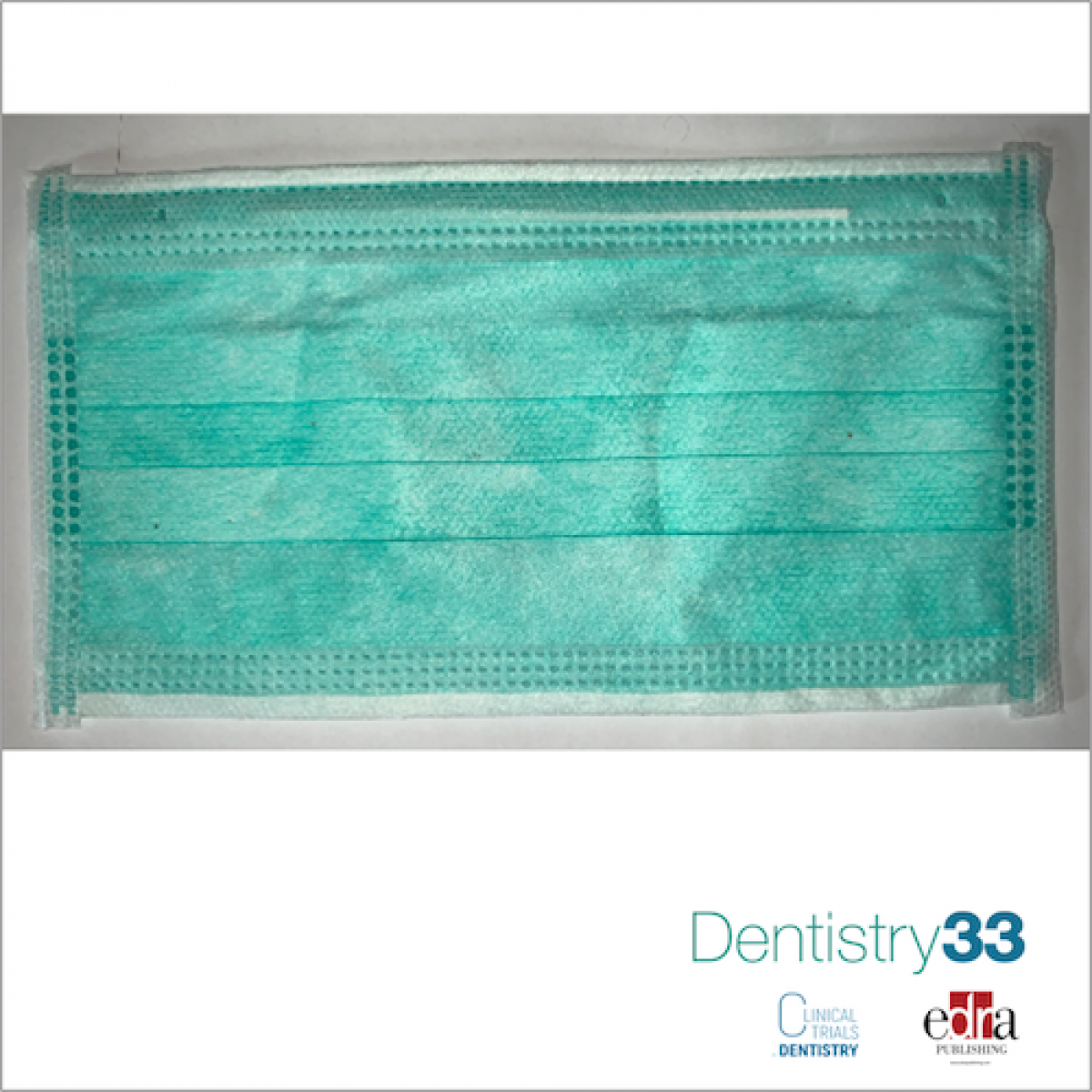
Objectives. Many dental procedures are responsible for the creation of an aerosol capable of transporting bacteria, virus and infected particles into the surrounding environment. The use of handpieces and/or ultrasonic devices creates an aerosol of particles with different diameters that present a severe risk for nasal and tracheobronchial cavities. This deposition of particles occurs on different levels, depending on their dimensions: particles with larger diameter stops in the nasal cavities, while the smaller ones end up in lung alveoli. These aerosol particles have their own movement, partly caused by the displacement of air masses and by the Brownian motions produced by the impact of the gaseous particles against the aerosol ones. Since these droplets are able to persist continuously for long time in environments where patients and procedures follow and overlap over the course of a day, it is essential for dental clinicians to adopt personal protective equipment, among which the choice of an appropriate mask. The aim of this literature overview is to clarify the terminology, the criteria for the construction of a mask, to illustrate the differences between masks and oral respirators, and to provide practical support for personal and patient protection, choosing the device suitable for each clinical situation.
Materials and methods. This dossier is a literature review of the national and international literature on this topic; the scientific data published since mask introduction to date have been collected, and the characteristics, differences and clinical indications for the use of masks and oral respirators in dentistry have been analyzed.
Conclusions. The surgical mask and the respirator are individual devices that meet specific standards and whose use must always be combined with other PPE such as screens and protective glasses, headgear, gloves, disposable gowns and of course a careful personal hygiene. The importance of examining the technical data sheet referring to the devices used, in order to check the necessary strict adherence to the reference protocols, must always be underlined. To date there are still conflicting opinions on what the correct indication may be on the type of respirator to be used to prevent contagion from Sars-CoV-2. Respirators without a filter-valve seem to be the devices capable of providing the highest protection to the operator and patient but, precisely because of their high filtering capacity, they make breathing difficult if worn for a long time continuously. To improve respiratory capacity and therefore to seek greater comfort, the use of a high filter respirator with exhalation valve, in association with a surgical mask to be applied on it, is conceivable. However, surgical masks remain valid devices for all those services that do not involve the creation of highly infected aerosols and the consequent dispersion of potentially contaminated particles in the air. Finally, to limit the spread of COVID-19 as much as possible, anyone should wear a surgical mask, so that an infected person cannot contaminate the surrounding environment and people nearby.
Clinical significance. This dossier highlights the characteristics of surgical masks and oral respirators, providing practical indications on the most suitable devices for protection from COVID-19 infection.
 Related articles
Oral Hygiene & Prevention 10 June 2020
Which masks do we have to use to prevent the risk of Coronavirus infection?
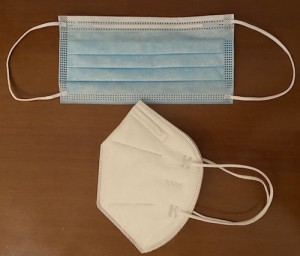
In these times, during Coronavirus emergency, there is a lot of talk about masks and what would be the safest for dentists. First of all, between surgical...
Read more
Products 14 October 2026
Royal Philips (NYSE: PHG, AEX: PHIA) announced that the Philips Sonicare Next-Generation DiamondClean 9900 Prestige, its most advanced and intelligent toothbrush to date, is now av

Key transaction by Heartland Dental and its supported practices expands opportunities for supported doctors, teams, and practices while strengthening Heartland Dental’s supported f
News 14 October 2026
Henry Schein Cares Celebrates 25 Years of Corporate Citizenship

Henry Schein Cares, Henry Schein, Inc.’s global corporate citizenship program, is celebrating a quarter century of bringing together Team Schein Members, customers, supplier partne
Editorials 14 October 2026
Scholarship at the CU Anschutz School of Dental Medicine reflects the collective contributions of our faculty, staff, residents and students.
Oral Hygiene & Prevention 14 October 2026
Propolis-containing formulations in caries prevention - a systematic review and meta-analysis.
This peer-reviewed oral hygiene & prevention article summarizes clinical evidence from Clinical oral investigations (2026). It focuses on findings that may help dental professionals evaluate...



Copyright © 2026 - All Rights Reserved
ISSN 2767-1178