


Electronic cigarettes: how much awareness of their impact on oral health?
Lara Figini
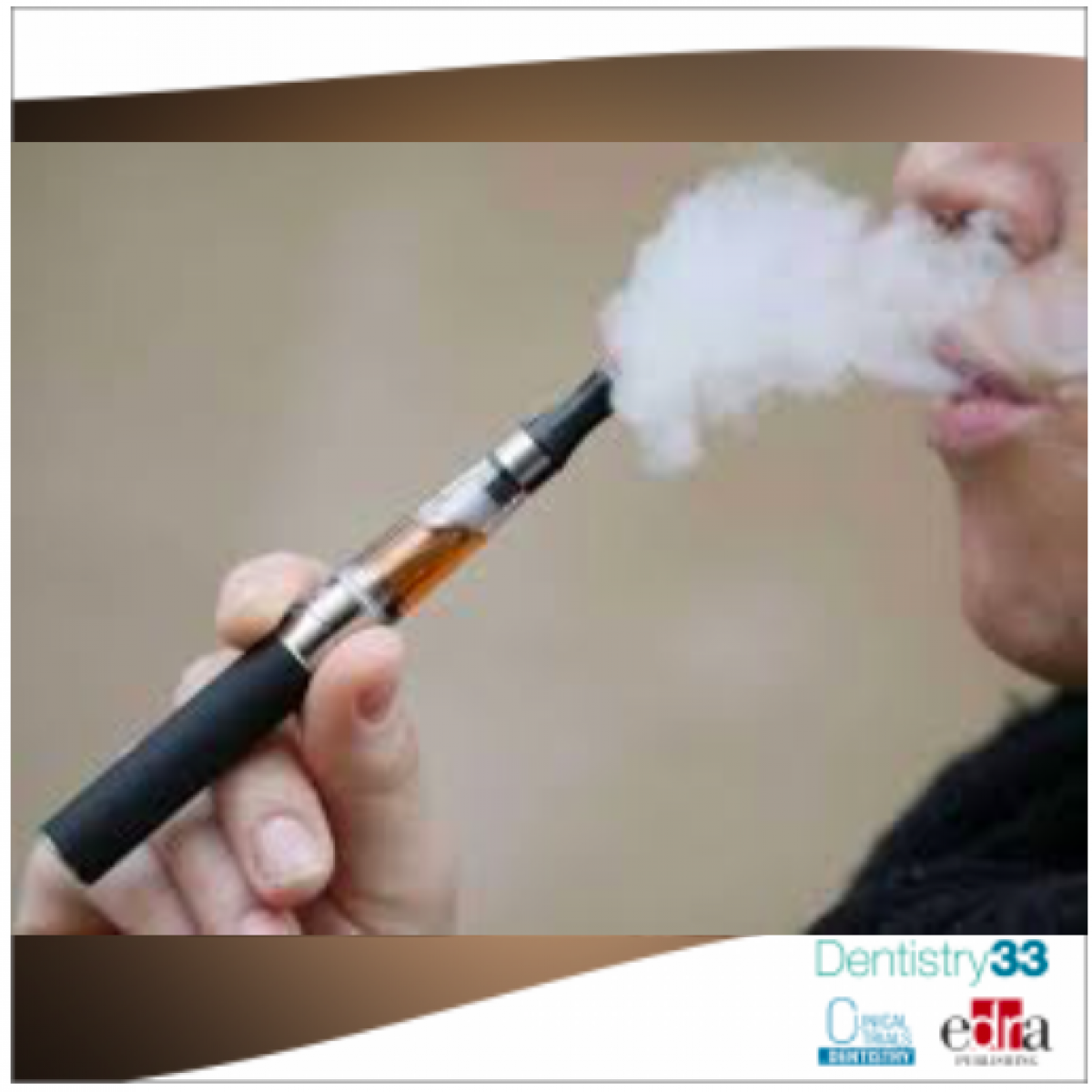
Initially, electronic cigarettes were marketed as tools for quitting smoking, but later they became a fashion, a social tool for recreational activity.
In contrast to traditional cigarettes, in CE electronic cigarettes the nicotine is not delivered through the emission of dry smoke, but through a wet and vaporized chemical aerosol. The ingredients of the EC are: propylene glycol, humectant glycerin, various flavoring agents, heavy metals, such as nickel and lead, carbonyl compounds, such as formaldehyde, acetaldehyde and acrolein; and nicotine. The use of the EC has continued to grow over the last ten years, and exceeds 35 million users worldwide, mainly affecting the age group between 18 and 35 years. However, there is not as much awareness among young people of the toxic and harmful effects of the electronic cigarette on systemic and oral health. In addition to the negative effects of nicotine, the negative effects on cardiovascular, neurological and respiratory health due to exposure to volatile organic compounds, heavy metals and additives such as vitamin E acetate present in aerosols in EC should not be overlooked.
Materials and methods
In a study, published in JADA in December 2020, the authors wanted to investigate the knowledge and habits of young adults regarding the use of EC electronic cigarettes and the impact of the latter on oral health.
The authors conducted a cross-sectional survey based on a questionnaire consisting of 33 questions. The questionnaire was divided into 6 subgroups concerning:
1) demographics (4 questions),
2) knowledge (10 questions),
3) current vaping practices (8 questions),
4) attitudes (5 questions),
5) willingness to learn (3 questions) e
6) frequency of dental visits (3 questions).
A content validity index (CVI) was established by a group of 7 health care experts. All experts were found to be in agreement on the validity and relevance of the questions.
Results
The final sample analyzed in the study was 168 participants, including 56 women (33%) and 112 men (67%), with 48% aged between 18 and 24 and 52% between 25 and 34 years.
Most users (50.0%) reported vaping for more than 1 year and some (23.8%) for more than 5 years. 87 participants (57%) said they started vaping why
they wanted to quit smoking. Most said they go to a hygienist (67.3%) for routine dental hygiene 2 or more times a year (50%).
About half of the participants (54.2%) reported brushing their teeth 2 or more times a day.
while only 26.2% flossed at least once a day. Despite regular dental visits 83.8% of participants said they had never discussed vaping with their dentist or dental hygienist. Participants aged 18 to 24 indicated a lack of knowledge of the oral health effects of vaping.
Participants expressed a willingness to discuss the oral health effects of vaping with oral professionals, and most were willing to reduce (30%) or quit
(24%) to vape if they learned it was harmful to their oral health. Participants between the ages of 18 and 24 were more likely to quit than those between the ages of 25 and 34. Those used to having dental checkups every 6 months agreed more to stop vaping than those not used to having regular dental checkups.
Conclusions
From the data of this study, which must be confirmed in other similar studies, it can be concluded that young people between the ages of 18 and 35 report little knowledge of the implications of vaping on oral health, but express the willingness to discuss vaping with their dental professionals.
For additional information: Knowledge, attitudes, and practices of young adults regarding the impact of electronic cigarette use on oral health
 Related articles
Endodontics 21 October 2026
This peer-reviewed endodontics article summarizes clinical evidence from BMC oral health (2026). It focuses on findings that may help dental professionals evaluate treatment decisions, patient...
Endodontics 19 October 2026

This peer-reviewed endodontics article summarizes clinical evidence from BMC oral health (2026). It focuses on findings that may help dental professionals evaluate treatment decisions, patient...
Pediatric dentistry 09 October 2026
This peer-reviewed pediatric dentistry article summarizes clinical evidence from BMC oral health (2026). It focuses on findings that may help dental professionals evaluate treatment decisions,...
Periodontology 08 October 2026
This peer-reviewed periodontology article summarizes clinical evidence from BMC oral health (2026). It focuses on findings that may help dental professionals evaluate treatment decisions, patient...
Oral pathology 02 October 2026
This peer-reviewed oral pathology article summarizes clinical evidence from BMC oral health (2024). It focuses on findings that may help dental professionals evaluate treatment decisions, patient...
Read more

Continuous innovation across the DEXIS ecosystem helps clinicians work with greater clarity, confidence, and efficiency
News 23 October 2026

CrownPoint Partners announced the successful closing of a $9.2 million, five-property dental sale-leaseback portfolio located throughout Michigan.
News 23 October 2026
Dentsply Sirona, Midwest Dental Expand Technology Relationship

Beginning November 1, Dentsply Sirona will expand its long-standing relationship with Midwest Dental Equipment & Supply beyond consumables to include its complete technology portfo
Editorials 23 October 2026
Honoring Excellence: Graduation Awards for CU Anschutz Dental Students and Faculty

As the University of Colorado Anschutz School of Dental Medicine celebrates the graduating DDS Class of 2025, we are proud to recognize the students and faculty members whose excep
Implantology 23 October 2026

This peer-reviewed implantology article summarizes clinical evidence from Clinical oral implants research (2026). It focuses on findings that may help dental professionals evaluate treatment...



Copyright © 2026 - All Rights Reserved
ISSN 2767-1178