


A clinical case of amelobastoma
By: Giulio Villa, Elena Maddalone, Elena Maria Varoni, Davide Costa, Alberto Pispero, Laura Moneghini
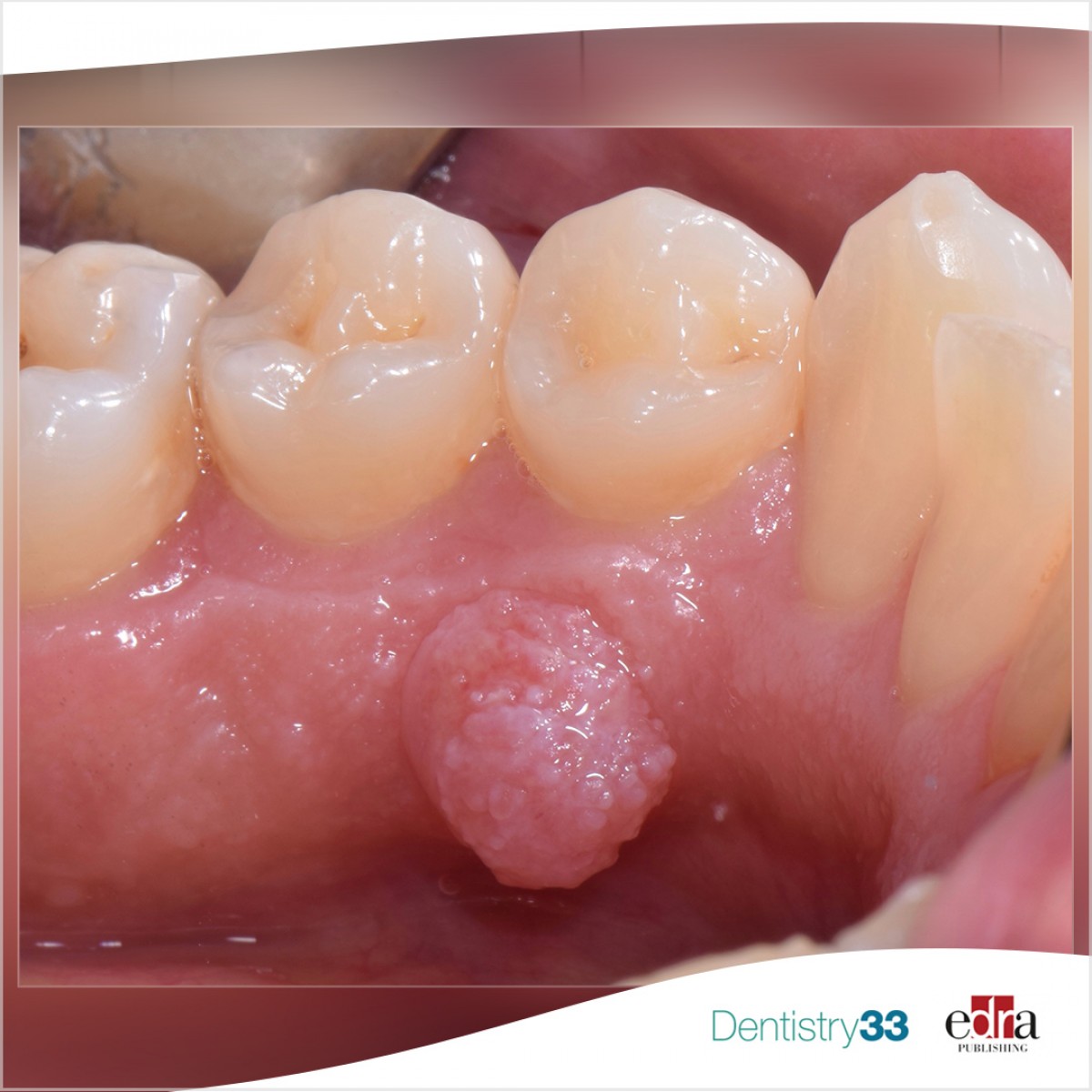
A 46-year-old patient came to the dental emergency room of the Giorgio Vogel University Clinic of Milan. The patient was sent by the attending physician due to the presence of a gingival lesion that persisted for about eight months, asymptomatic and with signs of intermittent bleeding.
The patient, a former smoker, had a history of cardiac infarction which occurred about three years earlier. The patients had four cardiac stents placed and was also suffering from arterial hypertension. The reported drug history included the intake of low-dose acetylsalicylic acid, atorvastatin, pantoprazole, bisoprolol and amlodipine. Physical examination revealed the presence of a lesion in the gingiva adhering to the lingual aspect of the III quadrant, corresponding to elements 3.3-3.4. The lesion was exophytic and papillomatous, with a sessile implant base and soft consistency, pinkish white in color, painless to palpation and with a diameter of about 1 cm.
DIAGNOSIS AND CARE
Based on the clinical features highlighted during the physical examination, the lesion was placed in a differential diagnosis with squamous papilloma, pyogenic granuloma, squamous cell carcinoma and peripheral odontogenic fibroma. Subject to informed consent and local peri wound anesthesia with 2% mepivacaine with vasoconstrictor, an incisional biopsy was performed with the cold blade method and diamond incision.
Hemostasis of the wound was achieved by compressing the intervention site with gauze soaked in physiological tissue and it was not necessary to apply sutures. The collected material was oriented on paper, immersed in fixative liquid and was sent to pathologists for microscopic analysis of the sample. Histopathological analysis yielded a proliferation result of the peripheral / extraosseous ameloblast type, worthy of radicalization.
Ameloblastoma is a benign neoplasm of odontogenic epithelial origin that can present with various histological growth patterns. Referring to the definition of the World Health Organization (4th edition, 2017), ameloblastomas are classified as follows: solid / multicystic, peripheral / extraosseous, desmoplastic and unicystic.
Currently, the classification has been simplified and restricted to ameloblastoma, unicystic ameloblastoma and peripheral / extraosseous type. The WHO defined peripheral ameloblastoma as "the extra-osseous counterpart of solid / multicystic ameloblastoma.”
Peripheral ameloblastoma is thought to be the rarest subgroup, constituting 1 to 5% of all ameloblastomas, with a slight predilection for males and occurring more frequently in the fifth to sixth decade of life. Clinically, it appears as an exophytic sessile mass, generally asymptomatic, with a smooth or papillary surface.
It commonly affects the mandible, particularly the lingual gingiva in the premolar region, followed by the anterior region. However, there have been reports of extra-gingival positions, such as the buccal mucosa and the oral floor. There is rarely radiological evidence of bone infiltration, however re-absorption of the underlying bone tissue may occur due to the pressure exerted by the tumor.
The current therapeutic recommendation for peripheral ameloblastoma is complete surgical excision with adequate disease-free margins. Rare cases of relapse have been reported, even several years after surgery, progression of the disease and malignancy, therefore a long-term follow-up is mandatory.
 Related articles
Oral pathology 09 May 2022
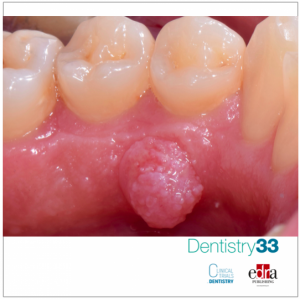
Authors: Giulio Villa, Elena Maddalone, Elena Maria Varoni, Davide Costa, Alberto Pispero, Laura Moneghin
The patient, a former smoker, had a history of cardiac infarction which occurred about 3 years earlier, operated with the placement of 4 cardiac stents and was also suffering from arterial...
Oral surgery 07 October 2026
This peer-reviewed oral surgery article summarizes clinical evidence from International journal of oral and maxillofacial surgery (2026). It focuses on findings that may help dental professionals...
Oral surgery 25 September 2026
This peer-reviewed oral surgery article summarizes clinical evidence from International journal of oral and maxillofacial surgery (2026). It focuses on findings that may help dental professionals...
Oral surgery 18 September 2026
This peer-reviewed oral surgery article summarizes clinical evidence from International journal of oral and maxillofacial surgery (2025). It focuses on findings that may help dental professionals...
Oral surgery 11 September 2026

This peer-reviewed oral surgery article summarizes clinical evidence from International journal of oral and maxillofacial surgery (2026). It focuses on findings that may help dental professionals...
Read more

Jen Kim Field, chief sustainability officer at Henry Schein and president of the Henry Schein Cares Foundation, answers questions for Dentistry Today about the group’s achievements
News 12 October 2026

The education-first program offered learning for the entire dental practice, with practical insights spanning the full patient journey and focused on improving workflows, collabora
News 12 October 2026

AAO and Stand for the Silent Unite Communities This Month to Shine a Light on Bullying Prevention
Editorials 12 October 2026
Expanded coverage: Texas A&M’s Plemons named 2026 Texas Dentist of the Year

Sometimes a small act of generosity can make a tremendous impression, especially on a 7-year-old.
Endodontics 12 October 2026
This peer-reviewed endodontics article summarizes clinical evidence from Journal of dentistry (2026). It focuses on findings that may help dental professionals evaluate treatment decisions, patient...



Copyright © 2026 - All Rights Reserved
ISSN 2767-1178