


Dental tourism: could flying after treatment create problems?
Lara Figini
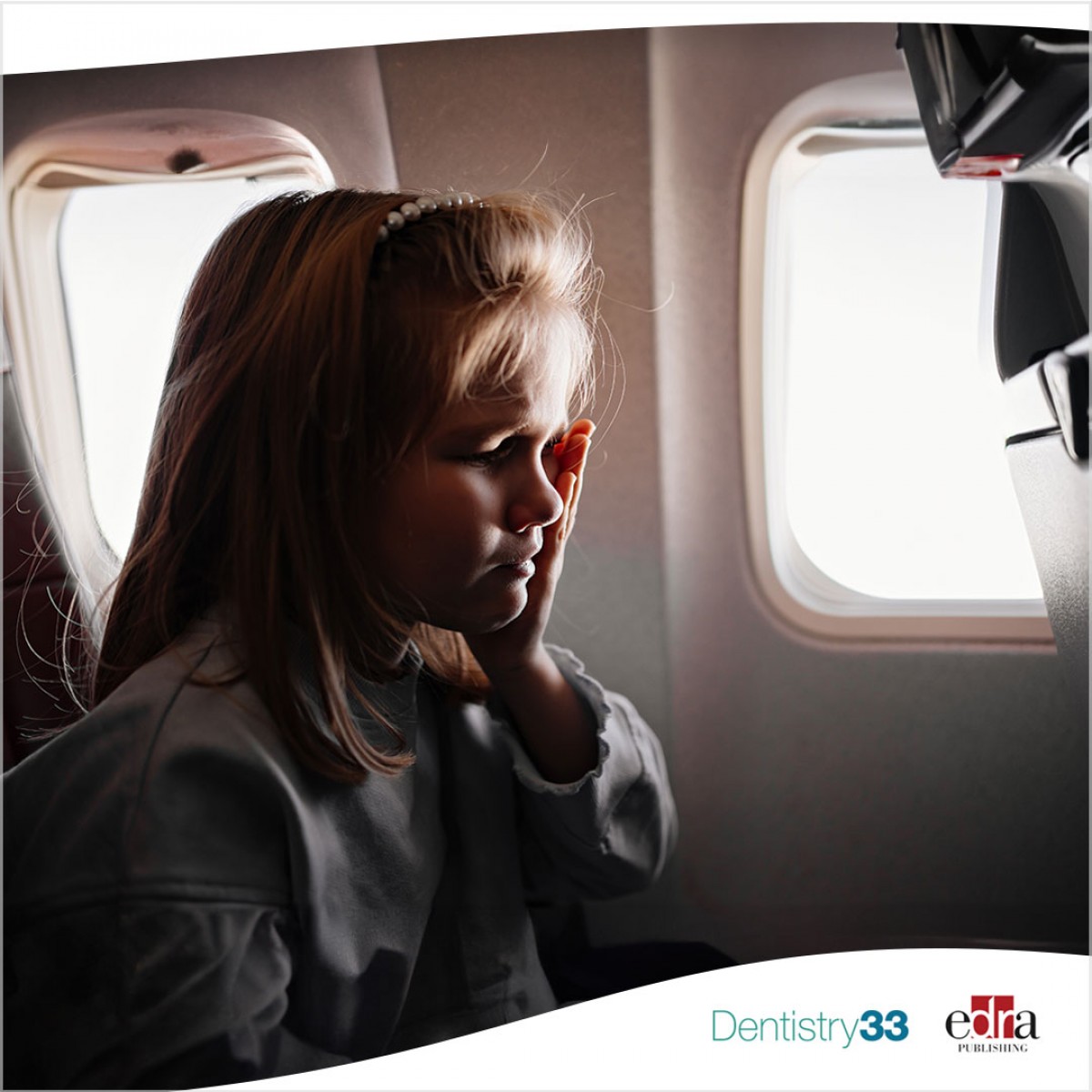
Millions of people travel every year for health care and, mainly, they do it to obtain therapies at a lower cost than in the country of origin. To a lesser extent, people travel to obtain assistance from a provider who shares the same culture or language, or because that specific therapy is not available or approved in the traveler’s country. People may also travel due to the need for a complex procedure and because there is no satisfactory experience or suitable specialist or adequate devices in the country of origin.
According to market research, dental tourism is growing by 12% and could generate $5.83 billion in business by 2025.
Dental care is one of the most common causes of medical tourism, along with surgery and cosmetic surgery, fertility treatments, transplants and cancer treatments.
Dental tourists usually travel from Western European countries to Eastern European countries, such as Hungary, Greece and Poland. North American patients typically prefer dental services in Mexico or Costa Rica, while Australian citizens tend to travel to Asian countries, including Malaysia, India and Thailand.
Dental tourism requires frequent air travel, and despite the pressurization of airliner cabins, at altitude pressure conditions <8000f there is still a risk of several adverse physiological effects caused by air pressure changes.
The dental tourist can be exposed to various health risks including barotrauma and barodontalgia, a pain caused by changes in ambient pressure.
Materials and methods
In a study published in January 2023 in the British Dental Journal, the authors provided guiding principles regarding the minimum time interval that must pass between dental procedures and air travel to prevent complications and adverse health effects.
The authors performed a literature search to gather information on complications related to air travel after dental treatment and were able to ascertain that there is little research in this area. Most of the studies were conducted on military crews, with flight and personnel characteristics different from those referring to civilians.
Results
The recommended time to fly safely and after most dental procedures is one week to six weeks after a sinus lift treatment.
The minimum time required between a conservative procedure and a flight is 24 hours and 24 to 48 hours for a simple extraction, 72 hours for a non-surgical endodontic procedure and a surgical extraction and implant placement, and at least two weeks for a sinus lift procedure.
Conclusions
From the data of this study, it can be concluded that dentists treating dental tourists should know and be familiar with the post-operative risks associated with air travel and should provide guidelines to their patients on how to prevent or reduce these risks.
However, more research on civilian flights is needed to formulate more accurate guidelines for the civilian population.
For more information: "Dental tourism and the risk of barotrauma and barodontalgia."
 Related articles
Market 04 September 2023

China, India, the Middle East and other Asia-Pacific and Latin American countries present a lucrative opportunity for players in the market.
According to the new report, the global dental tourism industry generated $6.2 billion in 2021 and is anticipated to generate $21.5 billion by 2031, witnessing a CAGR of 13.9% from 2022 to 2031. The...
Market 01 December 2022

Growth is expected due to demand for cosmetic dentistry and expansion of emerging markets worldwide.
Market 09 November 2022

The increase in growth is expected based on the increasing prevalence of periodontal disease, increasing awareness of oral hygiene and booming dental...
Market 30 September 2022
The global market for dental services is projected to grow to a value of $368.7 billion by 2027, according to a report by Research and Markets.
Read more

Continuous innovation across the DEXIS ecosystem helps clinicians work with greater clarity, confidence, and efficiency
News 23 October 2026
CrownPoint Partners announced the successful closing of a $9.2 million, five-property dental sale-leaseback portfolio located throughout Michigan.
News 23 October 2026
Dentsply Sirona, Midwest Dental Expand Technology Relationship
Beginning November 1, Dentsply Sirona will expand its long-standing relationship with Midwest Dental Equipment & Supply beyond consumables to include its complete technology portfo
Editorials 23 October 2026
Honoring Excellence: Graduation Awards for CU Anschutz Dental Students and Faculty

As the University of Colorado Anschutz School of Dental Medicine celebrates the graduating DDS Class of 2025, we are proud to recognize the students and faculty members whose excep
Implantology 23 October 2026
This peer-reviewed implantology article summarizes clinical evidence from Clinical oral implants research (2026). It focuses on findings that may help dental professionals evaluate treatment...



Copyright © 2026 - All Rights Reserved
ISSN 2767-1178