


Testing dental quality measures
Emergency department visits for nontraumatic dental conditions, subsequent follow-up dental visits

Background
The goal of this study was to test the feasibility, reliability, and validity of the Dental Quality Alliance’s adult dental quality measures for system-level implementation for ambulatory care sensitive (ACS) emergency department (ED) visits for nontraumatic dental conditions (NTDCs) in adults and follow-up after ED visits for NTDCs in adults.
Methods
Medicaid enrollment and claims data from Oregon and Iowa were used for measure testing. Testing included validation of diagnosis codes in claims data through patient record reviews of ED visits and calculations of κ statistic, sensitivity, and specificity.
Results
Adult Medicaid enrollees’ ACS NTDC ED visits ranged from 209 through 310 per 100,000 member-months. In both states, patients in the age category 25 through 34 years and non-Hispanic Black patients had the highest rates of ACS ED visits for NTDCs. Only one-third of all ED visits were associated with a follow-up dental visit within 30 days, decreasing to approximately one-fifth with a 7-day follow-up. The agreement between the claims data and patient records for identification of ACS ED visits for NTDCs was 93%, κ statistic was 0.85, sensitivity was 92%, and specificity was 94%.
Conclusions
Testing revealed the feasibility, reliability and validity of 2 DQA quality measures. Most beneficiaries did not have a follow-up with a dentist within 30 days of an ED visit.
Practical implications
Adoption of quality measures by state Medicaid programs and other integrated care systems will enable active tracking of beneficiaries with ED visits for NTDCs and develop strategies to connect them to dental homes.
Enihomo Obadan-Udoh et al. "Testing dental quality measures: Emergency department visits for nontraumatic dental conditions and subsequent follow-up dental visits." JADA. 2 May 2023. DOI: https://doi.org/10.1016/j.adaj.2023.03.008
 Related articles
Editorials 21 April 2026
NYU Dentistry Receives $5M to Expand Oral Health Care for Children with Disabilities

State funding will create dedicated space for pediatric and adolescent care and improve access for people with disabilities across the lifespan

A new grant awarded to Marcie S. Rubin, DrPH, MPH, MPA, associate professor of Behavioral Sciences in Dental Medicine at the Columbia University College of Dental Medicine will support the...
Products 14 October 2025
How oral health professionals can better support patients’ oral and systemic health with more microbiome-friendly oral care

Priyanka Prajapati, a student in the UW School of Dentistry’s International Dentist DDS (UWIDDS) program, has done a tremendous job using interprofessional collaboration to help improve access to...
News 23 May 2025
New Report: People with Disabilities Face Major Barriers to Accessing Oral Health Care

According to new data released by CareQuest Institute for Oral Health, adults with disabilities face major barriers to accessing oral health care and are at greater risk for poor oral health...
Read more
Products 21 October 2026

Foundation and ScanOS bring scanning into the SprintRay workflow; Nano Series introduces compact chairside printing, washing, and curing; GC partnership expands validated restorati
News 21 October 2026

(Nasdaq: HSIC) announced today that Emmanuel Caprais, former Senior Vice President and Chief Financial Officer of ITT, Inc.
News 21 October 2026
Editorials 21 October 2026
From California to Canada: CU Anschutz School of Dental Medicine at ADEA, GRC and IADR 2026
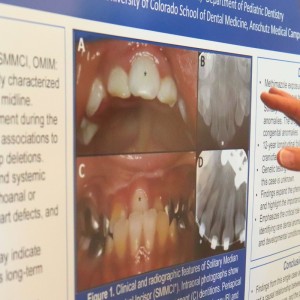
The CU Anschutz School of Dental Medicine will showcase a wide breadth of educational innovation, faculty development, clinical training and research at three major gatherings this
Endodontics 21 October 2026

This peer-reviewed endodontics article summarizes clinical evidence from BMC oral health (2026). It focuses on findings that may help dental professionals evaluate treatment decisions, patient...



Copyright © 2026 - All Rights Reserved
ISSN 2767-1178