


Correlation between Implantology and risk of bleeding in patient in chronic therapy with antithrombotic drugs
Lara Figini
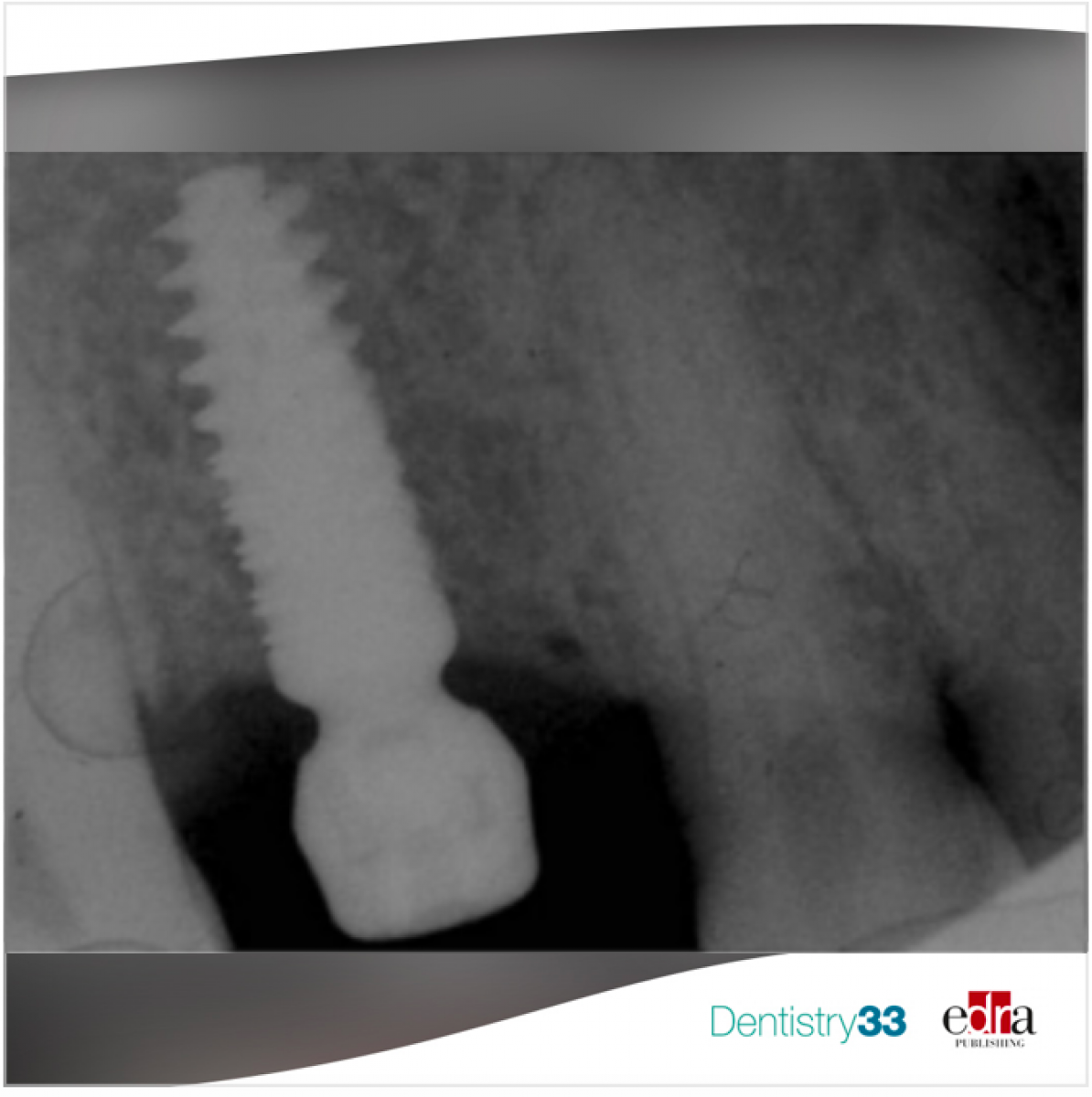
Antiplatelet and anticoagulant drugs are now widely administered in the prevention and treatment of venous and arterial thrombosis. The main categories of antithrombotic drugs are:
- antiplatelet drugs (AP), such as aspirin, dipyridamole and thienopyridine (clopidogrel, ticlopidine and prasugrel) which are more commonly prescribed in patients with ischemic cardiovascular diseases, cerebrovascular diseases and peripheral arterial diseases.
- oral anticoagulant drugs (OAC) such as warfarin, acenocoumarol and phenprocoumon, which are instead more commonly administered in patients with atrial fibrillation, heart valve prostheses, deep vein thrombosis or pulmonary embolism, as being vitamin K antagonists they are indicated in the prevention and treatment of venous thromboembolism.
- direct oral anticoagulant drugs (DOAC), which are indicated to prevent stroke or systemic embolism in patients with atrial fibrillation and for the prevention of thrombosis after elective hip and knee surgery. Compared to vitamin K antagonists, DOACs have some advantages including the rapid and direct onset of the mode of action, the predictable anticoagulant response, the broad therapeutic index, limited drug and food interactions, and the non-need for monitoring of routine of their effects.
In the last 2 decades, there have been several studies in the literature that have investigated the need or not to stop taking these drugs in anticipation of oral surgery treatments. Virtually all studies and recent literature reviews have shown that tooth extraction can be performed safely without stopping antiplatelet drugs
and antithrombotic therapies if adequate local haemostatic solutions are used. On the contrary, the literature is scarce on giving indications on the procedures to be adopted in case of dental implant surgery (both single and multiple implants, bone grafts, sinus lift procedures) in patients taking AP, OAC and DOAC, given that these interventions should be considered procedures with a high risk of bleeding in patients on antithrombotic therapy.
Materials and Methods
In the systematic review conducted by Bajkin et al, the authors evaluated the risk of bleeding in dental implant procedures in patients taking antiplatelet drugs (AP), oral anticoagulants (OAC) and direct oral anticoagulants (DOAC).
The authors performed a literature search for relevant articles using the MEDLINE and SCOPUS databases based on a pre-established search strategy. AP, OAC and DOAC medications and postoperative bleeding episodes were analyzed.
Results
Nine studies were included in the review. Postoperative bleeding occurred in 10 (2.2%) of the 456 cases that required implant placement; in all these cases, bleeding was controlled with the use of local hemostatic agents. The incidence of bleeding in patients taking antiplatelet drugs it was found to be 0.4%. Among those taking oral anticoagulants, the incidence of bleeding was 5.7% and among those taking direct oral anticoagulants, the incidence of bleeding was 3.3%. The number of more extensive surgical procedures (i.e., sinus lift and bone graft procedures) was limited, and often no further information was provided on the surgery, specific antithrombotic administered or bleeding, so it was not possible. perform a further analyses.
Conclusions
From the data emerging from this review, which must be confirmed by other similar reviews, it can be concluded that OAC, DOAC or AP drugs should not be suspended in anticipation of implant surgery as the risk of bleeding is very low and well controllable through local hemostats.
Clinical implications
The various studies published in the literature support the carrying out of implant surgery without interruption of drug therapy with antiplatelet agents, oral anticoagulants and direct oral anticoagulants. However, the assessment of the bleeding risk associated with more extensive implant surgery requires further investigation.
For additional information: Dental implant surgery and risk of bleeding in patients on antithrombotic medications: A review of the literature
 Read more

Continuous innovation across the DEXIS ecosystem helps clinicians work with greater clarity, confidence, and efficiency
News 23 October 2026

CrownPoint Partners announced the successful closing of a $9.2 million, five-property dental sale-leaseback portfolio located throughout Michigan.
News 23 October 2026
Dentsply Sirona, Midwest Dental Expand Technology Relationship

Beginning November 1, Dentsply Sirona will expand its long-standing relationship with Midwest Dental Equipment & Supply beyond consumables to include its complete technology portfo
Editorials 23 October 2026
Honoring Excellence: Graduation Awards for CU Anschutz Dental Students and Faculty

As the University of Colorado Anschutz School of Dental Medicine celebrates the graduating DDS Class of 2025, we are proud to recognize the students and faculty members whose excep
Implantology 23 October 2026

This peer-reviewed implantology article summarizes clinical evidence from Clinical oral implants research (2026). It focuses on findings that may help dental professionals evaluate treatment...



Copyright © 2026 - All Rights Reserved
ISSN 2767-1178