


EARLY IMPLANT LOADING IN THE ATROPHIC POSTERIOR MAXILLA: AN 11-YEAR RANDOMISED CONTROLLED TRIAL OF 1-STAGE LATERAL VERSUS CRESTAL SINUS LIFT AND 8-MM-LONG HYDROXYAPATITE-COATED IMPLANTS
Authors: G. Cannizzaro, P. Felice, D. R. Ippolito, M. Lazzarini, E. Velasco-Ortega, M. Esposito

OBJECTIVES: To compare 10- to 16-mm-long implants inserted into maxillary sinuses augmented with a lateral approach versus 8-mm-long implants placed in crestally augmented sinuses, both loaded early after 45 days.
MATERIALS AND METHODS: Forty partially or fully edentulous patients having 3 to 6 mm of residual crestal bone height and at least 4 mm thickness below the maxillary sinuses were randomised according to a parallel group design to receive either one to three 10- to 16-mm-long hydroxyapatite- coated implants (20 patients) after lateral sinus lift with 50% anorganic bovine (Bio-Oss) and 50% autogenous bone, or 8-mm-long implants (20 patients) after crestal sinus lift with autogenous bone. All implants were submerged and left to heal for 45 days before being loaded. Within one week after abutment connection, implants were loaded with screw-retained fully acrylic provisional prostheses. Definitive metal-ceramic prostheses were provisionally cemented 45 days after abutment connection. Outcome measures were: prosthesis or implant failure, any complications, and radiographic peri-implant marginal bone level changes. All patients were followed up to 11 years after loading.
RESULTS: One patient per group dropped out. One implant failed in the short implant group versus five implants in three patients from the longer implant group, the difference being not statistically significant (difference in proportions: 0.11; P = 0.604; 95% CI = -0.15 to 0.36). Three prostheses in the long implant group could not be fitted or were replaced versus one crown on short implants, the difference being not statistically significant (difference in proportions: 0.11; P = 0.604; 95% CI = -0.15 to 0.36). Six complications occurred in six patients from the short implant group versus ten complications in seven patients from the long implant group, the difference being not statistically significant different (difference in proportions: 0.053; P = 1.000; 95% CI = -0.265 to 0.357); however, two major postoperative complications occurred in the longer implant group: one abscess and one sinusitis, both of which determined the complete failure of the treatment in two patients (four implants lost). After 11 years, a total of 1.26 mm of peri-implant marginal bone had been lost at long implants and 0.64 mm at short implants, and the difference between the two groups was statistically significant (difference: 0.62 mm, 95% CI = 0.25 to 0.99; P=0.002).
CONCLUSIONS: In atrophic maxillary sinuses with a residual bone height of 3 to 6 mm, 8-mm short implants placed in simultaneously crestally lifted sinus might be a preferable choice than one-stage lateral sinus lift for placing longer implants, since the former appear be associated with lower morbidity. Implants placed with an insertion torque superior to 35 Ncm can be early loaded at 6 weeks.
For additional information: http://www.clinicaltrialsindentistry.com/847-2/
 Tag
Tag
Related articles
Authors: Carlo Barausse, Tiziano Maranesi, Roberto Pistilli, Pietro Felice
To evaluate the current state of the art in the surgical management of the fixed rehabilitations in the vertical atrophies of the jaws. Guide- lines and clinical indications will be given, with a...
Implantology 05 July 2021
Authors: Pietro Felice, Carlo Barausse, Roberto Pistilli, Jacopo Buti, Manlio Gessaroli, Marco Esposito
Objectives. To evaluate whether short (5 to 8.5 mm) dental implants could be a suitable alternative to longer (at least 11.5 mm long) implants for supporting dental prostheses placed in atrophic...

Long-term studies have shown that there is no significant difference between the success rates of implants placed in natural alveolar bone and those placed in...
Read more
Products 30 September 2026
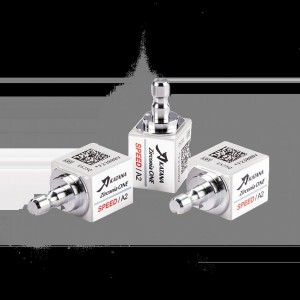
New workflow capability helps clinicians further accelerate same-day zirconia restorations
News 30 September 2026
Dental Care Alliance Appoints New CFO and Chief Marketing Officer
Seasoned healthcare executives bring decades of financial leadership and growth marketing expertise to support the company’s next phase of expansion
News 30 September 2026
Dentsply Sirona Completes 2026 Ultrasonic Scaling Teaching Institute
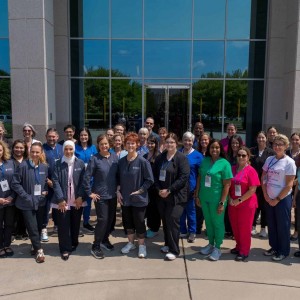
Dentsply Sirona welcomed key dental hygiene and periodontal faculty from across the US and Canada to DS Academy in Charlotte, North Carolina, for hands-on training, curriculum deve
Editorials 30 September 2026

The forerunner of what’s now Texas A&M College of Dentistry opened 120 years ago in Dallas with the mission of educating dentists to provide quality care to patients in North Texas
Oral Hygiene & Prevention 30 September 2026
Propolis-containing formulations in caries prevention - a systematic review and meta-analysis.
This peer-reviewed oral hygiene & prevention article summarizes clinical evidence from Clinical oral investigations (2026). It focuses on findings that may help dental professionals evaluate...



Copyright © 2026 - All Rights Reserved
ISSN 2767-1178