


Are short implants a safe alternative to bone graft procedures?
Alessandra Abbà
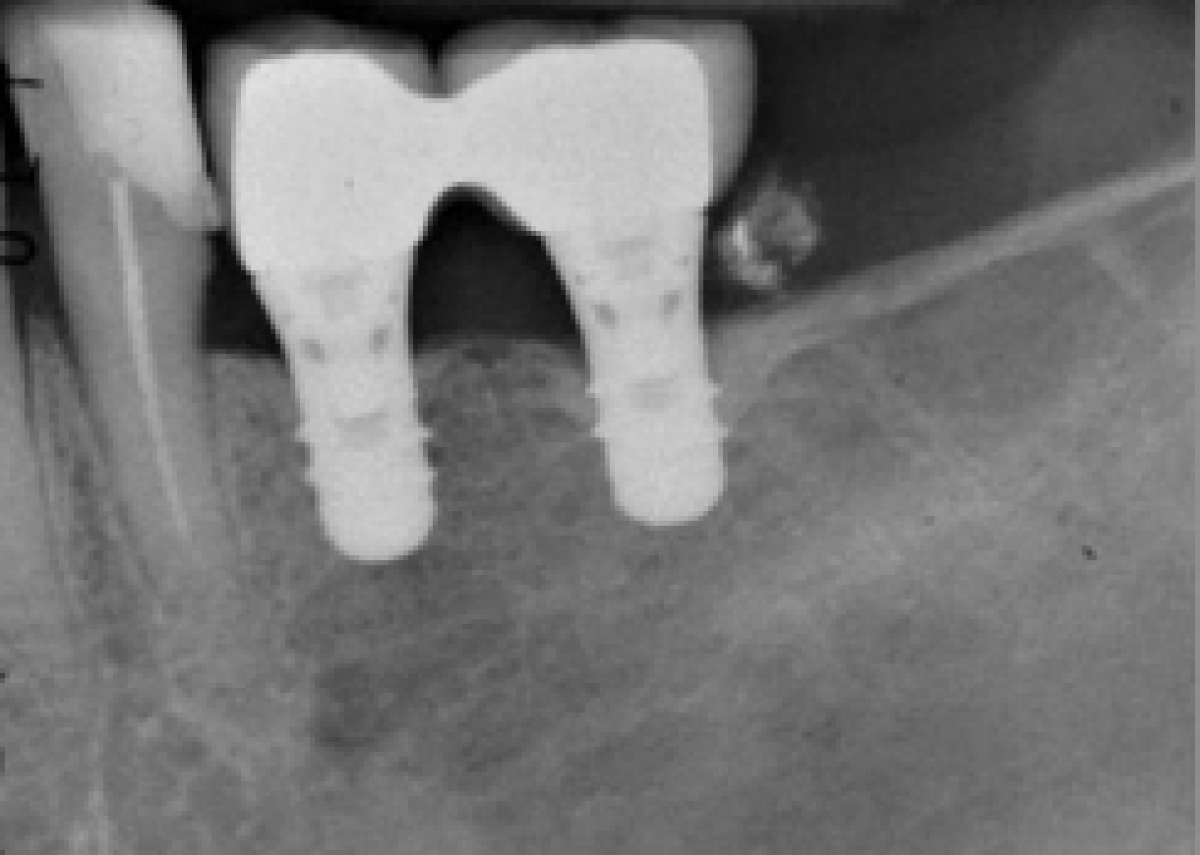
Long-term studies have shown that there is no significant difference between the success rates of implants placed in natural alveolar bone and those placed in grafted bone. However bone graft techniques implies higher costs and risks of complications and may lead to an increased post-operative morbidity. In these cases, as an alternative, short implants can be used. The definition of short implant is still controversial. Recently they have been defined with a length less than 8mm. Recent studies have demonstrated that augmentation procedures have similar outcome in terms of implant failures than short implants. Furthermore the use of short implants implicates many advantages such as the possibility to avoid CT scans, a safer surgery and inferior costs. On the other hand some elements of debate (bone to implant contact, the c/i ratio and the crestal bone resorption) limit the use of short implants. In a randomised controlled trial published in EJOI in 2018, the authors compare survival and success rates of 6-mm and 10-mm long implants in partially edentulous posterior areas. Prosthetic and biomechanical variables on marginal bone loss (MBL) and on the survival rates of implant-supported prostheses were evaluated.
Materials and Methods
24 patients, with a partially edentulous area in the jaws were included in the study. Height and width of the bone should allow the positioning of 2 to 3 adjacent 10 × 4.1 mm implants without any bone graft procedure, as main inclusion criteria. Patients were randomly allocated according to a parallel group design to receive 6-mm long or 10-mm long implants. A total of 54 implants were placed (26 × 6 mm and 28 × 10 mm implants). Prosthesis were realised 8 weeks after surgery and were followed for 10 years. Outcome measures were prosthesis and implant survival, as well as marginal bone loss and complications.
Results
After 10 years, 17 patients (eight with 6 mm implants and nine with 10 mm implants) were still available: three 6 mm and four 10 mm patients were lost to the follow-up. One 6 mm implant failed during the healing period but no other implants were lost after loading. Nine patients in the 6 mm group showed a total of 15 complications (two mucositis, six decementations and seven chippings). Ten patients in the 10 mm group showed a total of 13 complications (five mucositis, two decementations and six chippings). Generally, the difference for complications between the two groups was not statistically significant (P = 0.22; difference in proportion = -0.02; 95% CI: -0.31 to 0.27). Decementations in the 6 mm group registered a value statistically significant higher than the 10 mm group (P = 0.04; difference in proportion = 0.39; 95% CI: 0.03 to 0.74). Marginal bone loss at 10 years was 0.84 and 0.37 mm with the 6 mm and 10 mm groups, respectively (difference between the two groups 0.49 mm; 95% CI -0.31; 1.29; not statistically significant: t test P = 0.22)
Conclusions
From the study it’s not possible drawing general conclusions because of the limited sample. Overall survival rate of a prosthesis supported by 6 mm and 10 mm implants seem to be similar after 10 years. Marginal bone loss was similar. Prosthetic and biological complications rates showed high values in both groups. Rehabilitations supported by 6-mm or 10-mm long implants show comparable clinical outcomes in survival and success rates even if 6 mm implants show a tendency for decementations.
For additional informations: 6 mm vs 10 mm-long implants in the rehabilitation of posterior jaws: A 10-year follow-up of a randomised controlled trial.
 Related articles
Authors: Carlo Barausse, Tiziano Maranesi, Roberto Pistilli, Pietro Felice
To evaluate the current state of the art in the surgical management of the fixed rehabilitations in the vertical atrophies of the jaws. Guide- lines and clinical indications will be given, with a...
Implantology 05 July 2021
Authors: Pietro Felice, Carlo Barausse, Roberto Pistilli, Jacopo Buti, Manlio Gessaroli, Marco Esposito
Objectives. To evaluate whether short (5 to 8.5 mm) dental implants could be a suitable alternative to longer (at least 11.5 mm long) implants for supporting dental prostheses placed in atrophic...
Implantology 10 November 2020
Authors: G. Cannizzaro, P. Felice, D. R. Ippolito, M. Lazzarini, E. Velasco-Ortega, M. Esposito
OBJECTIVES: To compare 10- to 16-mm-long implants inserted into maxillary sinuses augmented with a lateral approach versus 8-mm-long implants placed in crestally augmented sinuses, both loaded early...
Read more
Products 20 October 2026

News 20 October 2026

In recognition of National Dental Hygiene Month, Delta Dental highlights key findings from its 2026 State of America’s Oral Health and Wellness Report , a nationwide analysis of co
News 20 October 2026

Abra Health Group has launched The Dental Bank, a new community impact initiative designed to make essential oral health resources more accessible to individuals and families throu
Editorials 20 October 2026
Woman’s skull likely proof of ancient nose amputation, says College of Dentistry professor

Qian Wang, professor in biomedical sciences at Texas A&M College of Dentistry in Dallas, identified what he and other researchers believe is likely one of the first examples of an
Endodontics 20 October 2026
This peer-reviewed endodontics article summarizes clinical evidence from Clinical oral investigations (2026). It focuses on findings that may help dental professionals evaluate treatment decisions,...



Copyright © 2026 - All Rights Reserved
ISSN 2767-1178