


Can polyetherketone replace titanium and zirconia in implant-supported prosthesis?
By Lorenzo Breschi and Annamaria Forte

Introduction
A precise fit between the implant and prosthetic framework is crucial for successful and long-term integration of an implant-supported prosthesis (ISP). Any discrepancies may lead to stress-related issues like implant and abutment fractures, screw problems and bone loss.
The most used framework materials include:
- titanium (Ti), commonly chosen for good biocompatibility and mechanical properties and the possibility to be produced with CAD-CAM techniques despite the gray color, difficulty bonding with certain materials, and milling challenges
- zirconia (Zir), which presents good toughness, strength, biocompatibility and aesthetics but its brittleness can lead to technical and biological problems due to stress transfer, and
- polyetherketone (PEEK), disclosing an elastic modulus close to that of the bone, transmitting minimal force to the abutment.
This in vitro study aimed to investigate the differences in terms of fit and fracture strength among these materials.
Materials and methods
A total of 30 ISP epoxy resin casts were obtained from a typodont with one straight implant (Nobel Biocare) in the mandibular right canine region and one implant with a 30-degree distal tilt in the mandibular right first molar region.
All frameworks (n=10) were fabricated on their own epoxy resin cast with multiunit abutment replicas by using a computer-aided design and computer-aided manufacturing system (exocad-Yenadent). The PEEK and zirconia frameworks were fabricated with Ti-bases. Primer (MKZ) and resin cement (DTK adhesive) were used to cement the frameworks to the Ti-bases under a static load of 10 N.
After thermomechanical aging (1.2×10⁶ cycles, 120 N, 5 °C-55 °C), marginal gaps between the Ti-bases and cemented frameworks and vertical and passive fits between the Ti-bases and framework and multi-unit abutments were measured by using a stereomicroscope (Euromex) at ×100 magnification. Fracture resistances and types were then determined by using a universal test machine and a stereomicroscope at ×40 magnification.
Data were analyzed by using 1-way analysis of variance (ANOVA) and the Tukey HSD and Fisher-Freeman-Halton tests (α=.05).
Results
The marginal gaps of the PEEK and zirconia frameworks were respectively 83.5 ±27.1 and 81.8 ±17.8 μm. PEEK (23.7 ±4.6) and zirconia (32.9 ±8.7) had a better vertical fit (μm) than Ti (52.5 ±10.6) (P<.001). Zir (49.3 ±16.2) (P<.001) and PEEK (70.9 ±19.6) (P>.05) frameworks had better passive fit (μm) than Ti (91.3 ±24.2). Ti had the highest mean fracture resistance (N) (14800.2 ±3442.3) followed by Zir (7318.7 ±1385.1) and PEEK (3448.9 ±486.6) (P<.001). Fracture types were different in distinct groups (P<.001).
Conclusions
Within the limitation of this study, the authors concluded that the PEEK and Zir frameworks with Ti bases had better vertical and passive fit than the Ti frameworks. All ISP frameworks represented mean marginal fit below 92 μm and withstood physiologic occlusal forces after thermomechanical aging.
Atsu S, Erol U. "Marginal fit and fracture resistance of polyetheretherketone, zirconia, and titanium implant-supported prosthesis frameworks for a partially edentulous arch after thermomechanical aging." J Prosthet Dent. 2023 Aug 22: S0022-3913(23)00487-0. doi: 10.1016/j.prosdent.2023.07.015.
 Related articles
Restorative dentistry 30 December 2022

Researchers evaluated the effect of pre-heating on wear and color stability of high-viscosity bulk-fill resin composites vs. conventional resin composites.
Read more
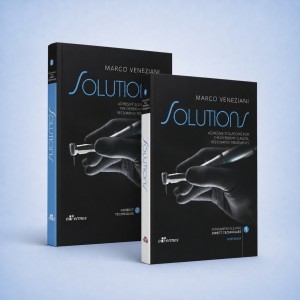
Solutions is an Edra professional dentistry reference focused on clinical practice, education and treatment planning.
Products 16 October 2026
Karen Davis on Philips Sonicare DiamondClean 9900 Prestige & Smarter Brushing
News 16 October 2026
Align Technology to Report Q3 2026 Financial Results October 28
(Nasdaq: ALGN), a leading global medical device company that designs, manufactures, and sells the Invisalign® System of clear aligners, iTero™ intraoral scanners, and exocad™ CAD/C
News 16 October 2026

Fewer people on intake, faster turnaround, and no lost cases: Relu’s new automation captures and centralizes every scan and Rx from every source within a minute of arrival
Editorials 16 October 2026

Achievement and service take center stage as the University of Colorado Anschutz School of Dental Medicine honors the Doctor of Dental Surgery (DDS) Class of 2026.



Copyright © 2026 - All Rights Reserved
ISSN 2767-1178