


Implementation of advanced technologies – the basis for the development of modern dentistry

Purpose
Purpose of the paper is to analyse the development of dentistry from ancient times to the present day, to reveal the role of advanced technologies in the development of modern dentistry and to outline the requirements for the knowledge and skills of dentists and dental technicians in the digital era of the new global world.
Design/methodology/approach
The work is based mostly on the author’s own research. It illustrates examples of problems in dentistry that the application of engineering approaches and advanced production technologies has solved.
Findings
It has been shown that implementing digital and CAD/CAM technologies can change the conventional treatment plan with fixed partial dentures to a semi- or fully digitalised protocol. It has been proven that for the successful application of advanced technologies in clinical practice, clinicians should have interdisciplinary knowledge in the fields of dentistry, new materials, CAD/CAM design, and production processes. The profession of dental technician requires a high level of computer skills, working with specialised automated equipment and constantly upgrading qualifications.
Research limitations/implications
Due to the very fast development of the materials and technologies for manufacturing dental restorations, not all of them are included in the present paper.
Practical implications
The advanced technologies, improved world communications and globalisation allow for flexibility in selecting a dental laboratory with the most suitable equipment for producing a particular dental construction. Therefore, the present study would greatly interest dental clinics and laboratories.
Originality/value
Nowadays, dental treatment synergistically depends on new technologies in clinics and dental laboratories. The development of modern dentistry is based on the mutual understanding between the dentist and the dental technician on the specifics, implementation and application of the advanced technologies.
Author: T.D. Dikova
Source: https://archivesmse.org/
 Related articles
Digital Dentistry 04 November 2025
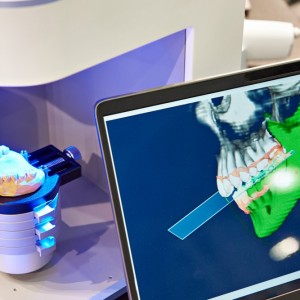
Digitalisation is an expanding field in dentistry and implementation of digital teaching methods in dental education is an essential part of modern education.
Digital Dentistry 01 May 2025
Current implementation of digital dentistry for removable prosthodontics in US dental schools

Although digital technology has been widely integrated into dental education, there is limited literature investigating the extent of the integration of computer-aided design and computer-aided...
Periodontology 14 March 2025

Implementation of the new classification of periodontal diseases requires careful navigation of the new case definitions and organization of the diagnostic process along rationale and easily...
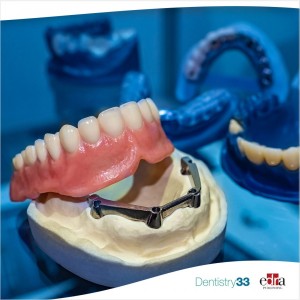
Despite increasing evidence, dentists have not widely adopted repairs. The authors aimed to develop and test potential interventions targeting dentists’ behavior.
Oral Hygiene & Prevention 16 March 2023
Standardized practice-based oral health data collection: A global pilot study

Researchers conducted a feasibility project involving 12 countries that tested the implementation of the methodology and data collection tools and assessed data quality from six countries.
Read more
Europe 27 September 2026 - 30 November -0001
Digital Dentistry Society Global Congress 2026: Event Preview and Professional Highlights

The Digital Dentistry Society Global Congress 2026 will take place from October 22, 2026 to October 24, 2026 in TBD, Rotating Europe, offering dental professionals a focused environment for...
Editorials 27 September 2026
Dentistry33 survey highlights replacement care, deep caries and evolving restorative workflows
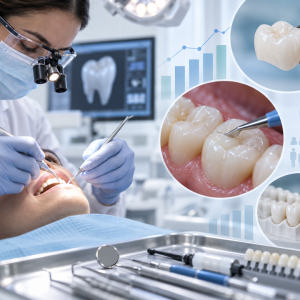
Reader survey finds direct composites remain dominant, secondary caries is the leading reason for restoration replacement, and clinicians want more training in pulp preservation
Reader survey finds direct composites remain dominant, secondary caries is the leading reason for restoration replacement, and clinicians want more training in pulp preservation
Edra Professional Books 26 September 2026
Manual of oral surgery: A Practical Reference for Dental Professionals
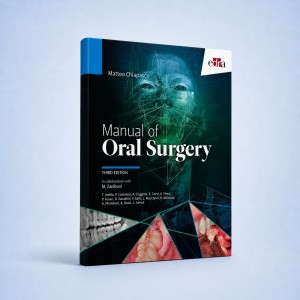
Manual of oral surgery is an Edra professional dentistry reference focused on clinical practice, education and treatment planning.
Products 25 September 2026
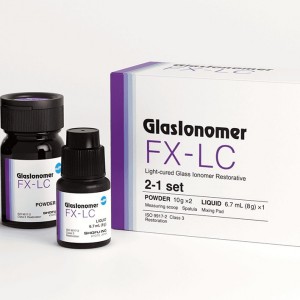
Shofu Dental’s line of dental restorative materials now includes FX-LC, a next-generation, light-cure, resin-reinforced glass ionomer formulated to deliver high strength, efficient 4
News 25 September 2026

The scholarships are part of an ongoing workforce solutions strategy to help address the need for skilled dental hygienists



Copyright © 2026 - All Rights Reserved
ISSN 2767-1178