


Association between intracanal medicament radiopacity, streak artifact production using CBCT

Introduction
This study aimed to calculate the correlation between the radiopacity levels of various intracanal medicaments and radiolucent streak formation using cone-beam computed tomography (CBCT).
Methods
Seven commercially available intracanal medicaments were tested, which contained different amounts of radiopacifier [Consepsis, Ca(OH)2, UltraCal XS, Calmix, Odontopaste, Odontocide, and Diapex Plus]. Their radiopacity levels were measured according to the International Organization for Standardization 13116 testing standards (mmAl). Subsequently, the medicaments were placed in 3 canals of radiopaque artificial printed maxillary molars (n = 15 roots per medicament), leaving the second mesiobuccal canal empty. CBCT imaging was carried out using an Orthophos SL 3-dimensional scanner under recommended manufacturer exposure settings. Radiopaque streak formation was assessed by a calibrated examiner using a previously published grading system (0–3). The Kruskal-Wallis and Mann-Whitney U tests with and without Bonferroni correction were used to compare radiopacity levels and radiopaque streak scores for the medicaments. Their relationship was assessed using the Pearson correlation coefficient. The level of significance was set as (α = 0.05).
Results
Diapex plus presented with the highest radiopacity levels (4.98 ± 0.01) and radiopaque streak scores [middle third (2.8 ± 0.18); apical third (2.73 ± 0.43)]; which was similar to UltraCal XS's radiopaque streak scores [middle third (2.8 ± 0.92); apical third (2.73 ± 0.77)]. Consepsis had the lowest radiopacity levels (0.12 ± 0.05), followed by Odontocide (0.60 ± 0.05). Consepsis and Ca(OH)2 were scored 0 for artifacts in all roots at all levels. A high positive correlation (R = 0.95) was found between radiopacity and streak formation.
Conclusions
The radiopacity of intracanal medicaments varies and strongly correlates with the formation of radiolucent streak artifacts during CBCT.
Alizafar Wahidi et al. "Association between Intracanal Medicament Radiopacity and Streak Artifact Production Using Cone-beam Computed Tomography: A Laboratory Study." Journal of Endodontics. 4 May 2023. DOI: https://doi.org/10.1016/j.joen.2023.04.011.
 Tag
Tag
Related articles
Endodontics 17 February 2026
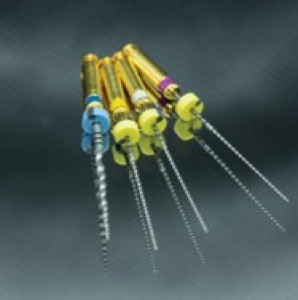
Treatment options for endodontic failure include nonsurgical or surgical endodontic retreatment, intentional replantation, and extraction with or without replacement of the tooth.

Fracture of shaping instruments within root canals is a common undesirable incident in endodontics. These fractures can prevent proper preparation, disinfection and obturation of the canal. They can...

This meta-analysis sought to identify the in vivo prevalence and influencing factors of middle mesial canal in mandibular first and second molars based on cone-beam computed tomography scans.

A study in the Angle Orthodontist evaluated the validity and reliability of marginal bone level measurements made on CBCT images produced using two reconstruction techniques, two viewing modes, and...
Endodontics 28 March 2023
External cervical resorption: relationships between classification, treatment, and outcomes

The purpose of this study was to identify possible associations between classification, treatment, and one-year outcome of external cervical resorption (ECR) lesions using the Heithersay and Patel...
Read more
Continuous innovation across the DEXIS ecosystem helps clinicians work with greater clarity, confidence, and efficiency
News 23 October 2026
CrownPoint Partners announced the successful closing of a $9.2 million, five-property dental sale-leaseback portfolio located throughout Michigan.
News 23 October 2026
Dentsply Sirona, Midwest Dental Expand Technology Relationship

Beginning November 1, Dentsply Sirona will expand its long-standing relationship with Midwest Dental Equipment & Supply beyond consumables to include its complete technology portfo
Editorials 23 October 2026
Honoring Excellence: Graduation Awards for CU Anschutz Dental Students and Faculty

As the University of Colorado Anschutz School of Dental Medicine celebrates the graduating DDS Class of 2025, we are proud to recognize the students and faculty members whose excep
Implantology 23 October 2026
This peer-reviewed implantology article summarizes clinical evidence from Clinical oral implants research (2026). It focuses on findings that may help dental professionals evaluate treatment...


Copyright © 2026 - All Rights Reserved
ISSN 2767-1178