


Shade matching process: the role of intraoral scanners
By Professor Lorenzo Breschi, Annamaria Forte

Introduction
Today, high aesthetic demand has revolutionized the treatment plans favored by the developments in materials and technique technologies. To fulfill the aesthetic requirements, it is, therefore, necessary that the final restoration replicate the optical properties of the natural dentition which is polychromatic and multilayered with intricate optical properties in nature.
The most common method used to accomplish this task is the visual shade selection using shade guides. The visual shade matching process produces highly variable results and it is influenced by multiple factors from the operator (i.e. eye fatigue, personal interpretation, clinical experience and proficiency). Environmental factors like light conditions also play a role in the outcome.
Numerous studies have reported a high percentage of color mismatches in aesthetic restorations. Consequently, the modern trend is to reduce these variables and introduce more reliable shade matching selection methods mainly based on instrumental or digital tools, such as digital cameras, spectrophotometers, spectroradiometers and colorimeters.
Recently, high-definition cameras of intraoral scanners have also been proposed to be used in shade matching selection. The possibility to combine impression making with the color selection in one tool would be extremely advantageous to clinical practice.
A recently published systematic review and meta-analysis by Dr. Mohammed Akl et al. evaluated the available literature to provide information on the viability of using intraoral scanners for shade matching.
Materials and methods
Researchers searched electronic databases including PubMed/MEDLINE, SCOPUS, EBSCO, Cochrane and ProQuest for articles published between January 1, 2011 and December 30, 2021 using the main search terms “intraoral scanners,” “scanners,” “TRIOS,” “CEREC,” “Planmeca,” “Medit” and “digital dentistry.” The team used these terms with one of the following keywords: “EasyShade” or “shade selection” or “shade matching” or “shade” or “tooth color” or “tooth shade” or “digital shade matching.” Both clinical and laboratory studies published in peer-review journals using the intra-oral scanners for shade matching were included in the review process. A manual search of the references completed the search.
Results
The search strategies yielded a total of 1,635 potential articles. After evaluation of titles and abstracts, 19 full-text articles were identified and reviewed. Four articles were further excluded as they did not meet the inclusion criteria, and 15 studies were included in the final review.
Most studies included visual shade matching in their comparison to different instruments that included intraoral scanners. The studies included in this review assessed only three intraoral scanners: TRIOS 3 (3Shape; Copenhagen, Denmark), CEREC Omnicam and CEREC Primescan (Dentsply Sirona; York, PA).
The TRIOS 3 was the most evaluated instrument. Eleven of the 15 studies used one of the Vita EasyShade spectrophotometers (EasyShade, EasyShade V, EasyShade Advance; VITA; Bad Säckingen, Germany) as a reference device.
Accuracy varied significantly between studies, with the majority recommending the use of visual shade matching to confirm or verify the intraoral scanner results.
Intraoral scanners are highly repeatable for shade matching and outperformed visual shade matching. Setting intraoral scanners to the Vita 3D Master shade guide improved both accuracy and precision. Shade matching with intraoral scanners may be influenced by external factors such as ambient light sources and incorrect use or manipulation.
Conclusions
Based on the findings of this systematic review and meta-analysis, researchers concluded that intraoral scanners set to the Vita 3D Master shade guide may be used for shade matching. However, due to the variability of the data, a visual shade matching confirmation is still recommended.
Mohammed A. Akl, Dina E. Mansour, Fengyuan Zheng. "The Role of Intraoral Scanners in the Shade Matching Process: A Systematic Review." Journal of Prosthodontics. 02 August 2022. https://doi.org/10.1111/jopr.13576
 Related articles
Editorials 20 September 2026
Dentistry33 survey shows small practices balancing growth, costs and technology modernization
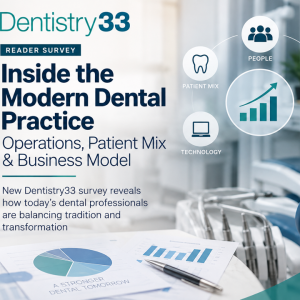
Reader survey finds solo and small practices remain prominent while staffing, rising costs and digital adoption shape business priorities
Reader survey finds solo and small practices remain prominent while staffing, rising costs and digital adoption shape business priorities

Products 26 August 2025
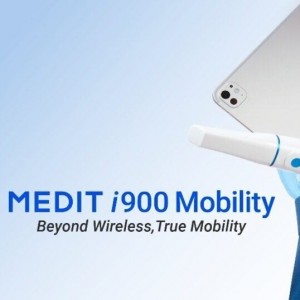
Medit, a global leader in digital dentistry, today introduces the Medit i900 Mobility, a next-generation intraoral scanner designed to deliver simplicity and true mobility to clinical workflows.
News 01 April 2025

OMNIVISION, a leading global developer of semiconductor technology—including advanced digital imaging, analog, and display solutions—and Biotech Dental, a specialist in the design and manufacture...
News 06 February 2025
Technavio Forecasts USD 915.75 Million Growth in Intraoral Scanners Market by 2028

The global intraoral scanners (IOS) market is poised for significant growth, with an estimated increase of USD 915.75 million from 2024 to 2028, reflecting a CAGR of 11.68%, according to Technavio.
Read more
Continuous innovation across the DEXIS ecosystem helps clinicians work with greater clarity, confidence, and efficiency
News 23 October 2026
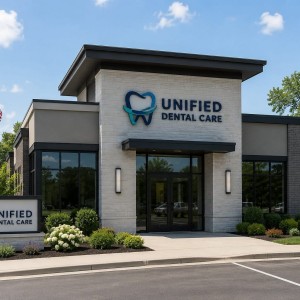
CrownPoint Partners announced the successful closing of a $9.2 million, five-property dental sale-leaseback portfolio located throughout Michigan.
News 23 October 2026
Dentsply Sirona, Midwest Dental Expand Technology Relationship

Beginning November 1, Dentsply Sirona will expand its long-standing relationship with Midwest Dental Equipment & Supply beyond consumables to include its complete technology portfo
Editorials 23 October 2026
Honoring Excellence: Graduation Awards for CU Anschutz Dental Students and Faculty

As the University of Colorado Anschutz School of Dental Medicine celebrates the graduating DDS Class of 2025, we are proud to recognize the students and faculty members whose excep
Implantology 23 October 2026
This peer-reviewed implantology article summarizes clinical evidence from Clinical oral implants research (2026). It focuses on findings that may help dental professionals evaluate treatment...



Copyright © 2026 - All Rights Reserved
ISSN 2767-1178