


Comparison between digital scan and conventional impression to fabricate dental prosthesis
Co-authors: Claudia Mazzitelli, Federico Del Bianco
Lorenzo Breschi
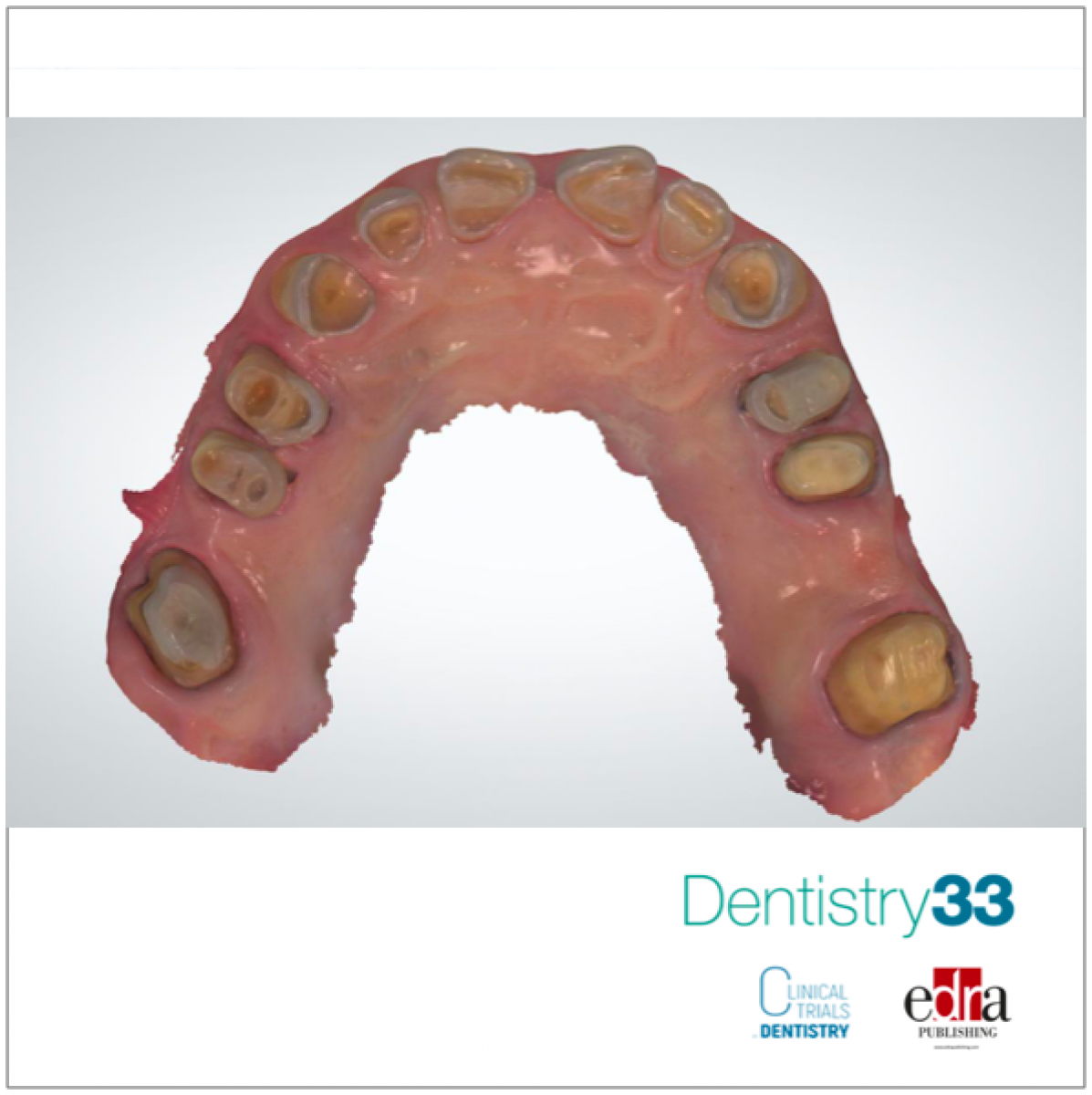
CAD/CAM technology is driving the attention of clinician and researchers, nowadays being present in almost all branches of Dentistry. Particular attention has been advocated to digital technology for prosthesis fabrication, including dental impressions. Although no clear advantages have been reported in literature for one method over the other, CAD/CAM scans present many advantages such has being faster, time-saving and more comfortable for the patients. Notwithstanding the several advantages reported for digital scans, major concerns are addressed to the training necessary for obtaining reliable impressions. Very recently, a systematic review and meta-analysis has been conducted on in vivo studies to compare conventional dental impressions with the digital scans for the fabrication of fixed-tooth supported prosthesis. The main outcomes were clinical time required, patient acceptability and marginal fit of the prosthesis.
Materials & Methods
An electronic search was conducted by 2 independent reviewers on Medline/Pubmed, Cochrane Library and Science Direct. Randomized clinical trials (RCTs) and prospective comparative studies (PCSs) comparing the conventional vs digital impressions for complete-coverage, fixed-tooth supported prosthetic were taken into consideration. Supplemental manual search implemented the strategy.
Results
A total of 14 RCTs and 2 PCSs were considered for the systematic review. The authors reported mean clinical time statistically similar for digital scan procedures (784 ±252 seconds) and conventional impression methods (1125 ±159 seconds) (P>.05). In addition, the mean visual analog scale score evaluated by the authors was 67.8 ±21.7 for digital scans and 39.6 ±9.3 for conventional impressions (P<.05). In conclusion the mean marginal fit was 80.9 ±31.9 mm and 92.1 ±35.4 mm for digital scan and conventional impressions, respectively, with no statistically significant difference between these two methodologies (P>.05).
Conclusions
According to the results of the systematic review and meta-analysis, the digital scan technique is comparable to the conventional impressions in terms of clinical time and marginal fit. However, patients reported higher level of acceptability when digital scan was used instead of conventional impression techniques.
For additional information: Comparative assessment of complete-coverage, fixed tooth-supported prostheses fabricated from digital scans or conventional impressions: A systematic review and meta-analysis.
 Related articles
Digital Dentistry 11 June 2023
Dental erosion and ultrathin CAD-CAM glass-ceramic and composite resin occlusal veneers

By Lorenzo Breschi and Diego D’Urso
Thanks to modern technology, an alternative to traditional onlays and complete coverage crowns for dental erosion exists in ultrathin bonded posterior occlusal veneers.
Digital Dentistry 02 April 2023
A digital workflow for perio analysis and crown lengthening: a case report

By Lorenzo Breschi and Diego D’Urso
Coachman et al. have presented a case report of surgical crown lengthening in an esthetic region to describe how a digital workflow can improve diagnosis, treatment outcome and follow-up.

Laborie et al. conducted a systematic review to compare the wear resistance of resin-ceramic materials with other resin-ceramic materials and lithium disilicate reinforced ceramics.
Pediatric dentistry 25 February 2023
Digital restorative workflows for developmental dental defects in young patients

The authors describe digitally supported treatment approaches for managing treatment of developmental dental defects in the early permanent dentition.
Prosthodontics 27 November 2022

A close marginal gap and accurate fit between the tooth and the restoration are important for the long-term success of fixed dental protheses.
Read more
Products 13 October 2026

New Resources Help Dental Exhibitors Evaluate Their Investment and Explore the Personify ShowFlow™ Trade Show Success System
News 13 October 2026

New patient apps extend The Aspen Group’s mission to remove barriers to care, giving patients greater visibility, convenience, and control from booking through treatment
Editorials 13 October 2026

The forerunner of what’s now Texas A&M College of Dentistry opened 120 years ago in Dallas with the mission of educating dentists to provide quality care to patients in North Texas
Oral pathology 13 October 2026
This peer-reviewed oral pathology article summarizes clinical evidence from Oral oncology (2026). It focuses on findings that may help dental professionals evaluate treatment decisions, patient...



Copyright © 2026 - All Rights Reserved
ISSN 2767-1178