


The ADA prepared a Q&A session to address the new No Surprises Act
The ADA has received questions from member dentists regarding the No Surprises Act and whether this bill could affect dental practices.
The ADA has created the following Q&A to help clear up confusion on the new law the ADA has created following Q&A. This resource is based on what the ADA knows as of Dec. 9. If the ADA learns additional information, it will be shared with dentists as soon as possible.
Question: What is the No Surprises Act?
Answer: In December 2020, the Consolidated Appropriations Act of 2021 was enacted. The law contains many provisions to help protect consumers from surprise bills, including the No Surprises Act. Starting Jan. 1, consumers will have new billing protections when getting emergency care, non-emergency care from out-of-network providers at in-network facilities, and air ambulance services from out-of-network providers. High out-of-pocket costs will be restricted through new rules aimed to protect consumers. Emergency services must continue to be covered without prior authorization, regardless of whether a provider or facility is in-network.
Q: Are dentists subject to the No Surprises Act?
A: For most, no, because dental benefits are considered “excepted benefits” under the new law. The surprise billing rule applies to group health claims and health insurance issuers.
The ADA has heard about infrequent cases where the surprise billing dispute resolution provisions could apply. For example, embedded dental benefits working with a medical plan could be subject to the rule. Still, the treatment would need to be done in an out-of-network hospital or ambulatory center under a plan with no out-of-network reimbursement. This is rare and can be solved ad hoc by plans.
Q: What health care facilities are included under the No Surprises Act?
A: According to the law, hospitals, ambulatory surgical centers, rural health centers, and federally qualified health centers are all examples of health care facilities that are included in the No Surprises Act. Private dental practices are not included in this definition.
Q: How does the No Surprises Act relate to Open Payments?
A: It doesn’t. The U.S. Centers for Medicare & Medicaid Services Open Payments is a national disclosure program that promotes a more transparent and accountable health care system. Open Payments houses a publicly accessible database of payments that reporting entities, including certain drug and medical device companies and group purchasing organizations, make to covered recipients like physicians. Open Payments apply to dentists, but this does not mean that surprise billing applies to dentists. They are separate rules.
Source: https://www.ada.org/
 Related articles
Editorials 09 October 2026
From California to Canada: CU Anschutz School of Dental Medicine at ADEA, GRC and IADR 2026
The CU Anschutz School of Dental Medicine will showcase a wide breadth of educational innovation, faculty development, clinical training and research at three major gatherings this
Editorials 17 September 2026
From California to Canada: CU Anschutz School of Dental Medicine at ADEA, GRC and IADR 2026
The CU Anschutz School of Dental Medicine will showcase a wide breadth of educational innovation, faculty development, clinical training and research at three major gatherings this
Editorials 27 August 2026
From California to Canada: CU Anschutz School of Dental Medicine at ADEA, GRC and IADR 2026
The CU Anschutz School of Dental Medicine will showcase a wide breadth of educational innovation, faculty development, clinical training and research at three major gatherings this
Editorials 06 August 2026
From California to Canada: CU Anschutz School of Dental Medicine at ADEA, GRC and IADR 2026
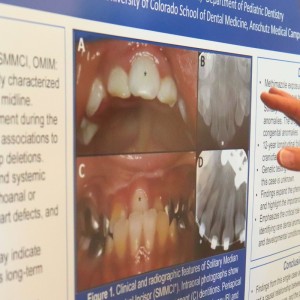
The CU Anschutz School of Dental Medicine will showcase a wide breadth of educational innovation, faculty development, clinical training and research at three major gatherings this
Editorials 23 July 2026
From California to Canada: CU Anschutz School of Dental Medicine at ADEA, GRC and IADR 2026
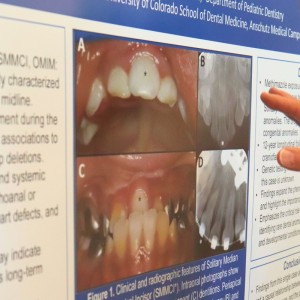
The CU Anschutz School of Dental Medicine will showcase a wide breadth of educational innovation, faculty development, clinical training and research at three major gatherings this
Read more
Products 20 October 2026
News 20 October 2026

In recognition of National Dental Hygiene Month, Delta Dental highlights key findings from its 2026 State of America’s Oral Health and Wellness Report , a nationwide analysis of co
News 20 October 2026
Abra Health Group has launched The Dental Bank, a new community impact initiative designed to make essential oral health resources more accessible to individuals and families throu
Editorials 20 October 2026
Woman’s skull likely proof of ancient nose amputation, says College of Dentistry professor

Qian Wang, professor in biomedical sciences at Texas A&M College of Dentistry in Dallas, identified what he and other researchers believe is likely one of the first examples of an
Endodontics 20 October 2026

This peer-reviewed endodontics article summarizes clinical evidence from Clinical oral investigations (2026). It focuses on findings that may help dental professionals evaluate treatment decisions,...



Copyright © 2026 - All Rights Reserved
ISSN 2767-1178