


Optimists Shape the Future
Luigi Campopiano

It is so challenging to be optimistic today because in this world, we face terrible problems:
- Climate change
- The pandemic
- War
- Other political-military tensions
It might seem strange, but even the magnitude of these problems provides an additional reason to be optimistic because the past guides us: we learn what to expect from the future. All the crises the world has already gone through have turned into opportunities for growth. Crises are genuine turning points, moments of development, acceleration.
The greatest challenges require more determination and an equally strong sense of trust, the belief that the task can truly be accomplished. Think about how important it is to believe in the possibility of achieving something good and grand. All of this will only happen when we believe that something can happen, because nothing will come by chance.
It is important to imagine the world we want and believe that we can change reality and make it the way we envision it. Thus, the confidence in making something happen that seems impossible to most is what has shaped our history so far: our history has been shaped by optimists, and if we want to shape the future, we must be optimistic too.
The world we are shaping is not a perfect one, but it is always a projection towards something better, an improvement in our lives. If we expect the world to produce a little more good than bad, to give us a few more reasons to hope rather than fear, we cannot help but be optimistic.
Optimism certainly does not just mean having a positive temperament; it is based on the reality of historical progress, on the fact that we transcend the moment we are living in and observe the data scientifically and rationally. Reading the data, we cannot help but highlight how the world, in the last 500 years, has done nothing but grow and constantly improve day by day.
There are probably three reasons why there are so many pessimists:
- What doesn't happen: All the negative things that could have happened but didn't. Because they don't happen, they don't make the front page, but that doesn't mean they aren't positive and that they don't result from the effort, development, and ability of many to generate positive results.
- Bad things happen faster than good ones. Good things take time. News programs, news reports, etc., represent nothing but the sum of bad things. If we were to create newspapers and websites updated every hundred years, we would have completely different headlines on the front page.
- The amount of development and progress generated each year. These are small increments, but just like our bank accounts benefit from compound interest, these small increments of progress generated each year add up, creating more and more development and growth.
To be optimistic, one must be realistic, and as mentioned, realism comes through the history we have already lived. The other important element of growth is trust among people and among nations: we have the opportunity to collaborate with perfect strangers, and this collaboration allows us to do things that go beyond ourselves and are bigger than what we can do.
We can also have confidence in future generations, in the billions of people who have not yet been born, just as it happened to us. Today, we are enjoying the work of past generations who studied to build infrastructure, roads, canals, skyscrapers, telephone networks, things from which we are now benefiting. We have more benefits than they did in the past (as if they had done it for us: when they started, we weren't there, so they acted as good ancestors for us. Sometimes even sacrificing what could have been all immediate benefits).
By looking out for future generations, we also want and can be good ancestors for them: this too is an act of optimism because we believe there will be future generations and because we are willing to sacrifice immediate gains to give more to the future.
Trust, a vision of the future, and the right relational approach between generations are elements that make up the strength of the optimist. The optimist is the one who is aware of the existence of problems and believes they can and should be addressed. The world is a constant cycle between awareness and ignorance, a continuous growth of learning new things. We have an obligation to be optimistic because being optimistic allows us to shape the future.
 Related articles
Editorials 02 December 2025
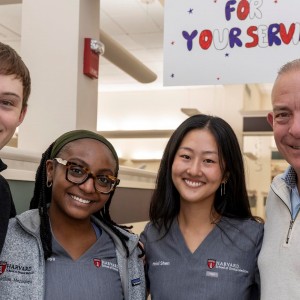
Thomas Miller joined Harvard School of Dental Medicine (HSDM) as Dean for Administration and Chief Operations Officer a year ago and has been a key figure through a period of transformation at the...
Market 29 November 2024

In financial markets, the butterfly effect is not uncommon—a phenomenon where small changes in conditions can lead to significant long-term variations in a system's behavior.
Market 22 November 2024

The creator economy, also known as the passion economy, is built around creators and influencers.
News 15 November 2024

The main goal for many investors is not to lose money, but they often overlook the time period over which they hope to achieve this.
News 05 November 2024

The food sector could offer attractive opportunities for investors in the coming years
Read more
Europe 11 October 2026 - 30 November -0001
Scandinavian Dental Fair 2026: Event Preview and Professional Highlights
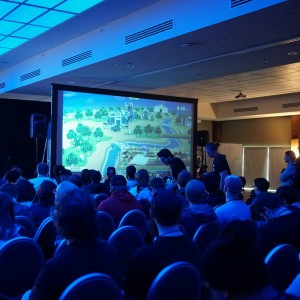
The Scandinavian Dental Fair 2026 will take place from November 11, 2026 to November 13, 2026 in TBD, Sweden/Denmark, offering dental professionals a focused environment for continuing education,...
Edra Professional Books 10 October 2026

Esthetics and function in complete denture prosthesis is an Edra professional dentistry reference focused on clinical practice, education and treatment planning.
Products 09 October 2026

Oral-B and Crest, Official Oral Care Partners of the NFL, recently announced the launch of new special-edition products, giving fans even more ways to celebrate their love of the g
News 09 October 2026

Apex Dental Partners, a dental partnership organization supporting dentists and affiliated practices, has been named No.
News 09 October 2026

New education website and fully funded Swiss fellowship program debut at the 2026 Orthopaedic Trauma Association Annual Meeting in Nashville



Copyright © 2026 - All Rights Reserved
ISSN 2767-1178