


When and why to rebalance the portfolio
Author: Luigi Campopiano

The saver's profile must be consistent with his objectives. Still, the portfolio distribution does not have to remain the same forever: changing the portfolio allocation happens in the practice of financial advice quite often, even if the criteria for deciding how and when do not respect universal rules. When to rebalance? Obviously, "it depends on the customer," even if rebalancing can be scheduled on a time basis (quarterly, half-yearly, or yearly). Each approach seems to have its advantages; let's see them in order:
• The quarterly rebalancing can evaluate the portfolio more precisely on the basis of market performance (it can be useful in periods of high volatility or when the markets push hard in one direction). Suppose a particular asset class, for example, deviates significantly from the objective established with the customer. In that case, it can be corrected in the "course of work" and in a relatively short time. Finally, it will be possible to confront the client at shorter intervals on his objectives;
• Extending the rebalancing time horizon to one year reduces the frequency of interventions and the possible negative implications of transaction and tax costs (frequent rebalancing can increase the burden on capital gains). It is a question of market timing that can determine whether a quarterly or annual rebalancing is more convenient. Depending on the case, a more frequent rebalancing could cause a bull market to liquidate early or fix the losses of a bear market. A Vanguard study based on data collected between 1926 and 2015 showed that there were no significant differences between the two approaches, except that the annual rebalancing had shown slightly lower volatility;
• "Threshold" system. The portfolio allocation is changed only when the balance between the various asset classes exceeds certain limits: should the changes prove to be more contained, the portfolio would be left as it is. This approach requires more explanation from the client since his understanding is less immediate than a simple time frame. The "tolerance threshold" must be carefully calibrated, also based on the number of asset classes in the portfolio;
• "Constant-proportion portfolio insurance" (Cppi). It is the practical application of a basic principle of risk management: the more the wealth accumulated by the investor increases, the more he will be able to tolerate losses, with the possibility of increasing particularly volatile assets. The client's financial situation will decide how to review the allocation: if it improves, more risk may be introduced into the portfolio (if the investor has expressed an intention to take advantage of the opportunity). It is one thing to be able to "afford" certain losses; another is to want to risk more to maximize the return opportunities.
Regardless of the rebalancing approach, it is important to have a system you trust to create, review and execute trades, and to communicate any updates to customers.
 Read more
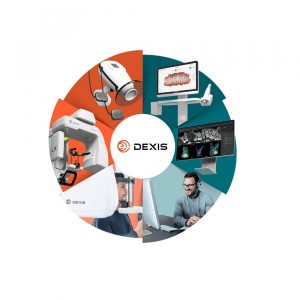
Continuous innovation across the DEXIS ecosystem helps clinicians work with greater clarity, confidence, and efficiency
News 23 October 2026

CrownPoint Partners announced the successful closing of a $9.2 million, five-property dental sale-leaseback portfolio located throughout Michigan.
News 23 October 2026
Dentsply Sirona, Midwest Dental Expand Technology Relationship

Beginning November 1, Dentsply Sirona will expand its long-standing relationship with Midwest Dental Equipment & Supply beyond consumables to include its complete technology portfo
Editorials 23 October 2026
Honoring Excellence: Graduation Awards for CU Anschutz Dental Students and Faculty

As the University of Colorado Anschutz School of Dental Medicine celebrates the graduating DDS Class of 2025, we are proud to recognize the students and faculty members whose excep
Implantology 23 October 2026

This peer-reviewed implantology article summarizes clinical evidence from Clinical oral implants research (2026). It focuses on findings that may help dental professionals evaluate treatment...



Copyright © 2026 - All Rights Reserved
ISSN 2767-1178