


What are bonds?
Author: Luigi Campopiano
From the point of view of the proposer, the issuer, they are a debt security, an obligation to return the capital that is lent plus an interest rate. The interest can be paid in a single solution (usually at maturity) or with coupons at fixed deadlines. Those who buy them, the subscriber, represent a credit right: whoever subscribes to a bond buys a debt, that is, lends money in exchange for interest.
The bonds are issued by:
• State or other public bodies;
• Banks or other private companies;
• Supranational bodies.
There is an agreement between the seller and the buyer of a bond: the bonds provide for, by the issuer (who sells them), the return to the subscriber (who buys them) of the capital received on loan at a predetermined deadline, and against payment of a reward (an interest rate).
It is called a bond because the issuer undertakes to pay the subscriber an interest rate that accrues during the life of the security according to the duration of the loan. Having reached the natural maturity of the security, the debtor repays the capital to his creditor, thus extinguishing his obligation.
It is advisable to issue a bond to subjects which need a loan for their business, an alternative to banking.
It is advisable to buy a bond for those investors and savers interested in increasing the value of their capital over time or in maintaining their purchasing power concerning inflation (not always).
The coupon of a bond can be fixed or variable and is generally distributed over the bond term. In some cases, already known from the start, it is fully recognized at the end, that is, at the time of the return of the capital: this is the case, for example, of the BOT (Ordinary Treasury Bond) and all the Zero-Coupon Bonds. This is the "reward" for those who, by investing in bonds, temporarily renounce the availability of their capital, obtaining, in exchange, a financial return.
Every time a bond is subscribed, capital is exchanged for a premium (a certain interest rate). The coupons of a bond (the coupon interest rate) depend on the duration of the bond (the natural maturity of the loan) and on how reliable the issuer is in honoring its obligations (its reputation): the higher it is its credibility, the easier it will be for it to place (i.e., sell) its bonds, and at a lower rate (and vice versa). It is the so-called creditworthiness.
Bonds can be purchased at the time of their first issue or later: if they are offered to the public for the first time, they are on the Primary Market and at the placement price; if they are purchased later, that is, from those who have already bought them, they can be found on the Secondary Market and at the market price.
Even for the subscription of a single bond, the greatest potential risk (but not the only one) is measured for the issuer. It concerns the possibility that the company will not be able to fully honor its commitments (payment of coupons and the return of capital).
The advantages of investing in bonds, especially if diversified by type of issuers and income opportunities, can represent an adequate response to investments with both stability and yield needs.
 Related articles

Ormco Corporation, a global leader in orthodontic solutions for over 60 years, is thrilled to announce the modernization of the commonplace adhesive and bonding process with the introduction of Ormco...

Orthobond Corporation, a leader in covalently-bound antibacterial surface technologies with broad applications in the medical device industry, recently announced the successful in-house production...
Products 16 January 2025
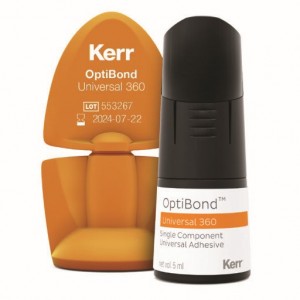
With direct and indirect dental restorations, a strong, durable, and versatile universal adhesive often determines short- and long-term success.
Market 11 April 2024
Orthobond Revolutionizes Medical Device Safety With FDA Approval of Ostaguard Coating

Orthobond Corporation, a leader in covalently-bound antibacterial surface technologies with broad applications in the medical device industry, announced that the U.S. Food and Drug Administration...
Restorative dentistry 21 March 2024
How does the universal adhesive’s film thickness affect its ability to effectively bond to dentin?

Modern composite restorations rely on increasingly efficient adhesive systems, but sometimes it is not clear how thick the adhesive layer needs to be.
Read more
Europe 11 October 2026 - 30 November -0001
Scandinavian Dental Fair 2026: Event Preview and Professional Highlights

The Scandinavian Dental Fair 2026 will take place from November 11, 2026 to November 13, 2026 in TBD, Sweden/Denmark, offering dental professionals a focused environment for continuing education,...
Edra Professional Books 10 October 2026

Esthetics and function in complete denture prosthesis is an Edra professional dentistry reference focused on clinical practice, education and treatment planning.
Products 09 October 2026

Oral-B and Crest, Official Oral Care Partners of the NFL, recently announced the launch of new special-edition products, giving fans even more ways to celebrate their love of the g
News 09 October 2026

Apex Dental Partners, a dental partnership organization supporting dentists and affiliated practices, has been named No.
News 09 October 2026

New education website and fully funded Swiss fellowship program debut at the 2026 Orthopaedic Trauma Association Annual Meeting in Nashville



Copyright © 2026 - All Rights Reserved
ISSN 2767-1178