


Dentist and PhD candidate helps patients find their voices

When Erika Rezende Silva, DDS, enters the sound booth at Adams School of Dentistry’s Oral and Craniofacial Biomedicine Laboratory, she hears a familiar and personal story.
Patients sit at a microphone across from her, repeat phrases for analysis and hope that corrective jaw surgery will help them speak more clearly. Silva understands that hope better than most. Before coming to Carolina, she underwent jaw surgery, living through some of the same speech distortions and recovery milestones as her research participants.
Now in her fourth year of Carolina’s oral and craniofacial biomedicine doctoral program, Silva has turned that personal experience into a scientific focus. In 2023, she joined the dentofacial disharmonies project in the lab of Laura Jacox, DDS, PhD, assistant professor in the UNC Adams School of Dentistry.
“I understand what people go through — their reservations, how they feel during recovery and how much speech distortions can affect everyday communication,” Silva said.
The project began in 2019, when Jacox, then an orthodontic resident, realized patients with severe jaw disproportions had the same question: “If surgery can fix my underbite, can it fix the way I speak?” Speech therapy cannot fully treat distortions caused by anatomical problems, so surgery was their hope. Scientific literature did not answer the question.
The study tracks patients with class III jaw disproportions, often marked by an underbite, who have trouble producing certain sounds. Words like “sock” and “shock” can blur together. “People with severe underbites have different frequencies when they’re trying to say S-sounds,” Silva said. “It’s subtle, but sound waves show it clearly.”
Researchers have patients visit the Jacox lab sound booth before and after surgery. Patients repeat short phrases such as “say shock again,” allowing researchers to isolate the middle word and break it into core sound components like “sha,” “cha” and “sa.” The team then performs quantitative soundwave and imaging analyses that reveal how tongue, jaws and teeth shape sound.
Silva compares analyses with a control group of speakers with perfectly proportionate jaws. The 467-patient dataset is among the largest of its kind. Doctors Tim Turvey and George Blakey III, oral and maxillofacial surgeons and professors in the dental school, perform the surgeries.
Silva interviews participants about quality of life: how their jaw disproportion affects confidence, social interactions, eating and responses of others to their speech. After surgery, patients adjust to new jaw positions and relearn tongue placement while speaking.
“I noticed the same thing after my surgery,” Silva said. “In the first few months, you’re getting used to jaws that sit differently. But after a year, my distortions were gone.”
Study data reflects that trajectory. Most patients experience temporary distortions as they adapt, but a year after the operation, their speech increasingly resembles that of people without distortions.
The findings challenge insurance companies’ view of jaw surgery as solely cosmetic. Surgery enables proper function. “My hope is to provide evidence-based recommendations for insurance policies, enabling more patients to access care they need,” Silva said.
The project could integrate speech therapy into post-surgical care. Before surgery, therapists are limited by structural issues. Afterward, therapy can help many patients fine-tune the remaining 10%-20% of speech nuances.
Author: Scott Jared
Source: https://dentistry.unc.edu/
 Related articles
Oral surgery 25 September 2026
This peer-reviewed oral surgery article summarizes clinical evidence from International journal of oral and maxillofacial surgery (2026). It focuses on findings that may help dental professionals...
Periodontology 24 September 2026
This peer-reviewed periodontology article summarizes clinical evidence from BMC oral health (2026). It focuses on findings that may help dental professionals evaluate treatment decisions, patient...
News 23 September 2026
Growing national network helps patients find local dentists trained to provide oral appliance therapy for obstructive sleep apnea.
Oral Hygiene & Prevention 23 September 2026
Propolis-containing formulations in caries prevention - a systematic review and meta-analysis.
This peer-reviewed oral hygiene & prevention article summarizes clinical evidence from Clinical oral investigations (2026). It focuses on findings that may help dental professionals evaluate...
Oral pathology 22 September 2026
This peer-reviewed oral pathology article summarizes clinical evidence from Oral oncology (2026). It focuses on findings that may help dental professionals evaluate treatment decisions, patient...
Read more
Products 25 September 2026
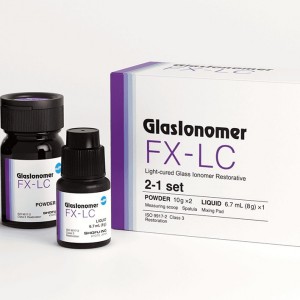
Shofu Dental’s line of dental restorative materials now includes FX-LC, a next-generation, light-cure, resin-reinforced glass ionomer formulated to deliver high strength, efficient 4
News 25 September 2026

The scholarships are part of an ongoing workforce solutions strategy to help address the need for skilled dental hygienists
News 25 September 2026

Michael Riccobene celebrates teamwork, community and more than 25 years of growth as one of sports’ most iconic trophies makes a special stop in Garner.
Editorials 25 September 2026
Oral surgery 25 September 2026
This peer-reviewed oral surgery article summarizes clinical evidence from International journal of oral and maxillofacial surgery (2026). It focuses on findings that may help dental professionals...



Copyright © 2026 - All Rights Reserved
ISSN 2767-1178