


A Dental Experience That Keeps Patients Feeling Right at Home

Many people approach a visit to the dentist with some fear or anxiety. For people with intellectual or developmental disabilities (IDD), those feelings can be even more intense and complex—often limiting their access to adequate dental care.
Compounding the situation, says Athanasios Zavras, an expert in public health dentistry at Tufts University School of Dental Medicine (TUSDM) is a gap in the way the healthcare system provides dental services to people with disabilities. The focus is on treating disease, rather than preventing it.
“Understanding how social determinants of oral health affect individuals with disability is also critical,” says Zavras, DG93, Delta Dental of Massachusetts Professor of Public Health and Community Service, and chair of that department.
A pilot program now underway at Tufts Dental Facilities (TDF), the network of seven clinics offering care to IDD patients run by TUSDM in partnership with the Commonwealth of Massachusetts, is intended to improve that situation.
Since November 2023, TDF has been incorporating, on a small scale, a family-based approach that includes telehealth and home visits. It’s funded by a $175,000 grant from the Boston-based CareQuest Institute for Oral Health, a nonprofit focused on equity in dental care.
“Our goal is to improve the patient experience and to increase access, especially to patients we do not currently serve,” Zavras says.
For one family now in the pilot program, that’s been exactly the case. “For us, it’s the whole deal,” says a mother whose son is blind and doesn’t speak. “It’s this or nothing.”
Redefining Success
The program prioritizes patients, their families and caregivers, and their needs—including some that aren’t strictly dental in nature, yet affect the patients’ overall oral hygiene.
Among other things, the grant funds a two-person dental hygienist/social worker team that makes house calls and connects with families and caregivers via teledentistry. With support from Darren Drag, D00, DG01, DG02, TDF’s clinical director, the duo—hygienist Katie Walker and social worker Niurka DeJesus—has cared for 10 people with IDD at home and via teledentistry. They meet dental patients with a variety of disabilities, especially those conditions that prevent them from visiting the dentist regularly, or that make dental exams unusually taxing for them and their caregivers.
For individuals with IDDs a successful visit can sometimes be as simple as “having them open their mouth and us taking a peek inside,” Zavras says.
“And it is successful because it provides us a small window of opportunity to look into someone's mouth to assess their dental needs and then to work with caregivers to devise a very specific, individualized plan that is based on that person's functional abilities.”
At a meeting in October, caregivers in the pilot program described what dental visits are like for their loved ones or for people in the group homes they manage. Many noted high anxiety—sometimes exacerbated by a long car ride to the dental clinic, or previous dental or medical trauma.
'A Huge Step'
As DeJesus, Walker, and participating caregivers spoke at the meeting, they praised the pilot program through story after story. Caregivers noted Walker and DeJesus’s patience, creativity, and respect. DeJesus described family and caregivers as a key part of a multidisciplinary team caring for their loved ones.
“Every strategy they gave would seem small to a dental provider,” Walker says. One parent, for instance, told Walker that her son pulled people’s hair when in distress, while another gently let her know when it was time to wrap up the dental exam. “But every single small strategy that was recommended by caregivers made a significant difference. It seems so small to provide an oral screening to someone, but was a huge step for so many of these individuals, and it was all because of these very small strategies.”
In addition to improving and broadening TDF’s care, “another aim was to train and standardize a group of dental specialists, all faculty at the dental school, in how to approach patients with IDD,” Zavras says.
“The two main goals are to see if by redesigning the patient intake process we can enhance the efficiency at the TDF clinics; and to have a team of experts that can support and advise our alumni and colleagues in private practice to care for more patients with disabilities, thus reducing the access issues,” he says.
The grant enabled the creation of a new intake form modeled after a concept created by the World Health Organization. Known as Tufts Functional Assessments For Oral Health, the new form captures more than each patient’s dental issues and demographic information.
“We probe deeper, trying to assess how the person functions,” Zavras explains. “What is their cooperation level? What is their tolerance? How can we make the interaction successful? And also, importantly, how is dental care going to affect their functioning?”
Customized Care
Informed by the detailed intake, DeJesus and Walker often got to know patients via telehealth before visiting them in person. When they visited the homes, Walker and DeJesus were familiar faces. They talked with patients, showed them dental equipment, and in at least one case, sang songs. They also provided oral hygiene instructions to the caregivers.
Plus, being seen at home, patients weren’t at “a weird, threatening facility, but rather in the sanctuary of their own home,” Zavras says.
Along the way, Zavras has learned that people with autism who require a high level of support rarely, if ever, go to TDF or other dental offices for care. “They cannot tolerate a visit to the dentist and as a result, their caregivers will not attempt to visit the dental clinic,” Zavras says. With home visits, people in this situation were comfortable enough to have dental exams.
Moreover, DeJesus screened families to determine which needed additional resources, and if parents and other caregivers needed additional support. “Caregivers who dedicate themselves to their loved ones often ignore their own needs,” Zavras says. “Diagnosing and providing this level of caregiver support goes well beyond the care that a dentist provides in a dental clinic.”
Author: Heather Beasley Doyle
Source: https://now.tufts.edu/
 Related articles
News 20 October 2026

In recognition of National Dental Hygiene Month, Delta Dental highlights key findings from its 2026 State of America’s Oral Health and Wellness Report , a nationwide analysis of co
News 20 October 2026
Abra Health Group has launched The Dental Bank, a new community impact initiative designed to make essential oral health resources more accessible to individuals and families throu
Europe 18 October 2026 - 30 November -0001
IDS Cologne 2027 in Cologne: Event Preview and Professional Highlights

The IDS Cologne 2027 will take place from March 16, 2027 to March 20, 2027 in Cologne, Germany, offering dental professionals a focused environment for continuing education, clinical updates and...

Solutions is an Edra professional dentistry reference focused on clinical practice, education and treatment planning.
News 16 October 2026
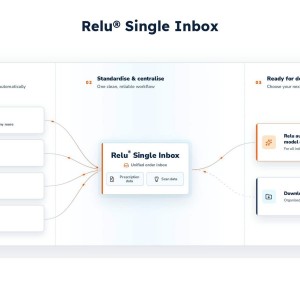
Fewer people on intake, faster turnaround, and no lost cases: Relu’s new automation captures and centralizes every scan and Rx from every source within a minute of arrival
Read more

Continuous innovation across the DEXIS ecosystem helps clinicians work with greater clarity, confidence, and efficiency
News 23 October 2026
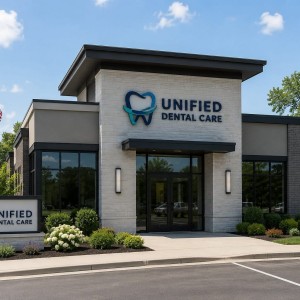
CrownPoint Partners announced the successful closing of a $9.2 million, five-property dental sale-leaseback portfolio located throughout Michigan.
News 23 October 2026
Dentsply Sirona, Midwest Dental Expand Technology Relationship
Beginning November 1, Dentsply Sirona will expand its long-standing relationship with Midwest Dental Equipment & Supply beyond consumables to include its complete technology portfo
Editorials 23 October 2026
Honoring Excellence: Graduation Awards for CU Anschutz Dental Students and Faculty

As the University of Colorado Anschutz School of Dental Medicine celebrates the graduating DDS Class of 2025, we are proud to recognize the students and faculty members whose excep
Implantology 23 October 2026
This peer-reviewed implantology article summarizes clinical evidence from Clinical oral implants research (2026). It focuses on findings that may help dental professionals evaluate treatment...



Copyright © 2026 - All Rights Reserved
ISSN 2767-1178