


TMJ disorders call for conservative care
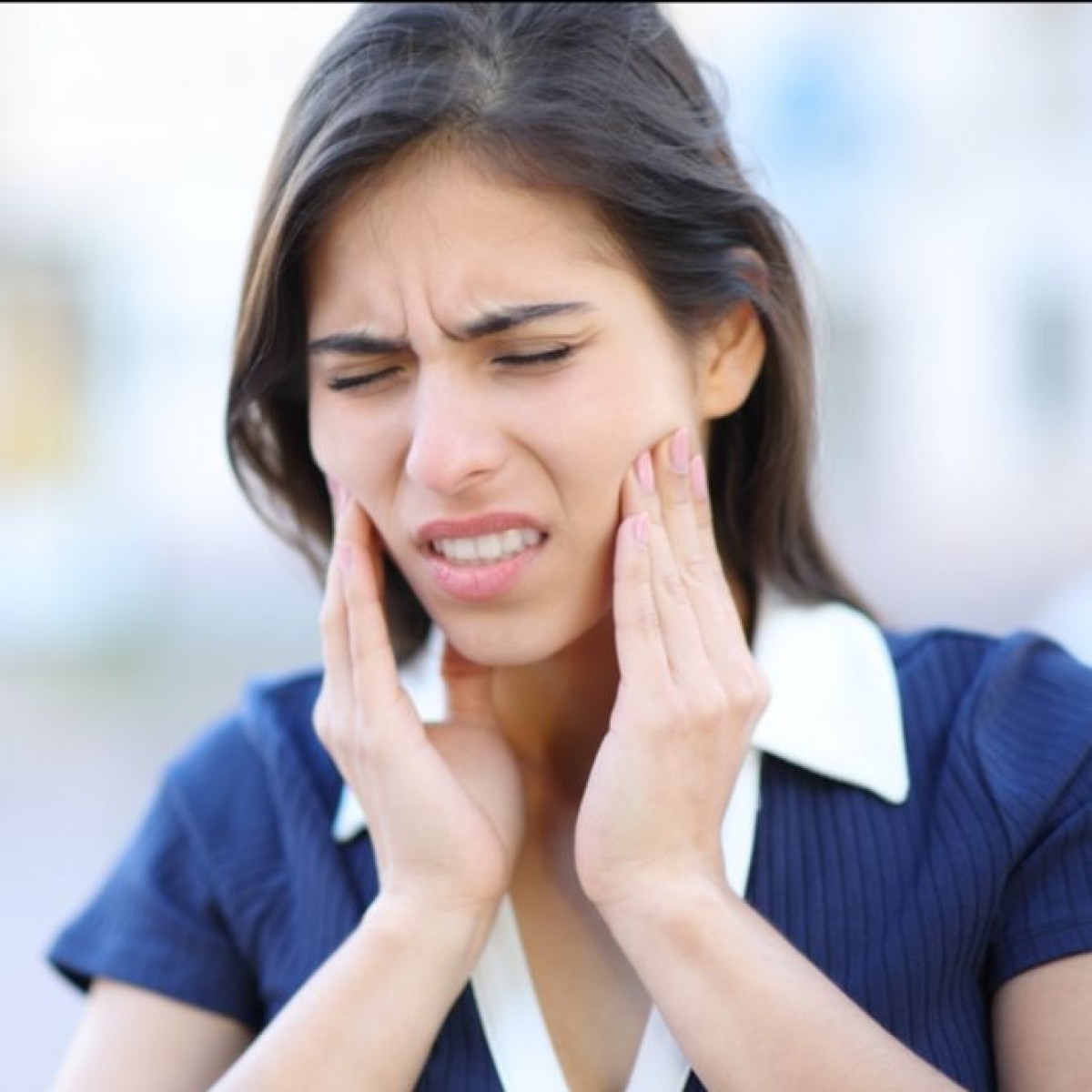
Opening and closing your mouth is an action taken for granted by most people, but if you suffer from temporomandibular disorders, it can be painful and lead to a myriad of other problems in the head and neck.
Dr. Steven Bender, clinical associate professor and director of the Clinical Center for Facial Pain and Sleep Medicine, said the disorders are often referred to as TMJ because that’s the affected joint.
“TMJ is the temporomandibular joint,” he explained. “Basically, it’s the jaw joint right in front of our ears. They’re the hinges that allow the mouth to open and close, so they affect people’s ability to bite, swallow, speak and even make facial expressions.
Patients suffering with TMJ disorders could experience pain in the jaw muscles, chronic headaches, jaw muscle stiffness, pain in the neck and shoulders, limited movement or locking of the jaw, ear pain or ringing in the ears, dizziness, vision problems, a bite that feels “off” or even grating in the joint when opening or closing the mouth.
Bender said there are various causes of TMJ disorders. Trauma from injuries or disease such as arthritis are common, he said, but the joint can also be hurt by overuse. Someone who habitually chews gum, for example, could hurt their jaw joint. Bender clarified TMJ disorders are much more likely to occur in someone who already has other health issues. According to the TMJ Association, 85 percent of patients with a TMJ disorder suffer from other health conditions.
No matter the cause, Bender emphasizes a conservative treatment plan.
“I normally recommend limiting function for a period of time,” Bender said. “Basically, just rest it. Put ice on the jaw joint for 10 minutes at a time, off for 30 minutes. After that, use heat to increase circulation.
“We might progress to stretching exercises or use medications, like anti-inflammatory drugs or acetaminophen,” he said. “But ultimately, we’d like to do as little as possible.”
According to the TMJ Association, anywhere between 10 and 35 million people in the United States are affected at any one time, and the most severe symptoms are experienced by women in their childbearing years. TMJ disorders have been primarily treated by dentists since the 1930s.
“The main thing I tell our patients about these disorders is that most of the time, even as painful as they may be at first, they are relatively self-limiting,” Bender said. “They tend to come and go over time, but eventually even most people with no care do well.
“If someone is ever told they need their teeth fixed for it, or braces or surgery, they should probably get a second opinion,” he said. “Most of the time patients respond very well to limited, conservative care.”
Author: Caleb Vierkant
Source: https://dentistryinsider.tamhsc.edu/
 Related articles
Editorials 18 November 2026

The Pediatric Dentistry Alumni Association supports the IU Pediatric Dentistry Department and students in a variety of ways.
Editorials 17 November 2026

Since 1950, the goal of the Indiana University School of Dentistry’s Oral Pathology Group has been to provide the finest in oral and maxillofacial pathology services to the profess
Editorials 16 November 2026

Editorials 13 November 2026

Editorials 12 November 2026
Maynard K. Hine Scholarship and Daniel M. Laskin Professional Ethics Lectures

Each year, the Indiana Section of the American College of Dentists teams up with Indiana University School of Dentistry's Daniel Laskin Professional Ethics Lectureship Series to br
Read more
Products 18 November 2026
News 18 November 2026
Angelalign Technology Appoints Marco Gadola as Senior Advisor

(6699.HK) (“Angel”), a global clear aligner leader, recently announced that Marco Gadola has joined the company as Senior Advisor.
News 18 November 2026

(“Align”) (Nasdaq: ALGN), a leading global medical device company that designs, manufactures, and sells the Invisalign® System of clear aligners, iTero™ intraoral scanners, and exo
Editorials 18 November 2026
The Pediatric Dentistry Alumni Association supports the IU Pediatric Dentistry Department and students in a variety of ways.
Orthodontics 18 November 2026
This peer-reviewed orthodontics article summarizes clinical evidence from Dental press journal of orthodontics (2024). It focuses on findings that may help dental professionals evaluate treatment...


Copyright © 2026 - All Rights Reserved
ISSN 2767-1178