


Shield Force Plus—Instant Desensitization That Lasts!
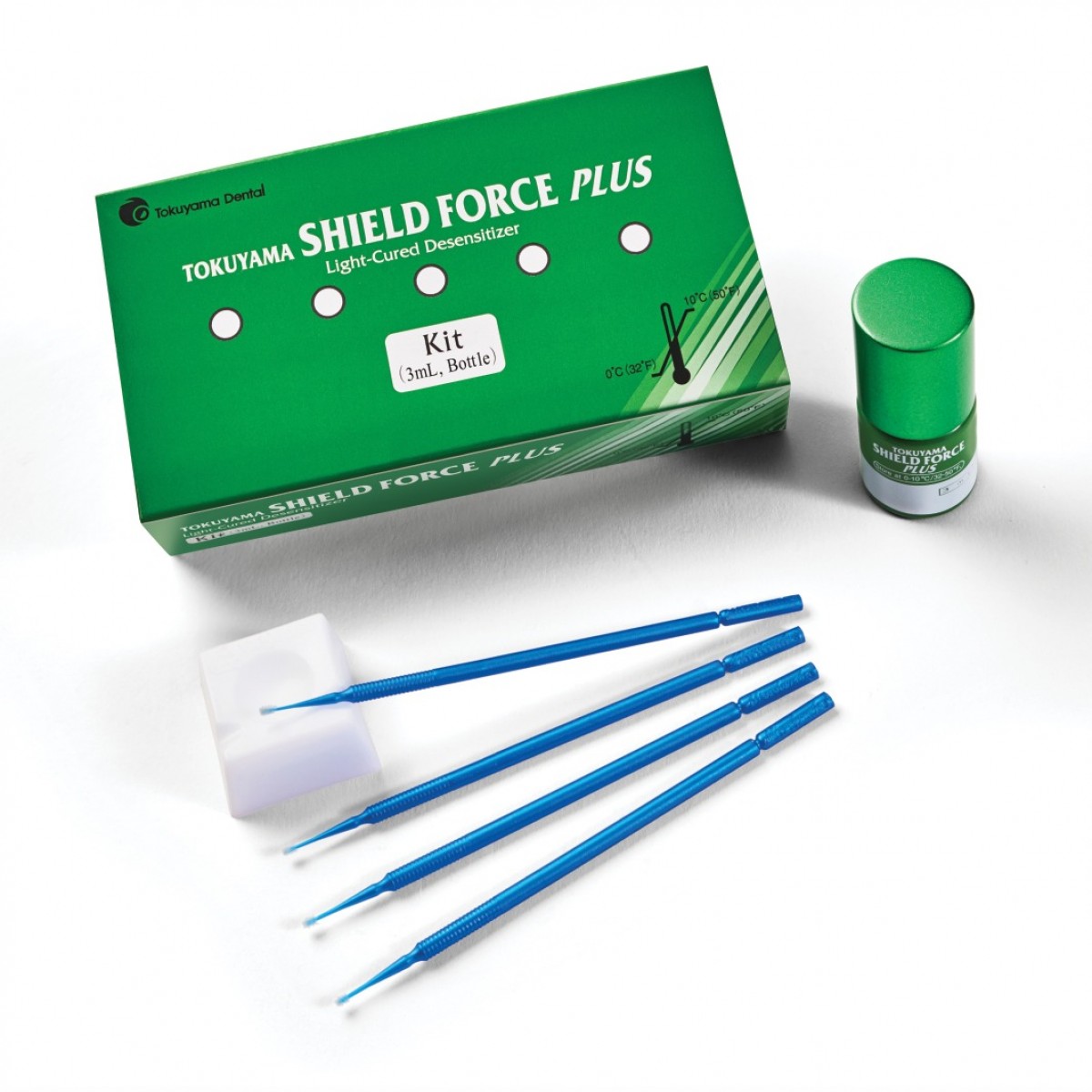
Karen Davis, RDH, BSDH, owner of international continuing education company Cutting Edge Concepts, explains why she likes using Tokuyama Dental America’s Shield Force Plus and how the desensitizer provides long-lasting relief and reduced anxiety to her patients.
Q: From your perspective, how common is tooth sensitivity among your patients?
A: It is not an uncommon response with patients when I question how everything feels since their last visit. It’s something patients not only notice but remember. It’s interesting that patients will describe a sensitive “area” since their last visit but can’t recall exactly where it was or identify a tooth that’s been sensitive when they bite on one side, so they’ve just learned to chew on the other side. Patients seem to like reporting in on tooth sensitivity, even if it resolved on its own. But, as we know, quite a few individuals walk through the door with anxiety elevated due to concerns that sensitive areas in their mouth will ignite during treatment.
Q: What are your key considerations when treating a patient with sensitivity?
A: It’s a bit like being a detective in the mouth to look for clues as to the cause of sensitivity. Questions I want insight on from the patient’s perspective include: How long have you noticed sensitivity? Is it worsened when chewing, or with hot or cold temperatures? Does it ever wake you up at night? Have you needed to take any pain reliever for sensitivity or are you avoiding certain foods that increase sensitivity? Have you tried any remedies such as desensitizing toothpaste? Are you aware of clenching your teeth at night or during the day? Answers to these questions help become a decision tree. Do I need an x-ray? Were there notations in the patient’s record regarding past sensitivity? Is there outstanding treatment diagnosed in an area the patient describes as sensitive? Are they wearing any bite appliance for clenching or snoring? Obviously, the next consideration is what I see upon examination. I look for wear facets, demineralization, evidence of caries, malocclusion, evidence of dry mouth, gum recession, abfraction lesions, and tooth erosion.
Q: How did you first learn about Shield Force Plus (Tokuyama Dental America)?
A: When I discovered an advertisement in a dental magazine for a desensitizer that provided a protective shield and didn’t need to be reapplied for 2 to 3 years, it caught my attention but that almost sounded too good to be true. Once I tried it, I was surprised at how easy and efficient it was to apply. But I keep using it is because of its effectiveness. Almost instant desensitization and it lasts! Once I apply Sheild Force Plus (SFP), I reassess the need for reapplication. Most commonly that is between 2 to 3 years down the road. Amazing longevity.
Q: Can you share a patient story where SFP made a real difference?
A: Hank’s story is a great example of its effectiveness. He experienced high sensitivity on several teeth that exhibited cervical wear. His greatest concern with dental care was that I would “accidently” ignite one of those sites during routine treatment which meant he started his hygiene visits with elevated anxiety. He received minor improvements using desensitizing pastes at home, but once I applied Shield Force Plus over those vulnerable and sensitive sites, Hank’s sensitivity went to zero. His anxiety at the beginning of appointments also went to zero. We are on his second application, so he has been sensitive-free for over 5 years.
Q: How did you introduce SFP to your dentist?
A: Easy. We were both in pursuit of strategies to reduce sensitivity and protect teeth already exhibiting abfraction lesions from further wear and had tried a few other products. Before ordering Shield Force Plus we both looked at ingredients for safety, and agreed the claims almost sounded too good to be true but have been pleasantly surprised the results are reproducible with diverse patient experiences.
A: Use of ADA Code D9911-application of desensitizing resin for cervical and root surfaces is easy to incorporate into dental hygiene visits. The value to me is that I no longer feel like I’m walking into a mine field as I work my way around sensitive teeth, and the value for patients is that anxiety over exposed roots being sensitive during treatment literally dissolves.
Q: Would you recommend SFP to a colleague, and why?
A: I’m a big proponent of ease-of-use technologies. Shield Force Plus takes 10 seconds of application of the liquid on the cervical area. Ten seconds of air-drying and 10 seconds of UV light. Relief is instant. Effectiveness is lasting. Clinicians can have confidence in the safety of SFP with its unique monomer profile of desensitization and protection. It is glutaraldehyde-free and none of the ingredients contains BPA, nor is BPA released with curing. Great reasons to try this innovative solution and see for yourself. Your patients will thank you. For more information, visit tokuyama-us.com .
Source: http://tokuyama-us.com
 Related articles
The dentist-invented shield aims to close the compliance gap by being the first one clinicians actually want to wear.
Editorials 04 August 2025

Welcome back to Robert C. Shields, Ph.D., who returns to the college as an assistant professor.

Ease-In-Shields protective loupe inserts were developed by dentists to provide comfortable, hands-free laser eye protection.
Market 18 December 2023
Blue Cross Blue Shield of Massachusetts Enhances Dental Benefits
insurancesquare.jpg)
Blue Cross Blue Shield of Massachusetts (Blue Cross) has announced a significant expansion of its Dental Blue benefits to ensure that members of all ages with mental health conditions can access...
Products 06 November 2023
Henry Schein Completes Acquisition of a Majority Interest in Shield Healthcare, Inc.

Henry Schein, Inc. (Nasdaq: HSIC), the world’s largest provider of health care solutions to office-based dental and medical practitioners, today announced it has completed the acquisition of Shield...
Read more
Products 13 October 2026

New Resources Help Dental Exhibitors Evaluate Their Investment and Explore the Personify ShowFlow™ Trade Show Success System
News 13 October 2026

New patient apps extend The Aspen Group’s mission to remove barriers to care, giving patients greater visibility, convenience, and control from booking through treatment
Editorials 13 October 2026

The forerunner of what’s now Texas A&M College of Dentistry opened 120 years ago in Dallas with the mission of educating dentists to provide quality care to patients in North Texas
Oral pathology 13 October 2026
This peer-reviewed oral pathology article summarizes clinical evidence from Oral oncology (2026). It focuses on findings that may help dental professionals evaluate treatment decisions, patient...



Copyright © 2026 - All Rights Reserved
ISSN 2767-1178