


A Predictable Transition to a Screw-Retained Full-Arch Prosthesis
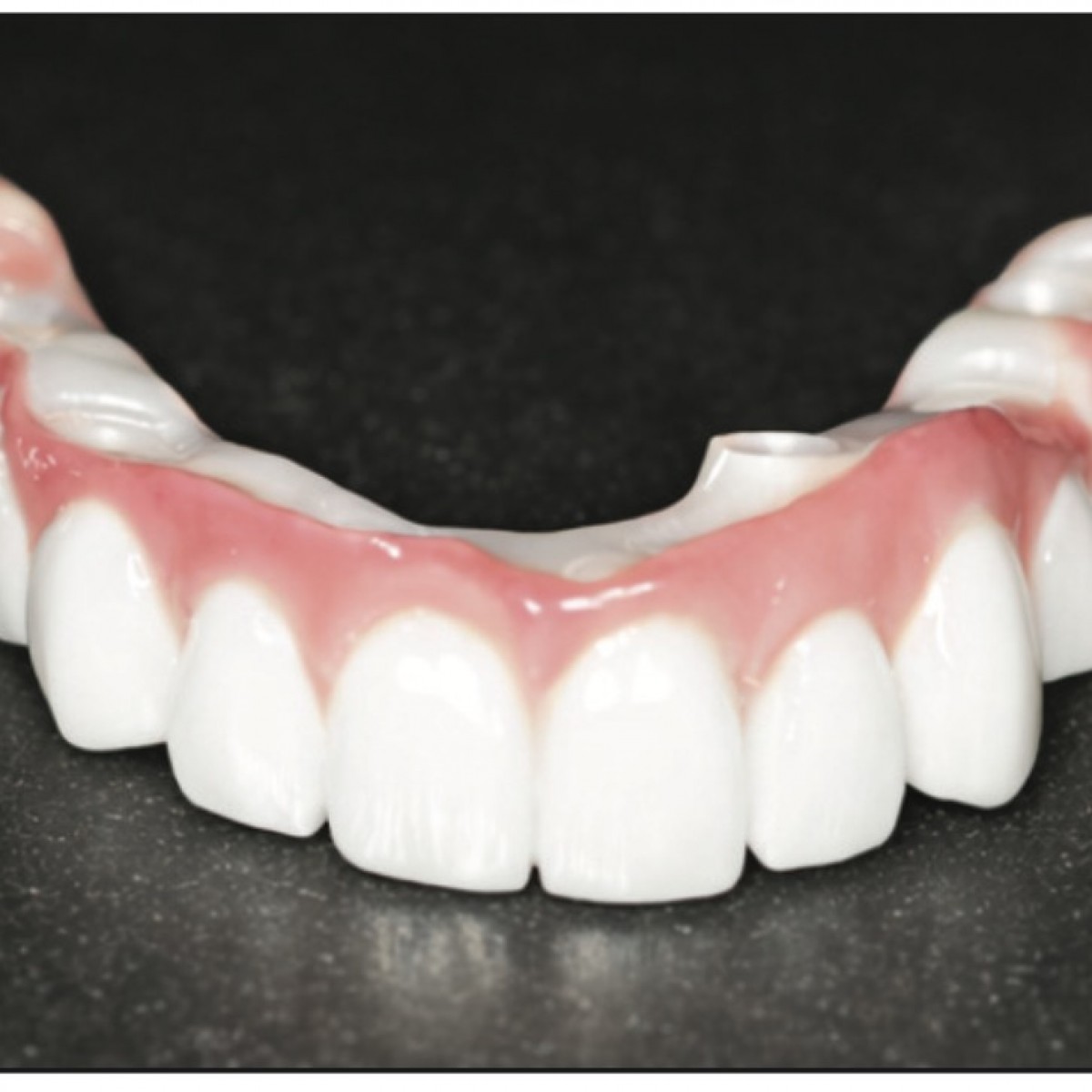
The use of implant-retained overdentures has become an established standard of care for the edentulous arch, offering improved function, stability, and patient satisfaction compared with conventional complete dentures.
Longitudinal studies report that while overdentures significantly enhance quality of life, 25% to 35% of patients later request conversion to a fixed prosthesis because of movement, wear of retention components, or cleaning inconvenience. This shift reflects both technological progress and the modern expectation that implant restorations should look and feel like natural dentition.
Digital workflows, CAD/CAM precision, and high-strength ceramics have made screw-retained full-arch prostheses increasingly predictable. When existing implants remain stable and well distributed, conversion rather than replacement can achieve >95% implant survival at 5 years.
This case report illustrates a practical, evidence-based workflow for converting a decade-old LOCATOR overdenture to a screw-retained zirconia restoration using existing Ankylos C/X implants (Dentsply Sirona) and a digital photogrammetry workflow (iCam4D [iMetric 4D]).
While the patient appreciated her implant-supported denture and had used it successfully for more than a decade, she wanted a more permanent solution—one that she did not have to remove, and that reduced the bulk of material on the palate and buccal vestibule. She was motivated by comfort, convenience, and the desire for a restoration that would feel more like her own natural teeth.
The patient, a 64-year-old female, presented with a maxillary LOCATOR retained overdenture (Figure 1) supported by 6 Ankylos C/X implants (3.5 mm platform) placed in 2012 at site Nos. 3, 5, 8, 9, 11, and 14. The prosthesis had functioned predictably for more than 10 years, with LOCATOR nylon housings (Zest Dental Solutions) replaced at regular intervals and the patient demonstrating excellent home-care compliance throughout that time. Despite its success, she had grown increasingly dissatisfied with the prosthesis’s bulk and the daily removal routine (Figure 2).
Radiographic evaluation using the Carestream CS 8200 3D Advanced Edition CBCT system (Carestream Dental) revealed excellent osseointegration at all sites except implant No. 3, which exhibited moderate crestal bone loss but remained clinically stable. The patient was informed of the bone loss and the potential risks of including that implant in the new prosthesis. The pros and cons of retaining vs removing implant No. 3 were discussed, and it was mutually agreed that the implant would be monitored throughout the provisional and definitive phases for any signs of progression or instability.
Peri-implant tissues were healthy, with adequate keratinized tissue and no inflammation.
Given the favorable implant distribution and tissue health, the plan was to convert the overdenture to a screw-retained zirconia full-arch prosthesis by replacing all LOCATOR abutments with Ankylos Multi-Unit Abutments (Platform A) (Dentsply Sirona) (Figure 3). Implant No. 3 was monitored through provisionalization to confirm stability before inclusion in the definitive prosthesis. All records were captured digitally using the Intelliscan 3D intraoral scanner in combination with iCam4D photogrammetry (iMetric 4D).
Implant Evaluation and Conversion Feasibility
Five of the 6 Ankylos C/X implants exhibited excellent bone levels; implant No. 3 showed localized vertical bone loss, likely from prior overload, but no mobility or infection. The patient was counseled regarding this finding and provided informed consent to proceed with careful monitoring.
The Ankylos TissueCare Connection—a conical, friction-fit interface—has been shown to minimize micromovement and bacterial leakage, maintaining marginal bone stability for more than 10 years. Because all implants remained functional and properly distributed, conversion could proceed without surgical replacement, preserving bone and minimizing patient morbidity (reducing the need for additional surgery, recovery time, and postoperative discomfort).
The Ankylos Multi-Unit Abutment (MUA) System (Dentsply Sirona) was used to convert the implant-level interfaces to a unified restorative platform. MUAs in straight and 30° angled configurations with collar heights of 1.0 to 5.5 mm were selected to equalize the restorative plane. Each MUA was torqued to 15 Ncm using the Dentsply Sirona Torque Control Driver per manufacturer protocol.
This prosthetic interface supports retrievable, screw-retained restorations with favorable load distribution and digital workflow compatibility via Atlantis scan bodies and digital libraries (Dentsply Sirona).
Conversion from Implant-Retained to Screw-Retained Prosthesis
1. Removal of LOCATOR Abutments and Site Preparation. LOCATOR abutments were removed, and the internal connections were cleaned using TiBrush titanium rotary instruments (Straumann) and irrigated with Peridex 0.12 % chlorhexidine gluconate (Solventum).
2. Multi-Unit Abutment Placement. Straight MUAs were placed at Nos. 8, 9, and 11, while 30°-angled MUAs were used posteriorly (Nos. 3, 5, 14). All were torqued to 15 Ncm and periapical radiographs were taken using the DEXIS Digital X-ray System (DEXIS Imaging) to verify seating (Figure 4).
3. Digital Capture and Photogrammetry. A photogrammetry scan (iCam4D) captured the 3D coordinates of each MUA, achieving an accuracy of <20 µm. A supplemental intraoral scan was performed using the Intelliscan 3D to capture soft-tissue contours and occlusion, merging both datasets in inLab CAD software (Dentsply Sirona) for precise framework design (Figure 5).
4. Provisionalization and Try-In. A Telio CAD PMMA (Ivoclar) screw-retained provisional bridge was milled and delivered within 24 hours using an inLab MC X5 milling unit. The patient reported immediate improvement in speech and comfort.
5. Definitive Prosthesis Fabrication and Delivery. The final monolithic zirconia full-arch prosthesis was milled from inCoris TZI zirconia (Dentsply Sirona) and bonded to Atlantis titanium bases (Dentsply Sirona) (Figures 6 and 7). Prosthetic screws were torqued to 15 Ncm, and access channels were sealed with Teflon PTFE tape (DuPont) and GrandioSO Flow composite resin (VOCO America). Postop radiographs confirmed passive fit and bone stability.
6. Maintenance and Followup. The patient was placed on 3-, 6-, and 12-month recalls, including annual prosthesis removal for cleaning. Home-care instruction emphasized use of a Waterpik Cordless Advanced Water Flosser and Oral-B Super Floss (P&G), with a nonabrasive toothpaste such as GC Tooth Mousse (GC America).
Implant overdentures remain highly successful, yet roughly 30% of long-term users eventually prefer a fixed restoration. Digital workflows and new biomaterials have made such conversions efficient and predictable.
Reusing stable implants minimizes biological and financial costs. Ankylos implants show >97% 10-year survival with <0.5 mm mean crestal bone change. Despite bone loss at No.3, stability during provisionalization justified retention.
LOCATOR attachments deliver reliable retention but require ongoing maintenance. Screw-retained restorations provide long-term stability and a sense of permanence.
Photogrammetry improves framework accuracy to 20 to 25 µm, eliminating the need for verification jigs and reducing chair time. The iCam4D system and Intelliscan 3D integrated seamlessly into the inLab CAD/CAM workflow, ensuring a passive, tension-free fit.
Beyond clinical metrics, patient-reported outcome measures demonstrate improved comfort, speech, and confidence after conversion from removable to fixed restorations. The patient in this case mirrored these findings, reporting immediate improvements in comfort and confidence.
This case demonstrates that even decade-old implants can be predictably repurposed for fixed restorations when bone and implant health are preserved. The Ankylos conical connection and multi-unit adaptability, combined with digital workflows using iCam4D, Intelliscan 3D, and inCoris TZI zirconia, enable efficient and stable full-arch conversions.
Dr. Simos received his DDS degree from Loyola University in Chicago and maintains a private practice, Allstar Smiles, in Bolingbrook and Ottawa, Ill. He is the founder and president of the Allstar Smiles Learning Center, teaches postgraduate courses in comprehensive restorative dentistry, and is a recognized leader in cosmetic and restorative dentistry. In addition, he lectures throughout the country and is an internationally published author on the use of today’s innovative techniques and materials in dentistry. He can be reached at sam.s@allstarsmiles.com.
Disclosure: Dr. Simos reports no disclosures.
Source: https://us02web.zoom.us/webinar/register/WN_pTvYxBGcQ_ak65szMIj5Ww#/registration
 Related articles
News 25 February 2026
Bioactive Crystal Technology (BCT): The Science Behind Predictable Bone Regeneration

OsteoGen™ bone grafting materials feature non-sintered, biomimetic calcium phosphate crystals that promote regenerative bone growth
Digital Dentistry 30 September 2025
Diagnosis and Treatment Planning for Predictable Restorative Outcomes
The dilemma in comprehensive dentistry is that dentists are often focused on restoring teeth for esthetic outcomes, and if occlusion is not taken into account during diagnosis and treatment planning,...
News 04 August 2026
Rob Brian brings more than 15 years of dental industry experience to Menlo Dental Transitions, where he will advise dentists throughout Utah and the surrounding region.
News 01 July 2026
(“Align”) (Nasdaq: ALGN), a leading global medical device company that designs, manufactures, and sells the Invisalign System of clear aligners, iTero intraoral scanners, and exoca
News 26 January 2026
Menlo Dental Transitions announced recently that David Haynes, MBA, has been promoted to Market Leader of Dental Practice Sales in Arizona. Haynes joined Menlo Dental Transitions in 2021 to help the...
Read more
Products 20 October 2026
News 20 October 2026

In recognition of National Dental Hygiene Month, Delta Dental highlights key findings from its 2026 State of America’s Oral Health and Wellness Report , a nationwide analysis of co
News 20 October 2026
Abra Health Group has launched The Dental Bank, a new community impact initiative designed to make essential oral health resources more accessible to individuals and families throu
Editorials 20 October 2026
Woman’s skull likely proof of ancient nose amputation, says College of Dentistry professor
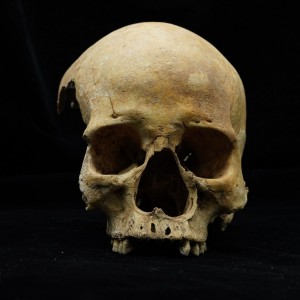
Qian Wang, professor in biomedical sciences at Texas A&M College of Dentistry in Dallas, identified what he and other researchers believe is likely one of the first examples of an
Endodontics 20 October 2026
This peer-reviewed endodontics article summarizes clinical evidence from Clinical oral investigations (2026). It focuses on findings that may help dental professionals evaluate treatment decisions,...


Copyright © 2026 - All Rights Reserved
ISSN 2767-1178