


Dental restoration: When and Why are they redone?
Simona Chirico

Survival of dental restorations presents temporal limits, despite the improvement of oral health education and the diffusion of fluoride treatments. Sooner or later, to be restored due to:
- marginal defects;
- secondary caries;
- fracture of the restoration;
- fracture of the tooth;
- discoloration and aesthetic inadequacy.
MATERIALS AND METHODS
In a review published in the Journal of Dentistry of May 2018, the authors studied the percentage of restorations redone, analyzing their motivations and duration. The studies included in the review were identified using electronic databases, until September 2017.Studies based on the Mjör protocol were selected, in which dentists were asked to complete a proforma each time a patient presented himself for a new restoration or for a restoration to be replaced. The dentists were asked to record all the restorations performed before and after 1998, in which they indicated if the restorations were done for the first time or second time.
RESULTS
Twelve studies were included in the final review. Before 1998, 32.697 restorations were performed: 44% were primary and 56% secondary restorations. After 1998, 54.023 restorations were performed: 42% were primary and 58% secondary restorations.
Comparing the review periods, there was a reduction in the use of amalgam from 65% (pre-1998) to 35% (post-1998), with a corresponding increase of resin composites from 43% to 57% in the same period.
Secondary caries has proved to be the most common cause of restoration replacement (59%).
CONCLUSIONS
The redone of dental restorations concerns, at present, even more than half of the primary restorations, despite the strengthening of dental prevention maneuvers, patients education to the maintenance of oral health and the improvement of techniques and materials used by dentists.
For additional informations:
An update on the reasons for placement and replacement of direct restorations
 Related articles
Editorials 27 September 2026
Dentistry33 survey highlights replacement care, deep caries and evolving restorative workflows
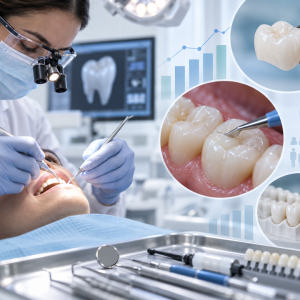
Reader survey finds direct composites remain dominant, secondary caries is the leading reason for restoration replacement, and clinicians want more training in pulp preservation
Reader survey finds direct composites remain dominant, secondary caries is the leading reason for restoration replacement, and clinicians want more training in pulp preservation
Restorative dentistry 17 April 2026
Patient Perceptions of New Robotic Technologies in Clinical Restorative Dentistry
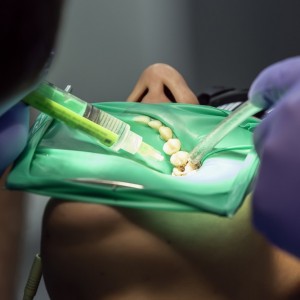
Patient perception research has failed to focus on burgeoning technology within the dental field.
Prosthodontics 16 April 2026
The use of orthodontics before fixed prosthodontics in restorative dentistry
For a variety of reasons, orthodontic intervention is often overlooked as a viable modality to correct occlusal, axial, rotational, and space discrepancies before undertaking fixed prosthetic...
Digital Dentistry 16 February 2026
An original procedure for the ovoid pontic technique in ortho-restorative cases

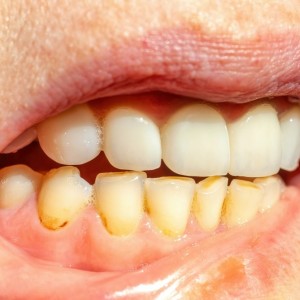
In the multidisciplinary treatments, especially in case of missing teeth in aesthetic area, the compliance of patient during retention time post orthodontic therapy is evidently very high, even among...
Read more
Products 20 October 2026

News 20 October 2026

In recognition of National Dental Hygiene Month, Delta Dental highlights key findings from its 2026 State of America’s Oral Health and Wellness Report , a nationwide analysis of co
News 20 October 2026

Abra Health Group has launched The Dental Bank, a new community impact initiative designed to make essential oral health resources more accessible to individuals and families throu
Editorials 20 October 2026
Woman’s skull likely proof of ancient nose amputation, says College of Dentistry professor

Qian Wang, professor in biomedical sciences at Texas A&M College of Dentistry in Dallas, identified what he and other researchers believe is likely one of the first examples of an
Endodontics 20 October 2026
This peer-reviewed endodontics article summarizes clinical evidence from Clinical oral investigations (2026). It focuses on findings that may help dental professionals evaluate treatment decisions,...



Copyright © 2026 - All Rights Reserved
ISSN 2767-1178