


New technologies, scientific research, and resilience: driving factors for the Dentistry Community
Interview with Doctor William Giannobile
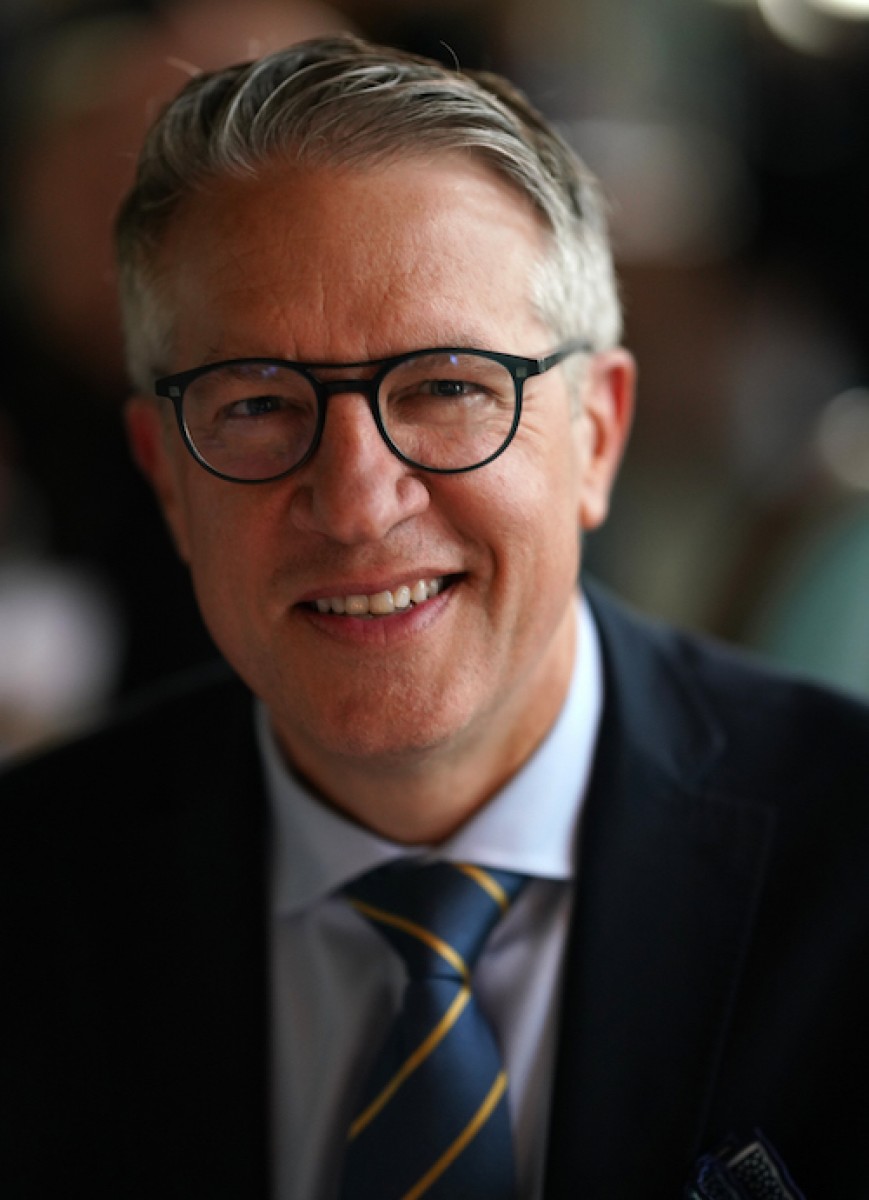
Dr. William Giannobile, Dean of Harvard School of Dental Medicine (HSDM), is a leader in the field of periodontology and an internationally recognized scholar in oral regenerative medicine, tissue engineering, and precision medicine. He is an alumnus of HSDM, with an advanced degree in periodontology and oral biology. In September 2020, he was appointed the 11th dean of HSDM.
Prior to HSDM, he served as the Najjar Endowed Professor and chair of the Department of Periodontics and Oral Medicine at the University of Michigan School of Dentistry. He was also a professor of biomedical engineering at the College of Engineering and Biointerfaces Institute. He received his DDS and MS in oral biology from the University of Missouri. He later received his certificate in periodontology and Doctor of Medical Sciences in oral biology from the Harvard School of Dental Medicine. He completed postdoctoral training in molecular biology at the Dana-Farber Cancer Institute and Harvard Medical School. Dr. Giannobile previously held positions as a faculty member at HSDM as an assistant professor of Periodontology and at the Forsyth Institute. He has served as a visiting professor at the University of Genoa Medical School Biotechnology Institute and the Eastman Dental Institute, University College London.
1) Let's start with an actual topic: how deeply did the pandemic affect dentistry in the USA and worldwide? How did the pandemic affect the teaching of Dentistry? What advice can you give to your colleagues?
The pandemic had a significant impact on the US; it shakes the country and challenges the American People to react and show resilience. In March, most dental clinics closed entirely, and it took sometime before we could understand the correct procedures and standards to follow to reopen safely. I was in contact with the Dean at Wuhan Dental School, and we were able to share insights and practices at that time; he told and explained to me their experience with covid19 during the early look down and how they were able to cope with the pandemic based on the publication we made available in the Journal of Dental Research. We did the same, and after long and arduous months of struggling, when all the clinics were closed, and the dental education and teaching switched to remote completely, we were able to develop testing protocols & creating guidelines and, little by little, get back on track. We had to stop our elective patient care for months, but thanks to the already strong PPE and protocols applied in any dental clinic, we could still take care of our patients.
On the teaching side, the University enforced social distancing, enhanced the safety procedures for students, professors, and academic staff. Now clinical teaching is more straightforward and, besides the protective equipment and maintenance of social distancing, we are working towards getting back to normal. The University has an appropriate procedure, and the education continues. Ultimately, we have learned to function, and it has changed our reality.
2) Compared to a few years ago, today, technology in dentistry is fundamental. What are the clinician and his/her team's role in the management of these new technologies?
New technologies are fundamental in the dentist industry, as well as their correct application. There is available 3D imaging combined computer tomography, and now we have optical scanning that can be used for impressions and then 3D printing that can be used for in-office construction; provisional restorations can be used for implant guides and a variety of other types of workflow improvements. Implant dentistry, for example, it’s significantly transformed by the use of digital dentistry. Another area that has got very strong advancement is an area that we call personalize or provision dentistry; starting from a couple of clinical information, with electronic records and, in some cases, even with biomarkers which haven’t been used as much, the application of machine learning and AI are powerful help for clinicians. We’re starting to see more and more places that are bringing together clinical information and other diagnostic information to come up with a more customized or personalized approach for our patients.
When it comes to therapeutics, many have now been developing different biological agents to repair tissues around teeth using regenerative medicine approaches, some tools also looking at improving enamel with certain types of agents. We’re starting to see these biologics being able to be used. These are a couple of technologies that are under development, and dentistry is always on the edge of innovation, and it’s able to implement many of them thanks to the expertise of doctors and their clinical teams.
3) Technique versus technology, which is the relationship today. Is it always the clinician's knowledge that determines the success of rehabilitation?
It’s evidence-based: it’s the dentist's knowledge to know how to apply these technologies and in which patients. We need to develop a protocol to use the proper technique in the right clinical situation. For example, the growth of the dental implant industry has increased dramatically, and many people look at this technology and technique as an approach to replace teeth save if some of them cannot be saved; this happens because the practitioner decides to remove a tooth that thinks cannot be preserved and places an implant instead. Well, there are many patients where you can save the teeth, and a good practitioner will think through what can be done to prolong the dentition's life to improve patient care.
I’m being concerned as the Dean of a Dental School and as a clinician myself where I’ve seen there are likely too many implants being placed because people are enamored with this technology of dental implants. Dental implants are very important, and I’ve placed implants myself, but I’ve also saved teeth.
4) You have exceptional scientific research experience in dentistry; how did the pandemic affect dental researchers and their job? What will be the next revolutions brought in Dentistry?
The pandemic has affected everything, and it has affected the biomedical research enterprise like anything else. What has happened in my background as a research and education building, the research facilities had almost completely shut down and had only gradually reopened. The good thing about research is that there’s much to report, and it was an opportunity for our researchers to think about new grants and approaches that could be developed in research that might impact dentistry. There was a significant increase in scholarly publications, therefore people tried to make the best of that time. However, just like with anything else, a difficulty is maintaining that physical distancing in research facilities and in the US government; if people were doing covid related research, they were enabled to use proper PPE, and research moved forward. It's exciting that we've gotten all of these vaccines and the development of diagnostic tests for covid testing; for example, we test all of our students, faculty, and staff at least once a week to provide a safe environment. There we can see that research still moves forward. Now we're opening up even more: in my state Massachusetts the COVID-19 cases have dropped dramatically, vaccinations are increasing, and we're starting to see those effects where they think that between April and July, we may be getting significant herd immunity. Although the research was slowed, it was not as impacted as clinical care and education. However, just like everything else, humans are social animals, and we like to be around people, and as a result, we lose a certain amount of innovation because we don't have that.
5) Finally, a personal question. Your CV is impressive: among your professional goals achieved, which ones do you remember most proudly?
I gained the most satisfaction professionally because now, as I get older, the people I've mentored and the students I interacted with 20-25 years ago are going on to make outstanding achievements. Many of them are going on into academia, taking on leadership positions within dentistry and industry. Our life is short, and being able to help others and inspire others to be the best they can be. In my case, to be able to push new knowledge generation forward, being able to publish our research findings and recognize specific findings that we hope are helping advanced dentistry. It's rewarding when we do something that we see is impacting how clinical care is delivered. Part of the reason I started this role to be Dean is having the opportunity to work with brilliant students and see what they do now. They inspire me, they're so smart and enthusiastic. I draw a lot of energy from the students, staff members, and our faculty members. It’s really been a privilege to serve in academia, I’ve felt very fortunate in my career today to have worked with such good people.
 Read more
Products 13 October 2026

New Resources Help Dental Exhibitors Evaluate Their Investment and Explore the Personify ShowFlow™ Trade Show Success System
News 13 October 2026
New patient apps extend The Aspen Group’s mission to remove barriers to care, giving patients greater visibility, convenience, and control from booking through treatment
Editorials 13 October 2026
The forerunner of what’s now Texas A&M College of Dentistry opened 120 years ago in Dallas with the mission of educating dentists to provide quality care to patients in North Texas
Oral pathology 13 October 2026
This peer-reviewed oral pathology article summarizes clinical evidence from Oral oncology (2026). It focuses on findings that may help dental professionals evaluate treatment decisions, patient...


Copyright © 2026 - All Rights Reserved
ISSN 2767-1178