


Periodontitis almost triples the chances of suffering an ischemic stroke
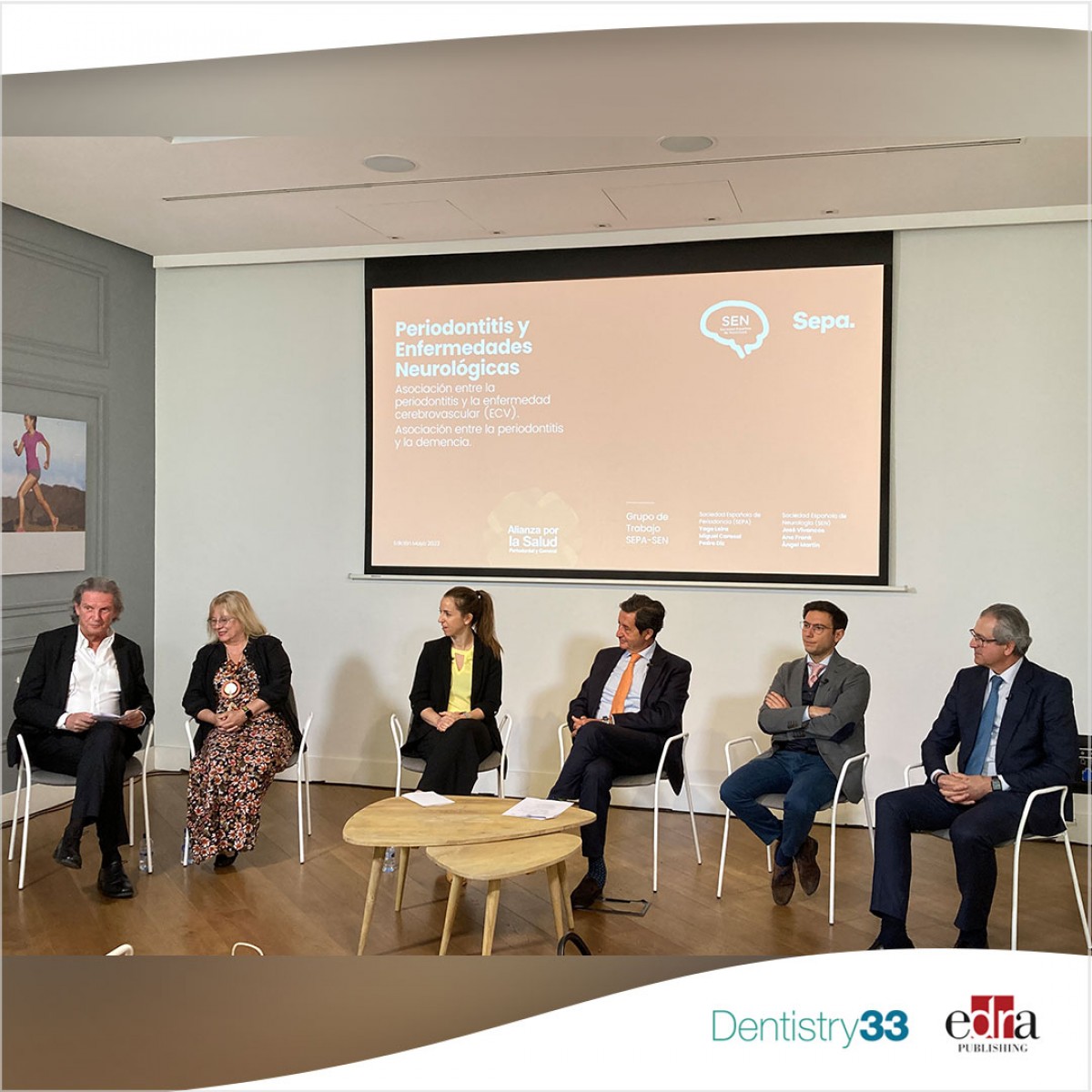
Periodontitis not only increases the risk of ischemic stroke and Alzheimer's dementia, but it is also considered that different oral health interventions can reduce the risk of these neurological disorders. These are the main conclusions drawn from a rigorous and exhaustive consensus report carried out by the joint working group of the Spanish Society of Periodontology and Osseointegration (SEPA) and the Spanish Society of Neurology (SEN). In addition, some practical recommendations for both dentists and neurologists are noted.
In recent years, new studies have accumulated that point to a suggestive link between periodontitis and some neurological diseases. As Dr. Miguel Carasol, coordinator of the SEPA working groups, points out, "hence the need to review the scientific evidence of this relationship, as well as the interest in drawing some conclusions and advice on how to act with patients with periodontitis and neurological diseases, which are useful for both the dentist and the neurologist and, in short, for the general population."
As SEPA Vice President Dr. Paula Matesanz concludes, "the result of the report shows that periodontitis increases the risk of ischemic stroke and Alzheimer's dementia." According to Dr. José Miguel Láinez, president of the Spanish Society of Neurology (SEN), "risk markers such as periodontitis are of great help to try to avoid, reduce or minimize the impact of these neurological disorders."
Of all neurological diseases, this report has analyzed the two for which there is the greatest scientific evidence of their relationship with periodontitis: cerebrovascular disease and dementia. As revealed by Dr. José Vivancos, neurologist and member of the SEPA-SEN working group, "the main difficulty in preparing the report has been to synthesize all the available literature on the subject, as well as to include as far as possible studies with good methodological quality".
The report reports the evidence from three clearly defined points: the epidemiological association between periodontitis and these two neurological diseases, the biological mechanisms that may explain these associations, and intervention studies on the effect of periodontal treatment as a primary or secondary preventive measure of stroke and dementia.
Epidemiological association
Neurological diseases, among which cerebrovascular diseases and dementias stand out for their frequency and morbidity and mortality, constitute a serious public health problem, being very relevant the enormous problems of disability that they entail. In recent years, to the known risk factors in the appearance and progression of these diseases, it has been assessed that periodontitis can influence in some way the etiopathogenesis of these neurological pictures.
Based on the epidemiological data extracted from studies evaluated in this report, "it is estimated that people with periodontitis have 1.7 times more risk of Alzheimer's dementia and 2.8 times more risk of suffering an ischemic stroke than periodontal healthy people," says Dr. Yago Leira, periodontist and coordinator of the SEPA-SEN working group. who recalls that "periodontal disease is very common among the adult population (it is estimated that 8 out of 10 Spaniards have some degree or type of periodontal disease)." In addition, as pointed out by Dr. Ana Frank, head of the Neurology Service at La Paz University Hospital (Madrid) and member of the SEPA-SEN group, "this gum disease is especially common among the elderly population, although it usually goes unnoticed and/or is not given enough attention."
Inflammation, a presumed culprit
Now, as Dr. Frank advises, "it would be very important to have epidemiological studies that confirm this relationship and, above all, studies that would help us to know in detail the mechanisms involved." In this sense, suspicions revolve, fundamentally, on the inflammatory hypothesis; Specifically, as this expert explains, "it is speculated that this link may be due to the inflammatory effect produced by periodontitis, a chronic and low-grade but persistent inflammation in the body and that triggers an inflammatory cascade, which ends up not only causing negative consequences at the neurological level but also in other target organs, which would explain its incidence also in cardiovascular health or diabetes."
Specifically, in ischemic cerebrovascular disease, there is experimental evidence on how the chronic immunoinflammatory response of periodontitis would trigger a prothrombotic state of hypercoagulability and vascular endothelial dysfunction that may increase the risk of cerebral embolism/thrombosis.
In the case of Alzheimer's disease, as detailed by periodontist Yago Leira, "many animal studies have shown that bacteremia and endotoxemia that occur in periodontitis, together with a state of chronic low-grade inflammation, contribute significantly to the development of neurodegenerative processes involved in cognitive dysfunction. such as neuroinflammation and neuronal death, the formation of senile plaque by deposits of amyloid beta peptides as well as the appearance of neurofibrillary tangles due to hyperphosphorylation of the Tau protein".
Therefore, as discussed in this report, there are different pathophysiological mechanisms studied in experimental models that support the biological plausibility of the epidemiological association.
The neurological benefits of periodontal treatment
There are currently no randomized clinical trials studying the impact of periodontal treatment on reducing the risk of stroke and dementia, nor are there intervention studies on secondary prevention of these pathologies. However, as clarified in the SEPA-SEN report, there are several observational studies published suggesting that different oral health interventions can reduce the risk of stroke or dementia.
In any case, and in the absence of the results of all these studies, "there is no doubt that, as this SEPA-SEN Report teaches us, we can and must do something," says Anne Frank. In his opinion, "in the light of this work, two very concrete and practical actions can already be carried out: 1) dental clinics in Spain should know and disseminate this report; 2) through the Spanish Society of Neurology, we will insist to all neurologists on the importance of periodontal health in their patients and, in addition, we will recommend that in all their patient reports (regardless of the neurological disease they suffer) they include specific preventive advice on oral health (insisting on daily toothbrushing, regular visits to the dentist,...)."
Messages for dentists, neurologists and the general population
Dr. José Miguel Láinez, president of the SEN, insists that "neurologists must be aware that the presence of periodontal disease, such as periodontitis, can increase the incidence and be an important risk factor for some types of dementia or stroke". And, therefore, he adds, "we must recommend to our patients that they take extreme care and review of their oral health, including these indications within the general health advice we offer."
Neurologists can play a key role when screening patients with signs of periodontal disease, and thus be able to refer them to the dentist for diagnosis and, if necessary, receive proper dental treatment.
For its part, as the vice president of SEPA points out, "dentists have to know that periodontitis is related to an increased risk of stroke and Alzheimer's disease." Therefore, clarifies Dr. Yago Leira, "it is of vital importance that in dental consultations we are able to screen patients with possible vascular risk factors that are related to neurological diseases such as hypertension or diabetes." On the other hand, according to the coordinator of the SEPA-SEN working group, "in our clinics we attend to thousands of patients suffering from a neurological disease and we will have to be in contact with our neurologist colleagues in order to offer the best possible treatment to these patients, with an adequate management adapted to each case".
To achieve the success of these measures, it is necessary to disseminate among the general population the information that relates periodontal health and neurological health. "Carrying out information and awareness campaigns would be a first step so that the message derived from this report can reach society, and thus know the possible neurological risk derived from diseased gums," says Dr. Leira, who is committed to "promoting among the general population the message that oral health goes hand in hand with general health: The mouth is part of the human body."
This article was originally published on Odontologia33.
 Read more
Europe 11 October 2026 - 30 November -0001
Scandinavian Dental Fair 2026: Event Preview and Professional Highlights

The Scandinavian Dental Fair 2026 will take place from November 11, 2026 to November 13, 2026 in TBD, Sweden/Denmark, offering dental professionals a focused environment for continuing education,...
Edra Professional Books 10 October 2026

Esthetics and function in complete denture prosthesis is an Edra professional dentistry reference focused on clinical practice, education and treatment planning.
Products 09 October 2026

Oral-B and Crest, Official Oral Care Partners of the NFL, recently announced the launch of new special-edition products, giving fans even more ways to celebrate their love of the g
News 09 October 2026
Apex Dental Partners, a dental partnership organization supporting dentists and affiliated practices, has been named No.
News 09 October 2026

New education website and fully funded Swiss fellowship program debut at the 2026 Orthopaedic Trauma Association Annual Meeting in Nashville


Copyright © 2026 - All Rights Reserved
ISSN 2767-1178