


Artificial intelligence applications in orthodontics

Objective
This manuscript describes strategies for assessment of precision of several diagnostic artificial intelligence (AI) tools in orthodontics, available open-source image analysis platforms, as well as the use of three-dimensional (3D) surface models and superimpositions.
Results
The advances described in this manuscript present perspectives on the controversies of whether AI is smarter than clinicians and may replace human clinical decisions. A thorough orthodontic diagnosis requires comprehensive 3D analysis of the interrelationships among the dentition, craniofacial skeleton and soft tissues. Forecasts have indicated that 3D printing technology will provide more than 60% of all dental treatment needs by 2025, and orthodontic companies as well as remote monitoring companies are already using AI technology, being it essential that the clinicians are prepared and knowledgeable with the technology advances now available.
Conclusions
The AI applications in orthodontics rely on the implementation into diagnostic image records, data analysis for clinical practice and research applications. Continuous training and validation of the AI orthodontic image tools are essential for improving the performance and generalizability of these methods.
Authors: Felicia Miranda and All
Source: https://www.tandfonline.com/
 Related articles
This study was not funded by any organization or institution or any research grant company.
Editorials 16 March 2026

The Columbia University College of Dental Medicine, in partnership with the Columbia University Center for
Digital Dentistry 22 October 2025
Artificial intelligence in dentistry: Exploring emerging applications and future prospects
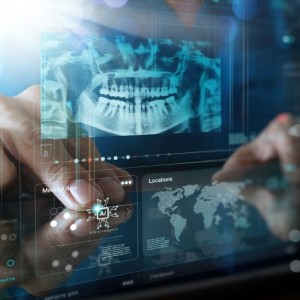
This narrative review aimed to explore the evolution and advancements of artificial intelligence technologies, highlighting their transformative impact on healthcare, education, and specific aspects...
Digital Dentistry 15 October 2025
The Impact of Artificial Intelligence on Diagnostic Accuracy and Treatment Planning in Dentistry

The use of AI in dentistry is revolutionizing the field of dentistry by enhancing the accuracy of diagnosis and treatment.
Oral pathology 23 June 2025

rtificial intelligence (AI) has rapidly advanced in healthcare and dental education, significantly impacting diagnostic processes, treatment planning, and academic training.
Read more

Jen Kim Field, chief sustainability officer at Henry Schein and president of the Henry Schein Cares Foundation, answers questions for Dentistry Today about the group’s achievements
News 12 October 2026

The education-first program offered learning for the entire dental practice, with practical insights spanning the full patient journey and focused on improving workflows, collabora
News 12 October 2026

AAO and Stand for the Silent Unite Communities This Month to Shine a Light on Bullying Prevention
Editorials 12 October 2026
Expanded coverage: Texas A&M’s Plemons named 2026 Texas Dentist of the Year

Sometimes a small act of generosity can make a tremendous impression, especially on a 7-year-old.
Endodontics 12 October 2026
This peer-reviewed endodontics article summarizes clinical evidence from Journal of dentistry (2026). It focuses on findings that may help dental professionals evaluate treatment decisions, patient...



Copyright © 2026 - All Rights Reserved
ISSN 2767-1178