


Effects of the Carriere Motion 3D™ appliance
Davide Elsido

In the latest issue (November 2019) of The Angle Orthodontist an article was published about a retrospective study to evaluate the treatment effects produced in Class II patients by the Carriere® Motion 3D™ appliance (CMA) followed by full fixed appliances (FFA). The Carriere® Motion 3D™ appliance (CMA; Henry Schein Orthodontics, Carlsbad, Calif) has become more popular during the past decade as a versatile intermaxillary Class II corrector.
The clinical principle of Class II correction using the CMA is based on establishing a Class I relationship at the beginning of treatment when patient compliance is high and before initiating the correction of the position and alignment of individual teeth with fixed appliances (or clear aligner therapy). Given the increasing popularity of the CMA and the lack of published data on the effects of CMA treatment, the purpose of the study was to evaluate skeletal and dentoalveolar treatment effects in subjects with Class II malocclusions immediately after CMA therapy and following comprehensive treatment with preadjusted fixed orthodontic appliances. In the figure, Intraoral views of the Carrier® Motion 3D™ appliance. (A, B) Pretreatment intraoral photos.
The subject sample consisted of 34 adolescent patients (23 girls and 11 boys) who were an average of 12.8 ± 1.4 years of age at T1 (pretreatment), 13.2 ± 1.5 years at T2 (removal of CMA), and 14.3 ± 1.5 years at T3 (posttreatment).
The results of this study indicated that the CMA is an efficient and effective way of correcting the sagittal component of Class II malocclusion within the first half-year of treatment. Comprehensive therapy using fixed appliances or other methods such as clear aligners can then be used, sometimes combined with rapid maxillary expansion or dental arch expansion, to refine and detail the occlusion. This study examined the treatment effects produced by CMA treatment followed by comprehensive orthodontics. The overall treatment time was relatively short (17.6 months), and Class II correction typically was achieved during the first 5–6 months of treatment. The following conclusions are reached based on the data analyzed:
- The CMA is efficient and effective in resolving Class II malocclusion.
- The primary treatment effects are dentoalveolar in nature, with changes in molar relationship, overbite, and overjet combined with some lower incisor proclination.
- The most obvious skeletal change was an increase in lower anterior facial height.
- There was a slight restriction in the forward movement of the maxilla at point A.
- Mandibular length was not affected by treatment.
- The chin point at pogonion did not move forward in the treatment group due, in part, to the increase in lower anterior facial height.
The changes were mainly dentoalveolar in nature, but some skeletal changes also occurred, particularly in the sagittal position of the maxilla and in the vertical dimension.
For additional informations: Treatment effects of the Carriere Motion 3D™ appliance for the correction of Class II malocclusion in adolescents
 Related articles
Orthodontics 21 August 2026
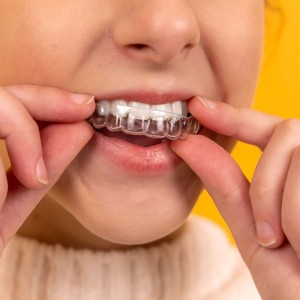
This peer-reviewed orthodontics article summarizes clinical evidence from Dental press journal of orthodontics (2026). It focuses on findings that may help dental professionals evaluate treatment...
Products 07 August 2026

Partnership with Eversmile makes o scillating s ystem available through HSO in the United States.
Orthodontics 07 August 2026
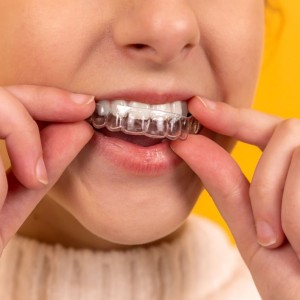
This peer-reviewed orthodontics article summarizes clinical evidence from Dental press journal of orthodontics (2026). It focuses on findings that may help dental professionals evaluate treatment...

Partnership with Eversmile makes o scillating s ystem available through HSO in the United States.
Orthodontics 25 June 2026
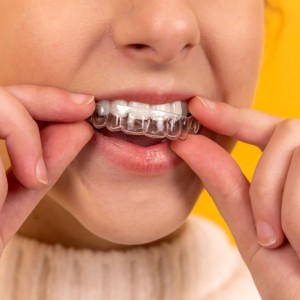
This peer-reviewed orthodontics article summarizes clinical evidence from PloS one (2026). It focuses on findings that may help dental professionals evaluate treatment decisions, patient outcomes, or...
Read more
Europe 27 September 2026 - 30 November -0001
Digital Dentistry Society Global Congress 2026: Event Preview and Professional Highlights

The Digital Dentistry Society Global Congress 2026 will take place from October 22, 2026 to October 24, 2026 in TBD, Rotating Europe, offering dental professionals a focused environment for...
Editorials 27 September 2026
Dentistry33 survey highlights replacement care, deep caries and evolving restorative workflows
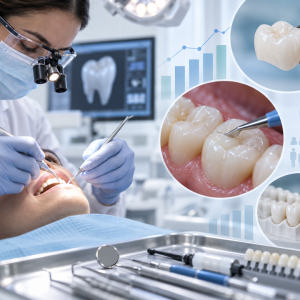
Reader survey finds direct composites remain dominant, secondary caries is the leading reason for restoration replacement, and clinicians want more training in pulp preservation
Reader survey finds direct composites remain dominant, secondary caries is the leading reason for restoration replacement, and clinicians want more training in pulp preservation
Edra Professional Books 26 September 2026
Manual of oral surgery: A Practical Reference for Dental Professionals
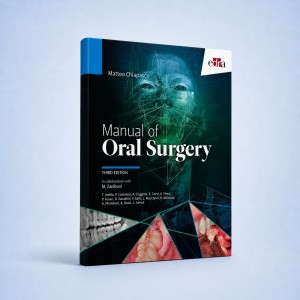
Manual of oral surgery is an Edra professional dentistry reference focused on clinical practice, education and treatment planning.
Products 25 September 2026
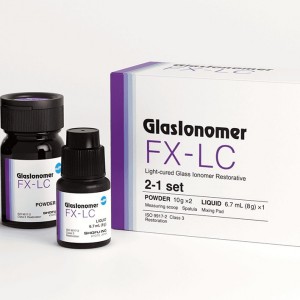
Shofu Dental’s line of dental restorative materials now includes FX-LC, a next-generation, light-cure, resin-reinforced glass ionomer formulated to deliver high strength, efficient 4
News 25 September 2026

The scholarships are part of an ongoing workforce solutions strategy to help address the need for skilled dental hygienists



Copyright © 2026 - All Rights Reserved
ISSN 2767-1178