


Maxillary sinus lift: are some of its characteristics correlated with greater success?
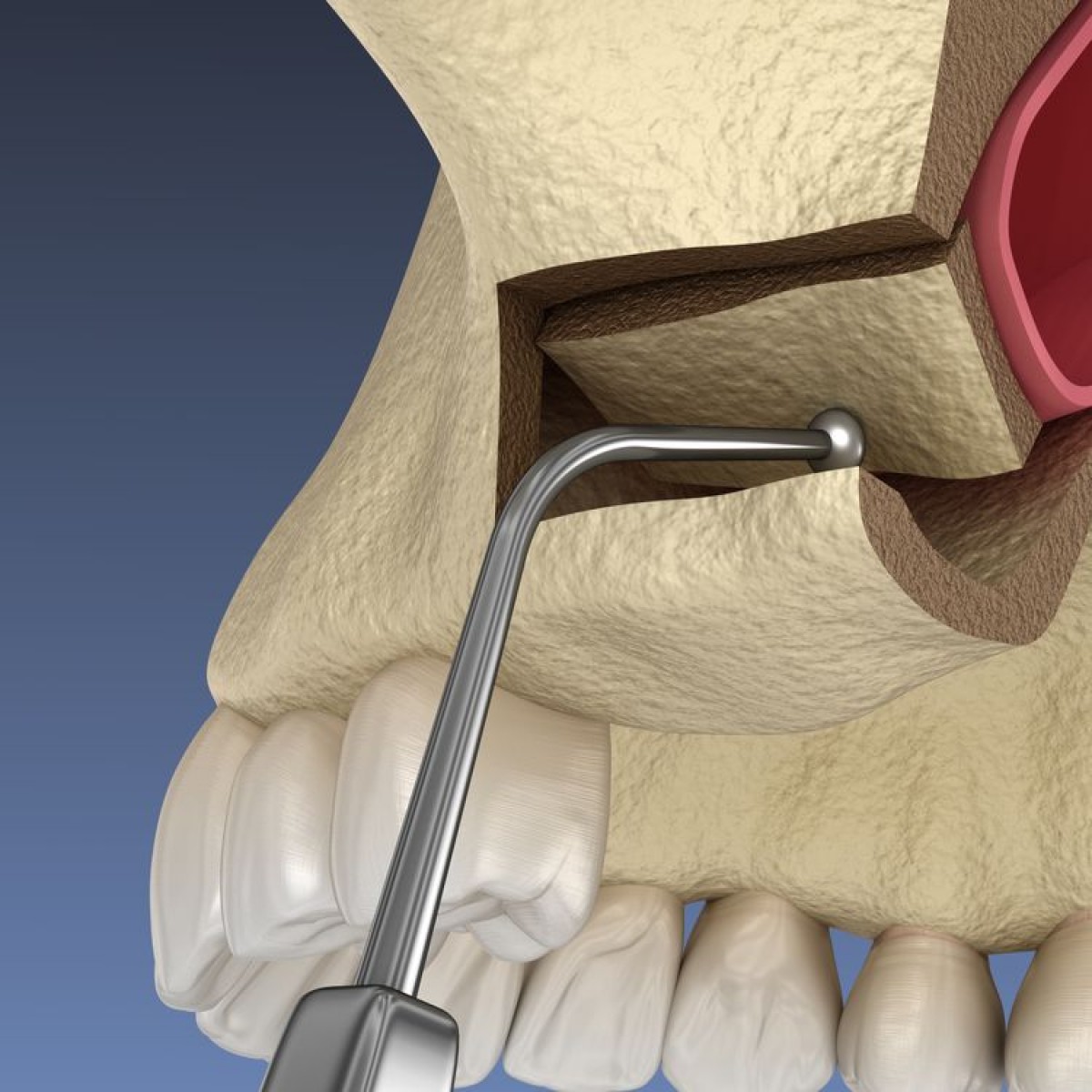
Autologous bone was the first material to be used as a graft for this procedure and has long been considered the gold standard, due to its osteoconductive, osteoinductive and osteogenic properties. However, although autologous bone grafts have demonstrated significantly higher bone formation after sinus lift compared to other bone substitutes, their use is associated with important disadvantages, such as increased morbidity, limited availability and low dimensional stability over time.
For these reasons, the possible use and behavior of alternative biomaterials (including allografts, xenografts, alloplastic grafts, composite grafts, platelet concentrates and growth factors) has been extensively studied.
Evaluation of the quality of the newly formed tissue is usually conducted by histomorphometric analysis of bone core biopsies, which evaluate the percentage of newly formed mineralized tissue (NFMT), residual graft particles (RG), newly formed non-mineralized tissue ( NFNMT) and total mineralized tissue (TMT = NFMT +RG).
Numerous systematic reviews have summarized the available evidence on this topic, failing to demonstrate the superiority of a specific bone substitute in terms of new bone formation after sinus lift procedures.
Neo-angiogenesis and colonization of the graft by osteoprogenitor cells are the two essential biological steps for the formation of new bone after maxillary sinus lift.
Following the cascade of inflammatory mediators released after surgical trauma, both the development of new capillary networks from normal vasculature and the migration of pluripotent mesenchymal cells start mainly from the walls and bony floor of the sinus, with a centripetal pattern. These biological activities are influenced by the size of the maxillary sinus.
Materials and methods
A retrospective radiographic study – published in Clinical Oral Implants Research in March 2022 – observed, after a one-stage transcrestal sinus lift, better intra-sinus bone coverage of implants inserted in narrow sinuses compared to wide ones.
Histomorphometric analyzes demonstrated significantly lower percentages of new bone in wide versus narrow sinus cavities after 6 months of healing, regardless of surgical approach.
The aim of this prospective multicenter study was to analyze the new bone formation 6 months after lateral elevation of the maxillary sinus in different anatomical areas of the latter.
The null hypothesis of the study is that there were no differences in new bone formation after lateral sinus augmentation in areas of the same maxillary sinus with different buccopalatal width.
All patients with Kennedy class II partial edentulism, who required a unilateral elevation of the floor of the maxillary sinus for the positioning of two non-adjacent dental implants to support a fixed partial prosthesis, were considered suitable to participate in the study.
Patients were consecutively enrolled in this study, provided they met the following inclusion criteria:
- residual bone crest height <5 mm and width ≥6 mm at both sites where implant placement was planned;
- age >18 years.
Patients were excluded from the study if they had one or more of the following general exclusion criteria:
- absolute medical contraindications to implant surgery;
- smokers;
- uncontrolled diabetes (HBA1c >7.5%);
- being treated with intravenous antiresorptive drugs;
- allergy to bovine collagen;
- irradiated in the head and neck area;
- pregnant or breastfeeding women;
- drug addicts;
- psychiatric problems or unrealistic expectations;
- patients not fully able to comply with the study protocol
- The local exclusion criteria were as follows:
- maxillary sinus conditions contraindicating maxillary sinus floor elevation;
- poor oral hygiene and motivation (full mouth plaque score >20% and/or full mouth bleeding score >10%);
- perforation of Schneiderian membrane during surgery.
The aim of the study was therefore to evaluate the histomorphometric results of lateral maxillary sinus augmentation in different areas of the same cavity and correlate the results to the width of the buccopalatal sinus (SW) and residual bone height (RBH).
Sinus floor elevation (RBH <5 mm) to place two nonadjacent implants were treated with lateral augmentation using a composite graft. Six months later, two bone core biopsies (mesial/distal) were obtained at the implant insertion sites.
SW and RBH were measured with the aid of cone beam computed tomography and the correlations between histomorphometric and anatomical parameters were evaluated by multivariable linear regression analysis.
Results
20 patients underwent sinus lift and eighteen were included in the final analysis (two dropped out due to membrane perforation). The mean percentage of newly formed mineralized tissue (%NFMT) after 6 months at the mesial and distal sites was 17.5±4.7 and 11.6±4.7, respectively (p = 0.0004). Multivariable linear regression showed a strong negative correlation between SW and %NFMT (β coefficient = -.774, p < .0001) and no correlation between RBH and %NFMT (β coefficient = -.038, p = .825).
Conclusions
The present study confirms that %NFMT after lateral sinus augmentation occurs at different rates in different anatomical areas of the same maxillary sinus, showing a strong negative correlation with SW, while no influence of RBH was observed.
Clinicians, therefore, should consider SW as a guide for graft selection and deciding the duration of the healing period.
Researchers should consider SW as a predictive variable, when comparing the regenerative outcomes of different biomaterials using the maxillary sinus as an experimental model.
 Related articles
Implantology 07 April 2026
The loss of tooth can be psychologically traumatizing. Attempts to replace teeth have been seen even in ancient civilizations.
Oral surgery 22 June 2020

Sinus elevation surgery has become a sought -after part of implant dentistry and procedures have evolved over the last 25 years to a point where sinus grafting...
Oral pathology 22 January 2024

There is no doubt, as amply demonstrated by the scientific literature, that mental and general health are closely linked.
Read more
Products 14 October 2026
Royal Philips (NYSE: PHG, AEX: PHIA) announced that the Philips Sonicare Next-Generation DiamondClean 9900 Prestige, its most advanced and intelligent toothbrush to date, is now av

Key transaction by Heartland Dental and its supported practices expands opportunities for supported doctors, teams, and practices while strengthening Heartland Dental’s supported f
News 14 October 2026
Henry Schein Cares Celebrates 25 Years of Corporate Citizenship

Henry Schein Cares, Henry Schein, Inc.’s global corporate citizenship program, is celebrating a quarter century of bringing together Team Schein Members, customers, supplier partne
Editorials 14 October 2026
Scholarship at the CU Anschutz School of Dental Medicine reflects the collective contributions of our faculty, staff, residents and students.
Oral Hygiene & Prevention 14 October 2026
Propolis-containing formulations in caries prevention - a systematic review and meta-analysis.
This peer-reviewed oral hygiene & prevention article summarizes clinical evidence from Clinical oral investigations (2026). It focuses on findings that may help dental professionals evaluate...



Copyright © 2026 - All Rights Reserved
ISSN 2767-1178