


Gnathodiaphyseal dysplasia: review of the literature and treatment of two clinical cases
Authors:A Rossi, T. Terenzio, L. Moneghini, D. Scarnò, M. Vitali, S. Giovannini
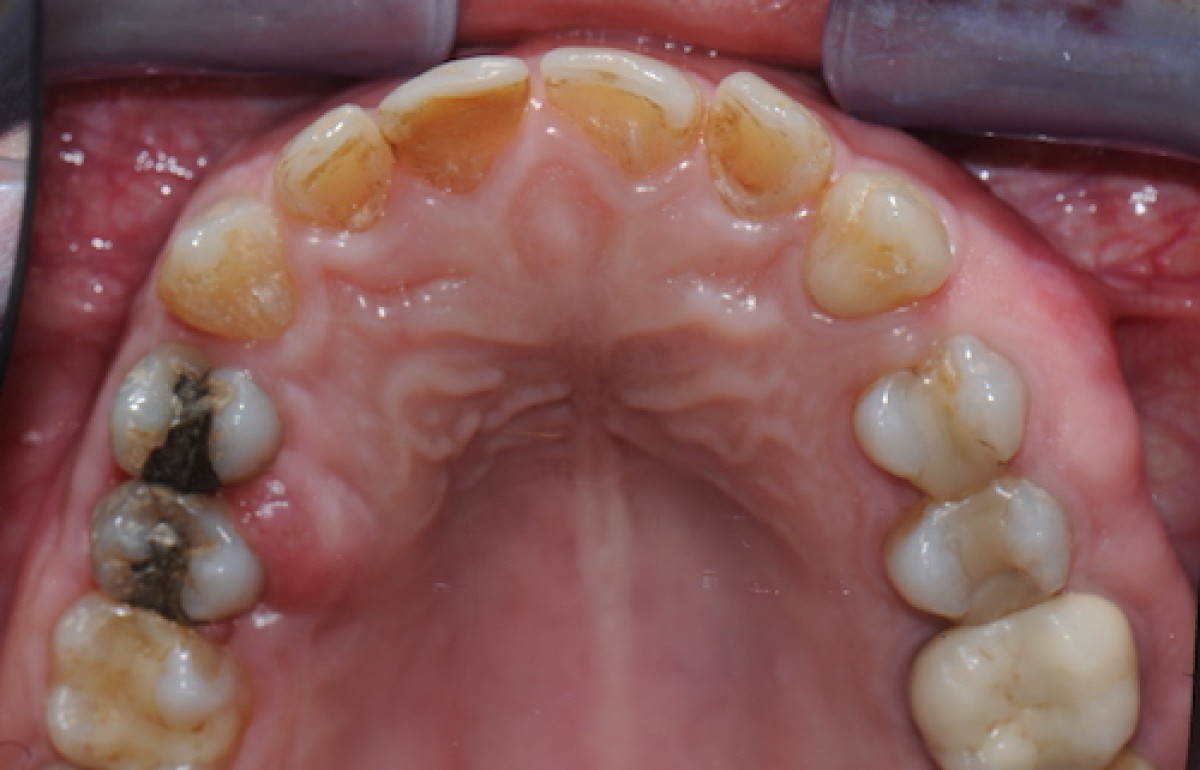
The aim of this paper is to perform a literature review of Gnathodiaphyseal Dysplasia (GDD) and to describe in detail two new clinical cases of GDD.
A literature search on PubMed and Scopus was carried out using the following keywords (“gnathodiaphyseal dysplasia”, “anoctamin 5”, “jawbone disease”, “fibro-osseous lesion”, “bone fragility”). Every article describing GDD was considered eligible for this review for two reasons: (1) GDD is a rare disease and (2) there are few studies about GDD. Two clinical cases of GDD patients (mother and son) are also presented: both patients attended Santi Paolo and Carlo hospital dental clinic for the surgical treatment of jaw exostosis caused by the syndrome, and for the extraction of the symptomatic mandibular right third molar.
GDD is a rare autosomal dominant syndrome caused by mutations of the ANO 5 gene, which is located on chromosome 11. The most frequent clinical signs are: maxillary fibro-osseous lesions, bone fragility, diaphyseal cortical thickening and bowing of long bones. The syndrome was described for the first time in literature by Akasaka in 1969, however the etiopathogenesis and the clinical features remain largely undescribed. There is great variability between patients and the genetic screening is at present the only reliable diagnostic tool. The patients described in this paper were diagnosed with GDD on the basis of bone alterations and genomic analysis showing a heterozygous missense mutation of the ANO 5 gene (ANO 5 can also be called TMEM16E). We decided to use a conservative treatment: patient 1 underwent the surgical removal of jaw exostosis as a result of the disabling effect of the malformation and the mandibular right third molar of patient 2 was extracted because it was symptomatic. Neither of the patients experienced complications during either the surgery or the postoperative period.
Studying GDD requires a multidisciplinary team, due to the multifaceted nature of this disease. At least four specialists are necessary: a geneticist to make the diagnosis of GDD, a maxillofacial surgeon and a dentist to carry out alterations of the cranial facial area which is the most affected by the pathology, an orthopedic to treat the frequent bone fractures. The knowledge of GDD is limited to few scientific studies: further articles are necessary to study different aspects of the disease, such as genetic and dental characterizations of GDD.
Another reason why there are few studies on GDD is that GDD patients are often undiagnosed. This may be caused by the lack of awareness of GDD in the scientific community and increase the spread of information on this rare disease will help improve diagnosis.
While it is not possible to establish an ideal treatment protocol for every GDD patient, we believe this study can help treat patients with similar clinical characteristics. The review of published works on and the detailed description of two GDD patients and their dental treatment, provide essential novel information on GDD.
 Related articles
Oral pathology 13 October 2026
This peer-reviewed oral pathology article summarizes clinical evidence from Oral oncology (2026). It focuses on findings that may help dental professionals evaluate treatment decisions, patient...
Oral pathology 06 October 2026
This peer-reviewed oral pathology article summarizes clinical evidence from Oral oncology (2026). It focuses on findings that may help dental professionals evaluate treatment decisions, patient...
Oral pathology 02 October 2026
This peer-reviewed oral pathology article summarizes clinical evidence from BMC oral health (2024). It focuses on findings that may help dental professionals evaluate treatment decisions, patient...
Oral pathology 29 September 2026
This peer-reviewed oral pathology article summarizes clinical evidence from Oral oncology (2026). It focuses on findings that may help dental professionals evaluate treatment decisions, patient...
Oral pathology 22 September 2026
This peer-reviewed oral pathology article summarizes clinical evidence from Oral oncology (2026). It focuses on findings that may help dental professionals evaluate treatment decisions, patient...
Read more
Products 13 October 2026


New Resources Help Dental Exhibitors Evaluate Their Investment and Explore the Personify ShowFlow™ Trade Show Success System
News 13 October 2026
New patient apps extend The Aspen Group’s mission to remove barriers to care, giving patients greater visibility, convenience, and control from booking through treatment
Editorials 13 October 2026

The forerunner of what’s now Texas A&M College of Dentistry opened 120 years ago in Dallas with the mission of educating dentists to provide quality care to patients in North Texas
Oral pathology 13 October 2026
This peer-reviewed oral pathology article summarizes clinical evidence from Oral oncology (2026). It focuses on findings that may help dental professionals evaluate treatment decisions, patient...



Copyright © 2026 - All Rights Reserved
ISSN 2767-1178