


Breaking bad news in dentistry
Authors:Silvia Poli, Daniela Sorrentino, Giovanni Lodi, Elena Vegni
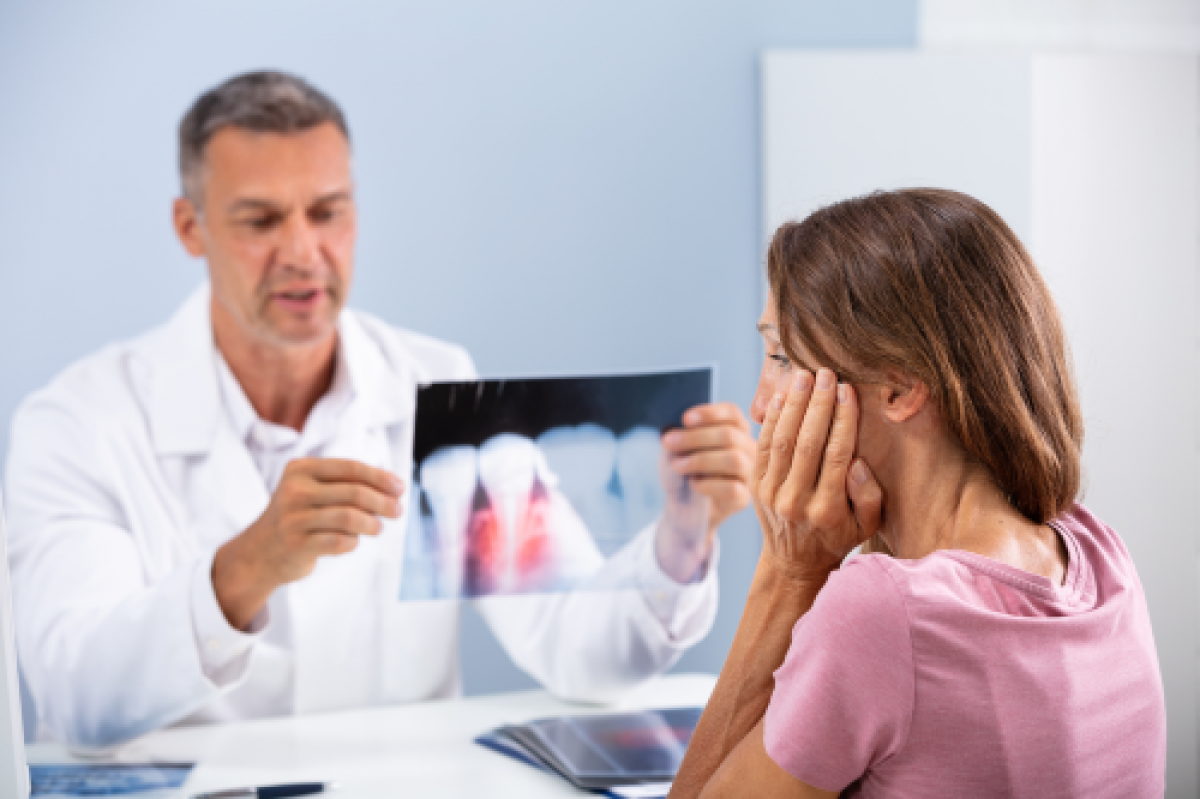
Communicating bad news is a difficult and stressful task for all healthcare professionals, including dentists. Effective communication of bad news is essential as it promotes better acceptance of the disease, improved adaptation and decreased stress in the patient. Learning how to give bad news effectively is, therefore, an important part of clinical work. However, specific training on breaking bad news is not common. A versatile, validated and learnable strategy is the S-P-I-K-E-S protocol developed by Buckman. The aim of this article is to illustrate the application of the SPIKES protocol in the dental field. Firstly, it is necessary to underline that breaking bad news is a complex task and the clinician may encounter many difficulties including the fear of causing pain, an erroneous perception of failure, the unpredictability of the patient's reactions, the inability to provide a treatment plan. Such difficulties can lead to delays in communication or even to the communication of partial and misleading information. Another important aspect is the definition of bad news, which is not objectively identifiable but depends on the patient's expectations. Therefore, a wide range of clinical situations can be considered as bad news and it must be taken into account that patients and dentists view on what can be considered as negative may differ significantly.
Materials and methods.
The SPIKES protocol includes 6 steps for the communication of bad news: Setting (prepare of the context in which the bad news will be given); Perception (assess the patient's degree of awareness of the situation); Invitation (invite the patient to explain what he would like to know about the diagnosis and prognosis); Knowledge (provide useful information taking into account the patient's needs); Emotion and Empathy (facilitate the expression of emotions and respond to them empathetically); Summarize and strategize (define an action strategy with the patient, summarizing the highlights and checking understanding).
Results.
The SPIKES protocol provides a set of essential and flexible guidelines for breaking bad news appropriate to the dental context. These guidelines allow the dentist to respond to the patient's needs in a personalized and person-centred way.
Conclusions.
Knowledge of the SPIKES protocol is fundamental in dental clinical practice. However, in addition to the knowledge of the protocol, continuous training based on active and experiential methods is needed to internalize the most effective way to communicate bad news. Furthermore, research in the dental field is needed to understand the experience of the dentist and to investigate specific aspects of communicating bad news in this clinical setting.
 Related articles
Oral pathology 13 October 2026
This peer-reviewed oral pathology article summarizes clinical evidence from Oral oncology (2026). It focuses on findings that may help dental professionals evaluate treatment decisions, patient...
Oral pathology 06 October 2026
This peer-reviewed oral pathology article summarizes clinical evidence from Oral oncology (2026). It focuses on findings that may help dental professionals evaluate treatment decisions, patient...
Oral pathology 02 October 2026
This peer-reviewed oral pathology article summarizes clinical evidence from BMC oral health (2024). It focuses on findings that may help dental professionals evaluate treatment decisions, patient...
Oral pathology 29 September 2026
This peer-reviewed oral pathology article summarizes clinical evidence from Oral oncology (2026). It focuses on findings that may help dental professionals evaluate treatment decisions, patient...
Oral pathology 22 September 2026
This peer-reviewed oral pathology article summarizes clinical evidence from Oral oncology (2026). It focuses on findings that may help dental professionals evaluate treatment decisions, patient...
Read more
Products 13 October 2026


New Resources Help Dental Exhibitors Evaluate Their Investment and Explore the Personify ShowFlow™ Trade Show Success System
News 13 October 2026

New patient apps extend The Aspen Group’s mission to remove barriers to care, giving patients greater visibility, convenience, and control from booking through treatment
Editorials 13 October 2026

The forerunner of what’s now Texas A&M College of Dentistry opened 120 years ago in Dallas with the mission of educating dentists to provide quality care to patients in North Texas
Oral pathology 13 October 2026
This peer-reviewed oral pathology article summarizes clinical evidence from Oral oncology (2026). It focuses on findings that may help dental professionals evaluate treatment decisions, patient...



Copyright © 2026 - All Rights Reserved
ISSN 2767-1178