


Angiomatous lesion, of progressive growth, on the dorsum of the tongue in an elderly patient
Authors: D. Migliari, N. Sugaya, M. Trieveiler.

Reported by his dentist, a 76-year-old patient turns to our observation and has noticed for about a month the appearance of a lesion on the back of the tongue. The clinical examination reveals the presence of a sessile exophytic neoformation, rounded, with well delimited margins, of vermilion red (fig. 1). The patient reports that the lesion has grown rapidly and is concerned that it may be a malignant disease. The medical anamnesis reveals a diagnosis of multiple myeloma dating back to about 18 months ago for which the patient was treated with unspecified chemoterapics, corticosteroids and antibiotics. At the moment, the patient only takes antihypertensive therapy.
DIAGNOSIS AND CARE
The clinical aspect suggested a lesion of a predominantly vascular nature. Equally important is the fact that the lesion presented a fibrous consistency on palpation and no signs of ischemia with digital compression were evident. Despite the absence of obvious local factors, and the absence of anamnestic data that could indicate a previous trauma, the differential diagnosis included traumatic hemangioma and pyogenic granuloma. The benignity of both injuries was reported to the patient with the aim of reassuring her. Subsequently, having obtained informed consent, the patient was subjected to an excisional biopsy operation. The technique used was the conventional one, which involves two incisions that meet to form a lozenge at the edge of the lesion (figs. 2a, b). This technique allows the connection of the surgical wound margins very efficiently. The tissue sample underwent a histopathological examination which showed a hyperkeratotic epithelium, with acanthosis, and an area of ulceration. In the connective tissue there were lobular structures consisting of cells of endothelial origin, in which small vascular spaces were evident (fig. 3).
The clinical aspect of the pyogenic granuloma can sometimes recall that of a senile capillary hemangioma (also known as "venous lake"), which is a type of lesion most common in the elderly, often located at the vermilion of the lower lip . In the venous lake there is no evidence of traumatic factors, while there may be some familiarity. The best procedure to make a distinction is to exert a compression on the lesion: the capillary hemangioma tends to ischemic and discolor, while in the pyogenic granuloma this effect does not occur.
In the case of pyogenic granuloma it is necessary to intervene surgically, preferentially using a conventional cold-blade technique, this because it is always necessary to proceed with the histological examination of the lesion. For hemangioma, on the other hand, the intervention is indicated only if the lesion is causing an aesthetic or (more rarely) functional problem. In order to treat capillary and cavernous eczema, it is preferable to use surgical lasers, which allow better bleeding control, rather than conventional excision. This intervention, however, must be carried out preferentially by the specialist, who has the knowledge of the differential diagnosis and the skill needed to perform the surgery.
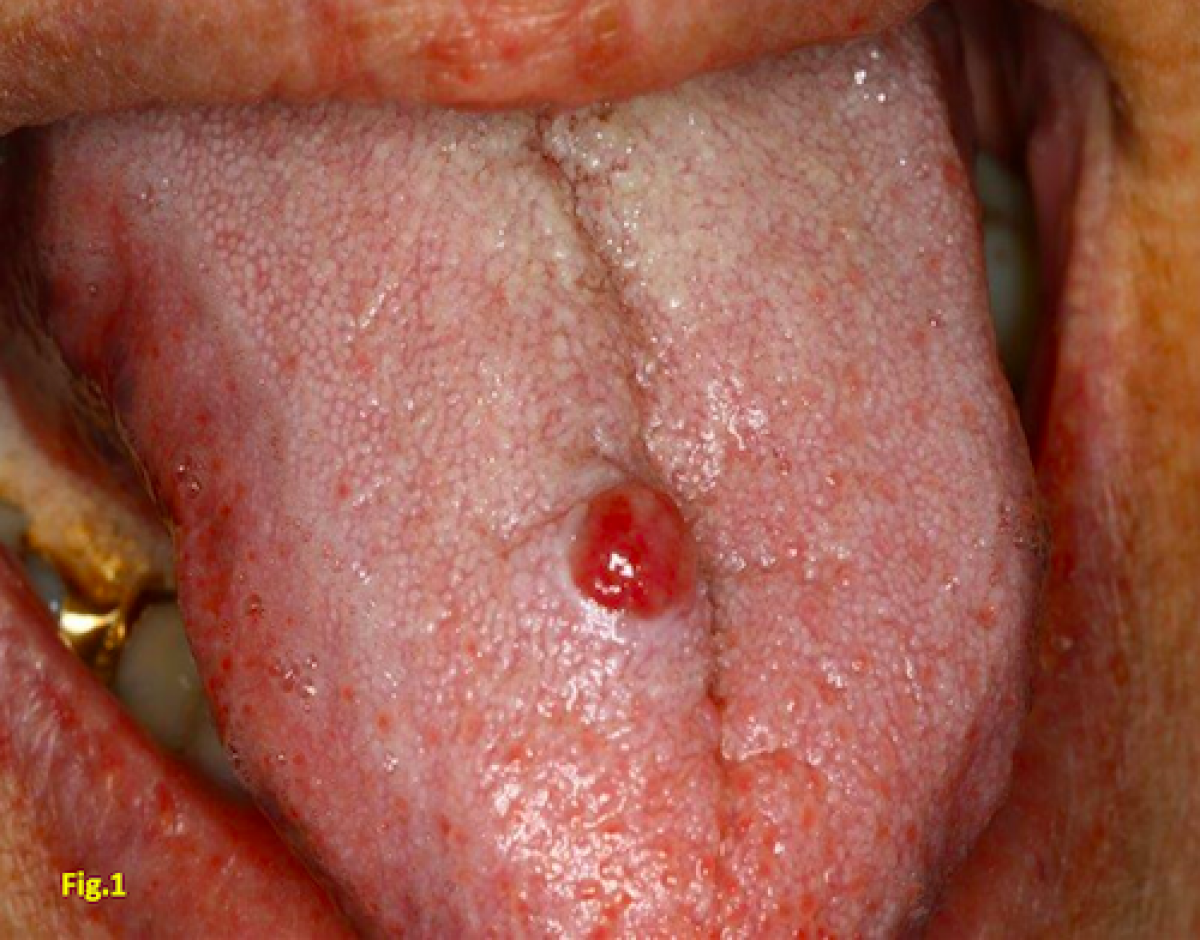
Fig. 1: Red vermilion exophytic lesion on the back of the tongue
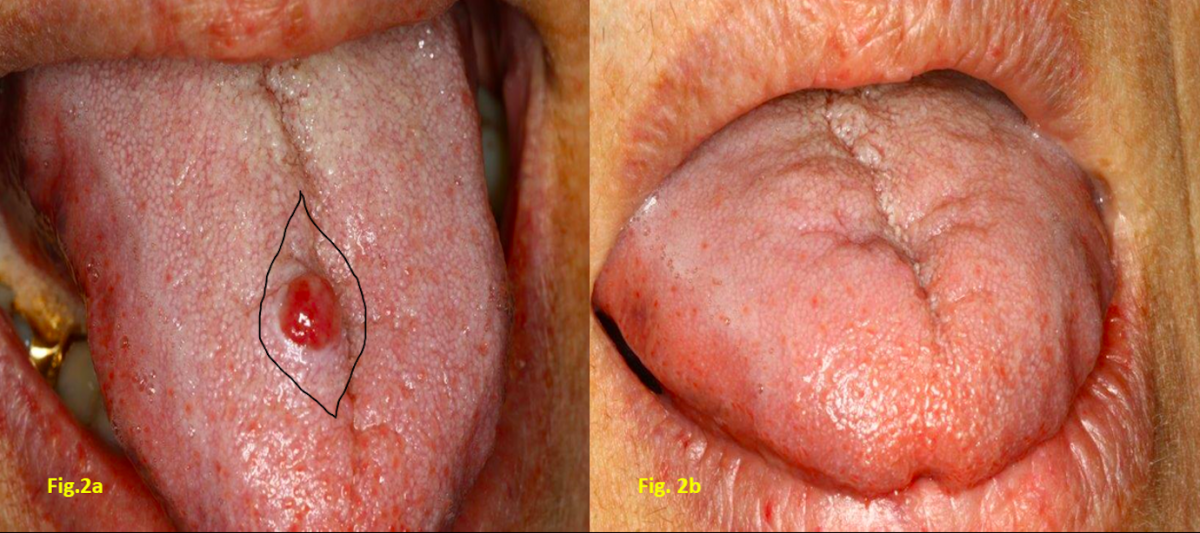
Figs. 2a-2b: The incision from the fusiform design (a); check about 4 weeks after the intervention (b)
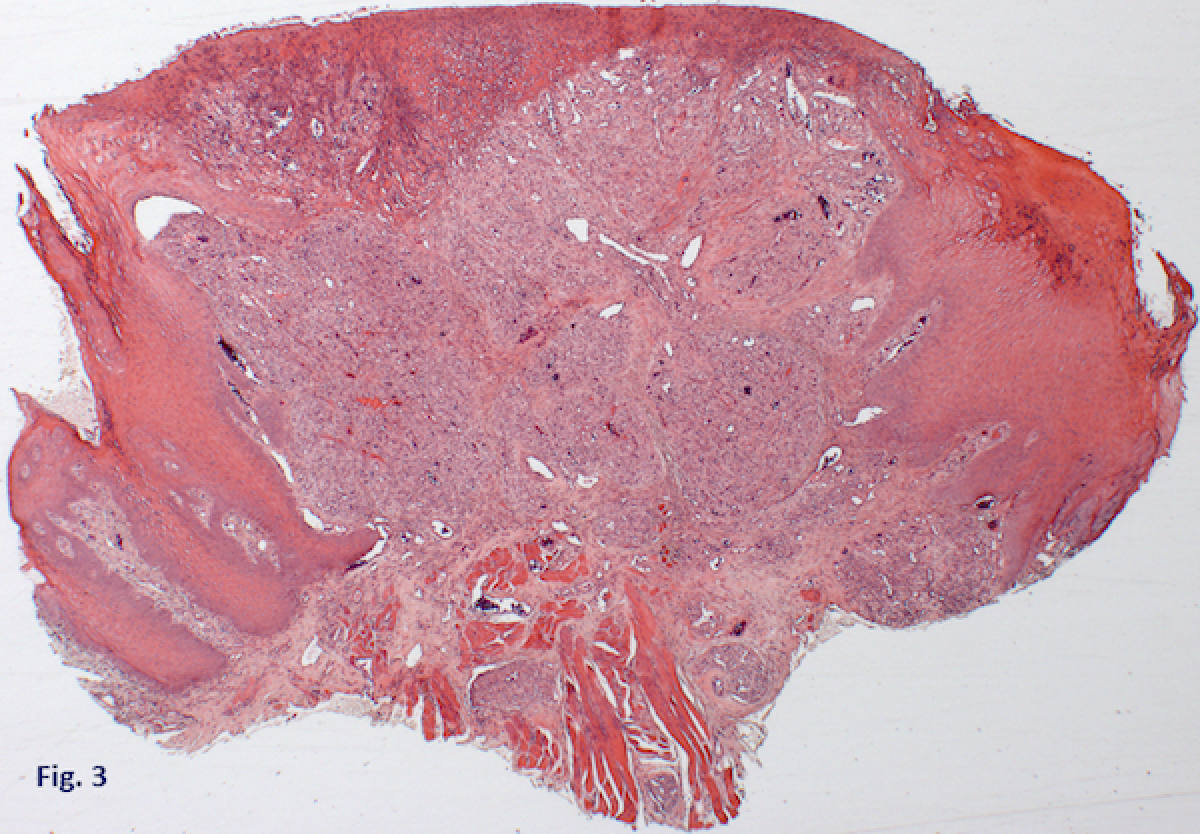
Fig 3. Histological examination shows a predominance of vascular tissue
 Related articles
Oral pathology 13 October 2026

This peer-reviewed oral pathology article summarizes clinical evidence from Oral oncology (2026). It focuses on findings that may help dental professionals evaluate treatment decisions, patient...
Oral pathology 06 October 2026

This peer-reviewed oral pathology article summarizes clinical evidence from Oral oncology (2026). It focuses on findings that may help dental professionals evaluate treatment decisions, patient...
Oral pathology 02 October 2026
This peer-reviewed oral pathology article summarizes clinical evidence from BMC oral health (2024). It focuses on findings that may help dental professionals evaluate treatment decisions, patient...
Oral pathology 29 September 2026

This peer-reviewed oral pathology article summarizes clinical evidence from Oral oncology (2026). It focuses on findings that may help dental professionals evaluate treatment decisions, patient...
Oral pathology 22 September 2026

This peer-reviewed oral pathology article summarizes clinical evidence from Oral oncology (2026). It focuses on findings that may help dental professionals evaluate treatment decisions, patient...
Read more
Products 13 October 2026


New Resources Help Dental Exhibitors Evaluate Their Investment and Explore the Personify ShowFlow™ Trade Show Success System
News 13 October 2026

New patient apps extend The Aspen Group’s mission to remove barriers to care, giving patients greater visibility, convenience, and control from booking through treatment
Editorials 13 October 2026

The forerunner of what’s now Texas A&M College of Dentistry opened 120 years ago in Dallas with the mission of educating dentists to provide quality care to patients in North Texas
Oral pathology 13 October 2026
This peer-reviewed oral pathology article summarizes clinical evidence from Oral oncology (2026). It focuses on findings that may help dental professionals evaluate treatment decisions, patient...



Copyright © 2026 - All Rights Reserved
ISSN 2767-1178