


How to treat the older adults in the Covid-19 era: considerations and proposed solutions
Lara Figini
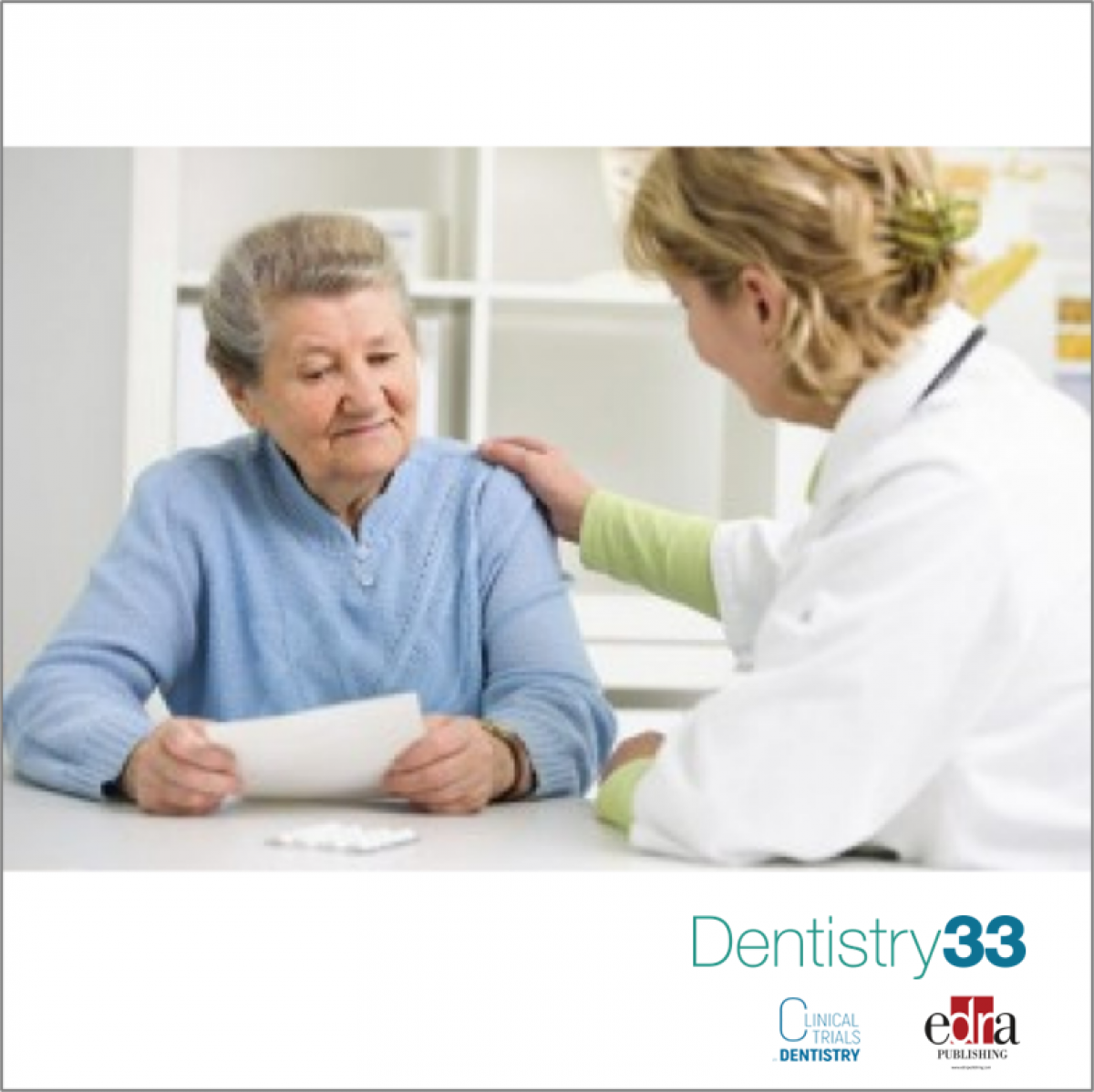
The older adults in the dental field should generally be considered a "fragile" patient, to whom the clinician must pay particular attention. This "fragility" is linked to several factors: - Greater difficulty of the elderly subject to reach the dental facility - Greater difficulty in undergoing prolonged and costly treatments - general state of health often compromised or complex with multiple comorbidities, for which elderly patients very frequently take more drugs for various systemic diseases - minor / poor or even non-existent oral hygiene control at home or due to poor manual skills or poor education / instruction or lack of habit. In an article still being published, previewed on JADA in August 2020, the authors underline how currently, in addition to the multitude of barriers listed above, the "fragile" elderly must face a new series of barriers related to the appearance of the COVID-related disease. 19 characterized by severe acute respiratory syndrome coronavirus 2 (SARS-Cov-2). Advanced age and comorbidities have been identified early as the main risk factors for worse outcomes of COVID-19 infection, and the mortality rate in individuals aged 80 and over reaches 22%. Also, drugs commonly used among the elderly such as angiotensin converting enzyme
(ACE) angiotensin II receptor blockers and inhibitors have been shown to upregulate the ACE-2 receptor, a receptor also used by the pathogenic virus COVID-19 to invade human cells and cause severe acute respiratory syndrome. As a result, patients on chronic therapy with these drugs are at increased risk of becoming severely ill with COVID-19.
It should also be emphasized that a large proportion of elderly patients with compromised health live in nursing homes and during the pandemic they remained isolated, unable to go out or meet relatives and / or friends. In addition, during the lockdown in the RSA there were regulations for which dental care was considered a non-essential service, therefore elective dental treatment was among the most postponed activities in these communities hosting frail elderly and nursing homes and dental care was limited. to emergency treatment, leading to worsening of the oral health of these patients.
Furthermore, elderly people with comorbidities know that they are at a higher risk of contracting a more severe COVID-19 infection, as a result, many elderly patients during this period are afraid to undergo regular dental sessions in private practices or health centers. On the other hand, dentists are concerned that they cannot guarantee the safety of their older adult patients with comorbidities, and therefore are reluctant to treat them during this period.
How can dentists handle this situation?
Dentists caring for frail elderly should work in partnership with the patient's general health care team to assess and mitigate the risk of contagion in the most vulnerable groups. Patients with multiple comorbidities will require medical consultation for the stability of their systemic health. Using the information provided by the patient's doctors, the dentist can develop a rational plan of dental care to be performed using the appropriate PPE to treat them safely.
Teledentistry, for example, can be an important tool for assessing some high-risk patients unable to reach the dental clinic due to pathologies, isolation or quarantine. Teledentistry is very useful for the follow-up of patients who have recently undergone a procedure performed in the office or to evaluate a patient with acute dental pain. Through Teledentistry, the dentist can retrieve information on the dental / oral problems of the "fragile" elderly patient, can prescribe painkillers / anti-inflammatories and antibiotics if necessary until the patient will be able to reach the dental office for definitive care ; or establish the need for a referral to a hospital emergency room with dental service. On the appointed day to proceed with dental treatments, it is good to educate our frail older adult patients and their carers about the strategies that are used in the office to minimize the risk of COVID-19 infection during dental care. Strategies include appropriate assessment of COVID-19 symptoms, temperature measurement, social distancing, and wearing appropriate PPE. Additionally, the risks of infection can be minimized by reducing aerosol generation procedures, using silver diamine fluoride (SDF) or other atraumatic restorative techniques (ART) to manage tooth decay, and manually performing oral hygiene treatments.
For additional information: COVID-19 and Dental Care for Older Adults: New Barriers Require Unique Solutions
 Read more

Continuous innovation across the DEXIS ecosystem helps clinicians work with greater clarity, confidence, and efficiency
News 23 October 2026
CrownPoint Partners announced the successful closing of a $9.2 million, five-property dental sale-leaseback portfolio located throughout Michigan.
News 23 October 2026
Dentsply Sirona, Midwest Dental Expand Technology Relationship

Beginning November 1, Dentsply Sirona will expand its long-standing relationship with Midwest Dental Equipment & Supply beyond consumables to include its complete technology portfo
Editorials 23 October 2026
Honoring Excellence: Graduation Awards for CU Anschutz Dental Students and Faculty

As the University of Colorado Anschutz School of Dental Medicine celebrates the graduating DDS Class of 2025, we are proud to recognize the students and faculty members whose excep
Implantology 23 October 2026
This peer-reviewed implantology article summarizes clinical evidence from Clinical oral implants research (2026). It focuses on findings that may help dental professionals evaluate treatment...


Copyright © 2026 - All Rights Reserved
ISSN 2767-1178