


Decontamination in the dental office: a comparative assessment of a new active principle
Authors:Marchetti Enrico, Mummolo Stefano, Mancini Leonardo, Quinzi Vincenzo, Pontieri Eugenio, Marzo Giuseppe, Campanella Vincenzo
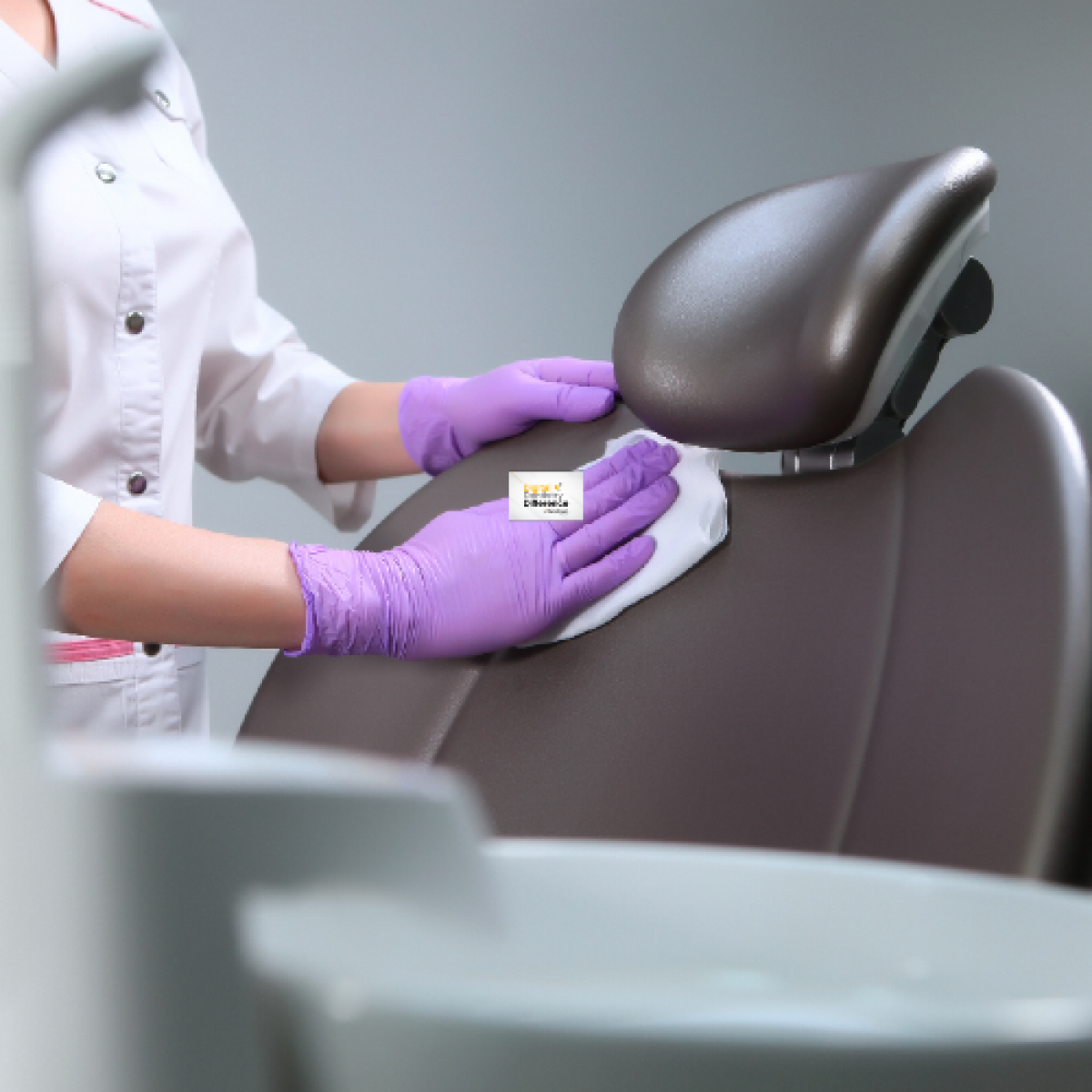
The goal of this in vitro study was to evaluate the effectiveness of a new surface disinfectant consisting of an antimicrobial metabolic substrate containing silver ions stabilized in citric acid (AMS), compared to traditional disinfectants used in the dental office.
Methods: The evaluation was performed by simulating nebulization, as performed in the clinic, on different surfaces. The experiment was carried out in a microbiology laboratory using a laminar flow hood. The test product (AMS) was compared with eight different disinfectants containing molecules such as quaternary ammoniums and alcohols, the gold standard in the decontamination process. The bacterial and fungi strains, grown in Muller Hinton broth and in Sabouraud broth, were Escherichia coli, Staphylococcus aureus and Candida albicans.
The spray nebulization of 0.8–1 ml of suspension containing a bacterial load (104 cells/ml) on plastic (Petri dishes) and glass surfaces (slides) and a negative control group evaluation (NN) were carried out. After drying, the contaminated surfaces were sprayed again (2–3 sprays), each with only one disinfectant except the plates and glass surfaces for the negative control plates (NN). Each disinfectant was allowed to act for about 2 minutes.
The evaluation of bacterial residues was carried out through the counting of the colony forming units (CFU) using contact slides and contact plates, which are used in clinical routine in microbiological laboratories to evaluate the bacterial load present on contaminated surfaces. The test was performed three times for each disinfectant and for each bacterial/fungal strain. Once sampling was performed using contact plates and contact slides, the same were placed in the incubator for 24 hours and the following day the colony forming units (CFU) were counted.
Results: The bacterial and Candida albicans counts obtained were 0 for most of the disinfectants tested. In the first series of tests, 102 CFU of Escherichia coli were found on AMS contact plates and 41 CFU of Candida albicans were found on contact slides treated with an alcohol-based disinfectant (G). In the second and third series of tests, however, the number of CFU was reduced to 0 for all disinfectant agents. In the negative control group, on the other hand, CFUs of all microorganisms were found on the contact plates and contact slides.
Conclusion: In this in vitro study, the AMS-based surface disinfectant appeared as effective as other alcohols and/or quaternary ammonium compounds. However, considering the reduced toxicity of AMS compared to traditional molecules, its daily use could be considered preferable. Further studies will be useful to confirm the efficacy of this active ingredient.
Clinical significance:
Natural, non-toxic and non-caustic molecules such as AMS could be used as an alternative to active ingredients that are widely used in the daily disinfection of work surfaces, reducing the amount of toxic compounds to which healthcare workers are exposed.
 Related articles
Oral Hygiene & Prevention 30 September 2026
Propolis-containing formulations in caries prevention - a systematic review and meta-analysis.
This peer-reviewed oral hygiene & prevention article summarizes clinical evidence from Clinical oral investigations (2026). It focuses on findings that may help dental professionals evaluate...
Oral Hygiene & Prevention 23 September 2026
Propolis-containing formulations in caries prevention - a systematic review and meta-analysis.
This peer-reviewed oral hygiene & prevention article summarizes clinical evidence from Clinical oral investigations (2026). It focuses on findings that may help dental professionals evaluate...
Oral Hygiene & Prevention 09 September 2026
Propolis-containing formulations in caries prevention - a systematic review and meta-analysis.
This peer-reviewed oral hygiene & prevention article summarizes clinical evidence from Clinical oral investigations (2026). It focuses on findings that may help dental professionals evaluate...
Oral Hygiene & Prevention 26 August 2026
Propolis-containing formulations in caries prevention - a systematic review and meta-analysis.
This peer-reviewed oral hygiene & prevention article summarizes clinical evidence from Clinical oral investigations (2026). It focuses on findings that may help dental professionals evaluate...
Oral Hygiene & Prevention 22 July 2026
This peer-reviewed oral hygiene & prevention article summarizes clinical evidence from Journal of dentistry (2026). It focuses on findings that may help dental professionals evaluate treatment...
Read more
Products 13 October 2026


New Resources Help Dental Exhibitors Evaluate Their Investment and Explore the Personify ShowFlow™ Trade Show Success System
News 13 October 2026

New patient apps extend The Aspen Group’s mission to remove barriers to care, giving patients greater visibility, convenience, and control from booking through treatment
Editorials 13 October 2026

The forerunner of what’s now Texas A&M College of Dentistry opened 120 years ago in Dallas with the mission of educating dentists to provide quality care to patients in North Texas
Oral pathology 13 October 2026
This peer-reviewed oral pathology article summarizes clinical evidence from Oral oncology (2026). It focuses on findings that may help dental professionals evaluate treatment decisions, patient...



Copyright © 2026 - All Rights Reserved
ISSN 2767-1178