


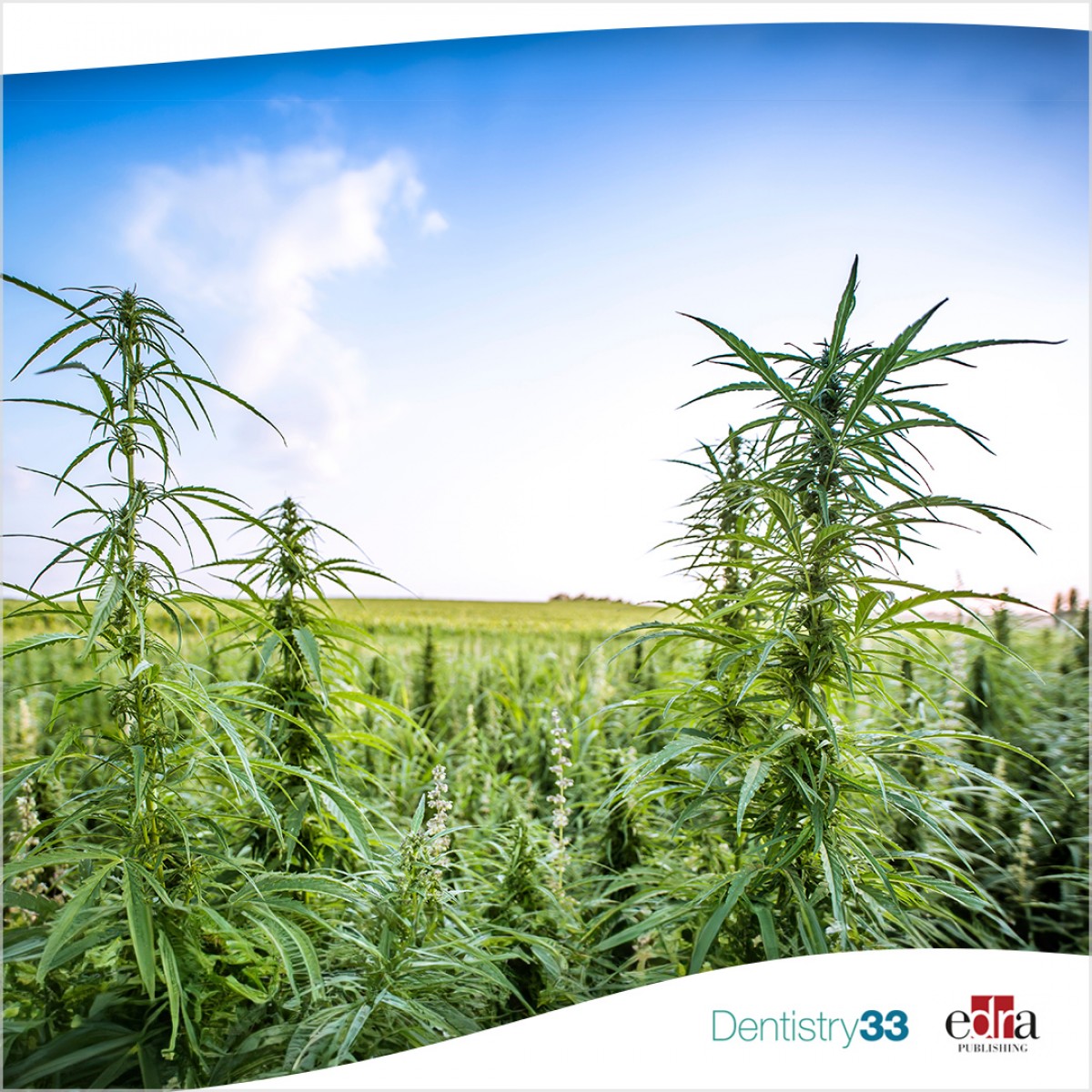
Cannabis users require more anesthetic agents for general anesthesia
Background
The use of cannabis in the general population has steadily increased over recent years and there is limited literature regarding the anesthetic implications of chronic cannabis use, particularly in the setting of outpatient anesthesia.
Purpose
To determine whether chronic cannabis users undergoing deep sedation or general anesthesia during ambulatory procedures require more anesthetic agents than non-users.
Study design, setting and sample
A retrospective cohort study of subjects undergoing deep sedation or general anesthesia at the Oklahoma University Oral and Maxillofacial Surgery (OMS) Clinic from January to December 2022 was performed. The inclusion criteria were duration of anesthetic procedure between 15-40 minutes; use of propofol, fentanyl, ketamine, and midazolam; extraction of at least 2 teeth. The exclusion criterion was patients undergoing adjunctive procedures other than extractions during sedation.
Predictor variable
Cannabis use status grouped as users and non-users. A user was defined as a subject who self-reported any regular use of cannabis.
Outcome variable
The primary outcome variable was the amount of intravenous anesthetic agents administered. Secondary outcome variables included the length of the procedure and the number of teeth extracted.
Covariates
Age, sex, and the senior-most resident involved in the sedation.
Analyses
IBM SPSS was utilized to perform descriptive statistics, paired T-tests, ANOVA, and multivariate linear regression. A level of significance of 5% (p < 0.05) was used for all analyses.
Results
Four hundred and ninety-nine subjects were identified, 189 met the inclusion criteria, and 57 reported using cannabis. The mean age of non-users was 28.2 ± 7.8 years and that of users was 26.6 ± 6.4 years (p = 0.09). Females represented 71.9% of non-users and 72.7% of users. Cannabis users received significantly more propofol (117.5mg ± 71.3 vs. 152.5mg ± 101.8; p = .004), midazolam (4.7mg ± 1.0 vs. 5.1mg ± 1.5; p = 0.01), ketamine (40.2mg ± 15.7 vs. 46.1mg ± 16.9; p = 0.01), and fentanyl (75.2μg ± 26.3 vs. 88.6μg ± 32.8; p = 0.002) than non-users, despite extracting a similar number of teeth (4.5 ± 3.1 vs. 4.4 ± 3.5; p = 0.37) in a similar amount of time (25.5 ± 7.3 vs. 27.3 ± 7.8; p = 0.06).
Conclusion and relevance
Cannabis users required more propofol, midazolam, ketamine, and fentanyl than non-cannabis users during outpatient OMS procedures.
Daniel Ripperger et al. "Cannabis Users Require More Anesthetic Agents for General Anesthesia in Ambulatory OMS Procedures." Journal of Oral and Maxillofacial Surgery. 13 September 2023. DOI: https://doi.org/10.1016/j.joms.2023.09.008.
 Related articles
Pediatric dentistry 26 August 2025
A trend of treatment in department of pediatric dentistry for 10 years
The purpose of this study is to analyze the changes in patient distribution and practice pattern resulted from changes of socioeconomic circumstances.
Products 10 December 2025
QuickSleeper5 Computer-guided Local Anesthesia Delivery System Showcased at GNYDM

After receiving FDA clearance and making its official U.S. launch in September, Dentalhitec Americas is showcasing QuickSleeper5 at this week’s Greater New York Dental Meeting (GNYDM).
The purpose of this study was to describe the use of operating room (OR) time for pediatric dental procedures performed under general anesthesia (GA) at a regional children's hospital over a 2-year...
News 28 October 2025
From advancing the specialty of office-based anesthesia through the medical/dental fields as a whole, ranging from procedures to technologies being implemented now and in the future, Office...
Products 03 October 2025
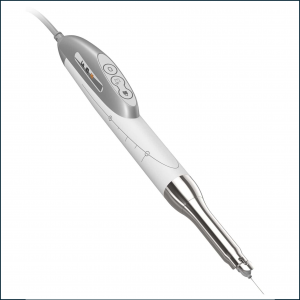
Dentalhitec Americas recently announced the official U.S. launch of QuickSleeper5, following FDA clearance. Even prior to its American debut, demand from dentists for the QuickSleeper5.
Read more
Asia&Oceania 04 October 2026
India Dental Show 2026 in New Delhi/Mumbai: Event Preview and Professional Highlights
The India Dental Show 2026 will take place from December 18, 2026 to December 20, 2026 in New Delhi/Mumbai, India, offering dental professionals a focused environment for continuing education,...
Edra Professional Books 03 October 2026
Diode laser Manual in dentistry and stomatology: A Practical Reference for Dental Professionals
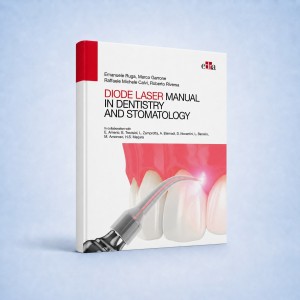
Diode laser Manual in dentistry and stomatology is an Edra professional dentistry reference focused on clinical practice, education and treatment planning.
Products 02 October 2026
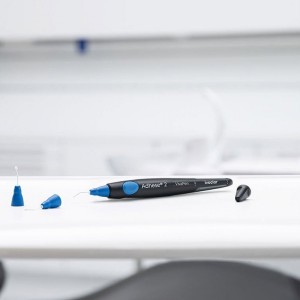
Adhese 2 can be applied directly from the VivaPen in dual-cure mode without an additional activator.
News 02 October 2026
New York Implant Institute Plans Live Patient Surgery Courses
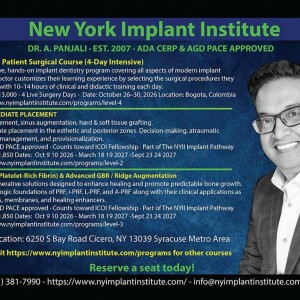
Institute offers a variety of hands-on implant training through its dental implant CE courses and live surgery courses.
News 02 October 2026
PDS Health and United Concordia Launch Saliva Screening Pilot
United Concordia Dental and PDS Health®, leaders in oral health and dental-medical integration, respectively, launched a saliva screening pilot in Southern California earlier this



Copyright © 2026 - All Rights Reserved
ISSN 2767-1178