


Chlorhexidine-containing mouthwashes with different formulations influence Streptococcus mutans biofilm viability: an in vitro study
Authors: A.C. Ionescu, G. Gloria Cazzaniga, M. Ottobelli, M. Basso, E. Brambilla

Alteration of the equilibrium between the oral tissues and the biofilm that permanently colonizes the mouth cavity could lead to dysbiosis and is responsible for most oral cavity pathologies, such as caries, gingivitis and periodontitis.
Among microorganisms, Streptococcus mutans (S. mutans), plays a key role in the development of oral cavity pathologies and, above all, caries. The control of the development of a pathogenic oral biofilm has become crucial in preventing such pathologies. The gold standard among the oral antimicrobial agents is chlorhexidine (CHX) which has shown a wide spectrum of action against gram-
positive, gram-negative and yeast bacteria. However, other two promising active ingredients are sodium hyaluronic acid and polyvinylpyrrolidone-vinyl ace- tate (PVP-VA).
The purpose of this in vitro study was to evaluate the effect of different mouthwashes formulations on the development of a S. mutans biofilm with the use of biore- actor under continuous flow (MDFR).
MATERIALS AND METHODS
48 polystyrene standardized discs were prepared and a monospecific biofilm of S. mutans was obtained in a bioreactor under continuous flow conditions for 20h. Once the biofilm was stable, the discs were exposed for two minutes to different mouthwash formulations indicated as A) Curasept Impianti; B) Dentosan® 0,20%; Group C) Curasept Perio; D) Dentosan® 0,12%; E) Control 1; F) Control 2 and two additional formulation containing CHX 0,20% (positive control) and sterile PBS solution (negative control). Additional 4 h of incubation were waited before the amount of viable adherent biomass on polystyrene surfaces was assessed by plate count. Results obtained were statistically analyzed with One-Way Anova test and Tukey post-hoc test and statistical significance was set for p<0.05.
RESULTS
The 0,2% CHX solution (positive control) showed a reduction of UFC number comparable to that of mouthwash formulation A, B, C, D (respectively p=1,000, p=0,995, p=1,000, p=0,242). All mouthwashes containing CHX, independently from the concentration, revealed a more effective antimicrobial activity compared to the ones without CHX, such as formulation E and F. Further, E and F formulation showed a reduced amount of vital bacteria cells compared to the negative control, thus indicating a weak antimicrobial effect (p<0,001).
CONCLUSIONS
Results of the in vitro study showed that mouthwash formulations containing CHX associated with PVP-VA are able to produce a more affective antimicrobial activity thus, the results were not statistically significant compared to the commercial mouthwash available on the market containing CHX alone. Further studies are necessary to validate the obtained results and to study the modification produced by the different additives included in mouthwashes formulations.
CLINICAL SIGNIFICANCE
The anti-biofilm efficacy depends not only on the active principle chosen, but also on the other compounds included in the formulation. They are supposed to be able to interact with the main ingredient and to power or reduce its antimicrobial effect. The creation of a more effective mouthwash with the association of CHX and a polymer able to create an adherent film on most oral tissues could be a helpful solution in controlling oral biofilm formation over time and promoting reduced bacteria growth on exposed surfaces.
 Related articles
News 04 November 2025
Do Mouthwashes Disrupt the Oral Microbiome? A Balanced Perspective
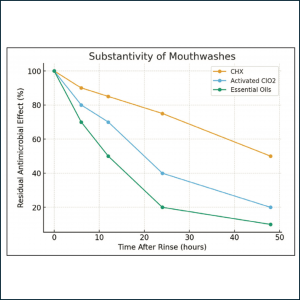
A growing debate questions whether antimicrobial mouthwashes disrupt the oral microbiome—the community of bacteria, fungi, and other microorganisms essential for health.
Oral Hygiene & Prevention 25 September 2023

Mouthwashes, a cornerstone of oral and dental hygiene, play a pivotal role in combating the formation of dental plaque, a leading cause of periodontal disease and dental caries. This study aimed to...
Read more
Products 22 October 2026
News 22 October 2026
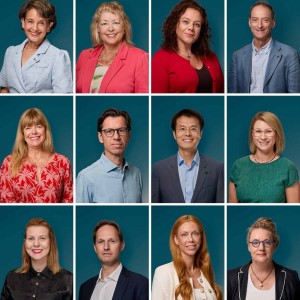
Royal Philips (NYSE: PHG, AEX: PHIA), a global leader in oral healthcare, today announced the formation of the Philips Sonicare Global Clinical Advisory Board, a group of external
News 22 October 2026
Opalescence Launches Limited-Edition Teeth Whitening Flavors
Opalescence whitening , the #1-selling professional teeth whitening brand, is introducing two limited-edition flavors, available only while supplies last: Pumpkin Spice and Birthda
Editorials 22 October 2026
2025 in Review: Highlights from the CU Anschutz School of Dental Medicine
From collaborative research to exceptional patient care and education , 2025 was a year of innovation and impact at the University of Colorado Anschutz School of Dental Medicine.
Implantology 22 October 2026
This peer-reviewed implantology article summarizes clinical evidence from Clinical oral implants research (2026). It focuses on findings that may help dental professionals evaluate treatment...


Copyright © 2026 - All Rights Reserved
ISSN 2767-1178